

Meridian MCP is live!
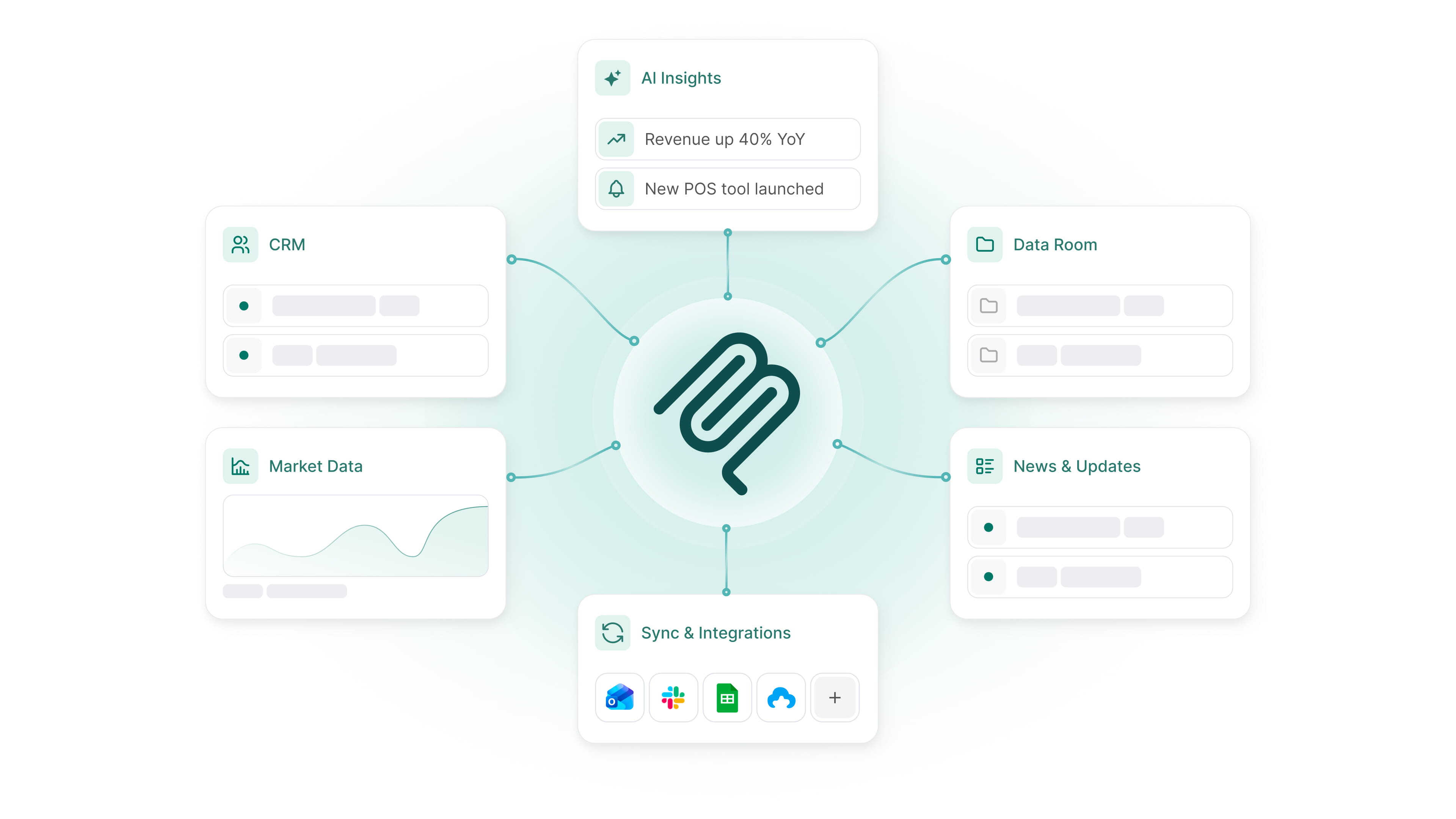
Connect your deal sourcing data to any AI tool.
Learn More
Meridian raises $7M seed round led by 645 Ventures.
Read More

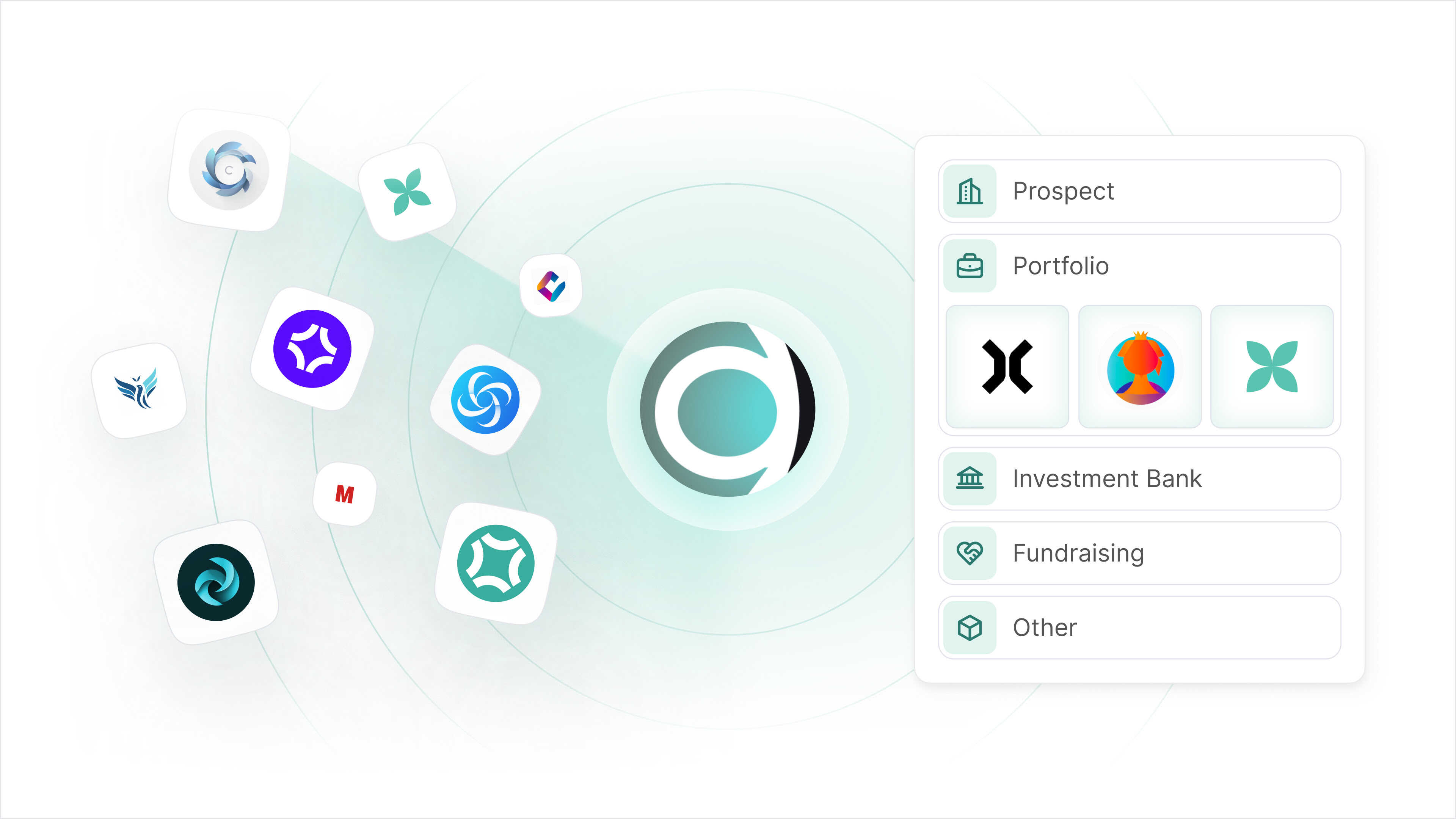
Meridian can now assign a company type automatically when new companies are imported or synced without one, so your pipeline stays organized without manual cleanup. Classification runs on your organization's own taxonomy, matching how your firm already categorizes companies, and applies a type only when it clears a confidence threshold. Low-confidence matches are left alone rather than guessed at, so you are not trading manual entry for bad data. Talk to your Meridian customer success lead to enable it.
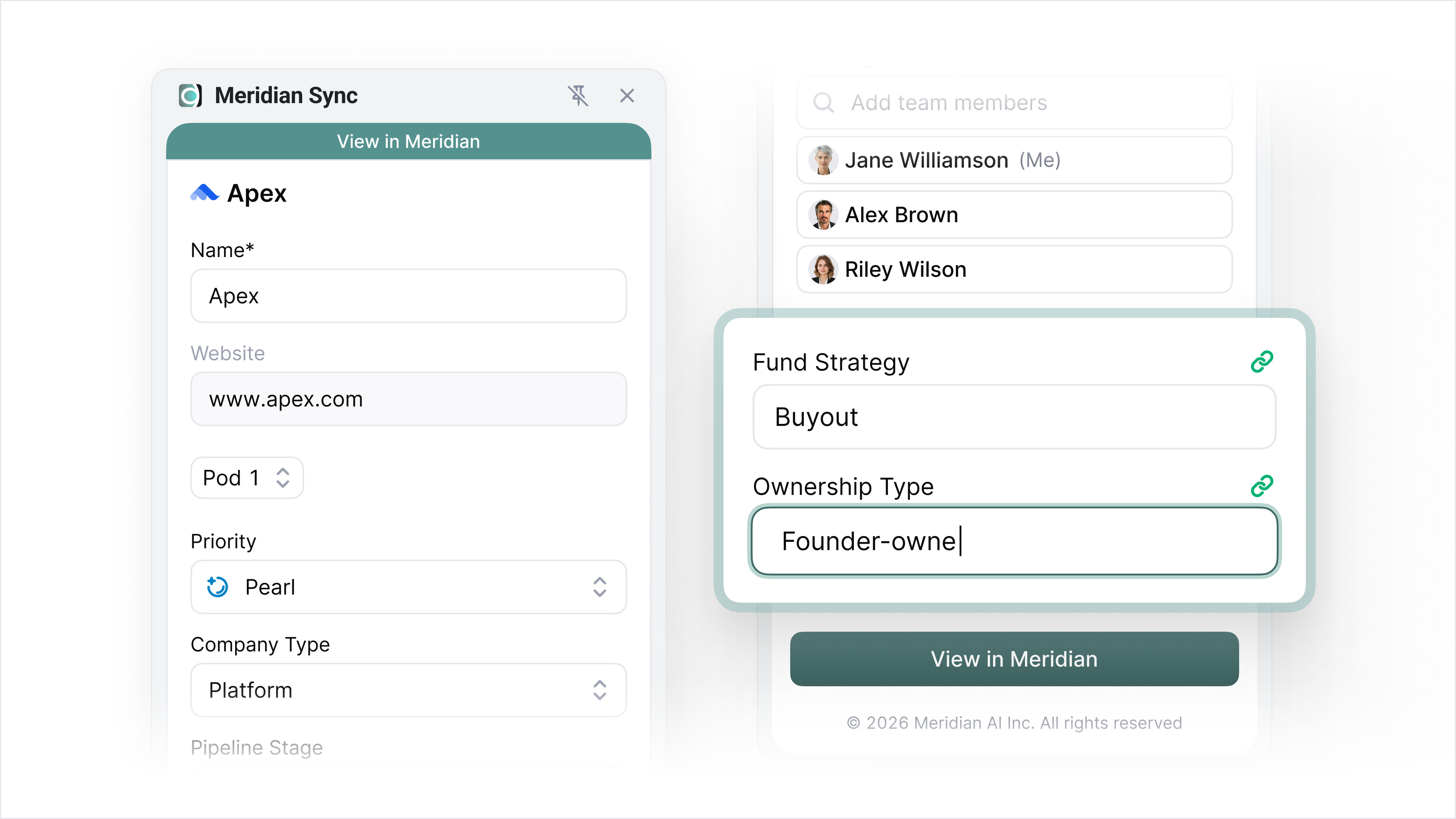
You can now view and edit all company details directly from the Meridian Chrome extension. Click any field to edit, and it saves automatically to your CRM and activity log. Fields shared between a company and its deals are marked with a link icon, so updating one keeps the linked records aligned. Update the record where you're already working, without a round trip back to Meridian.
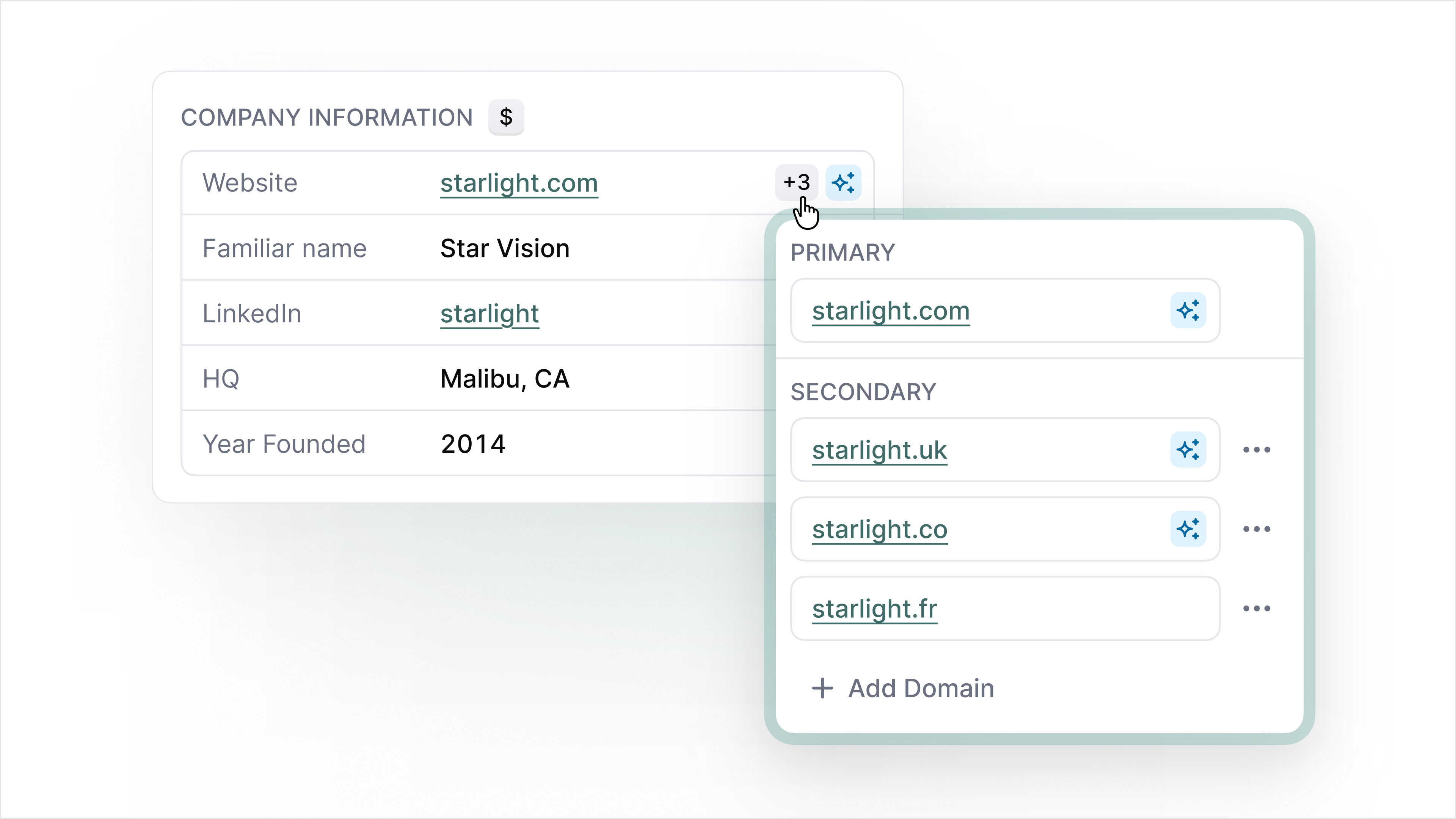
You can now add multiple domains to a single company record. No more duplicate records just because an organization runs a regional site, a product subdomain, or a legacy URL. Emails and meetings from people at any of those domains match to the right company automatically, so nothing scatters across near-identical entries. Coming in September, new merge capabilities will let you clean up any duplicates you already have.
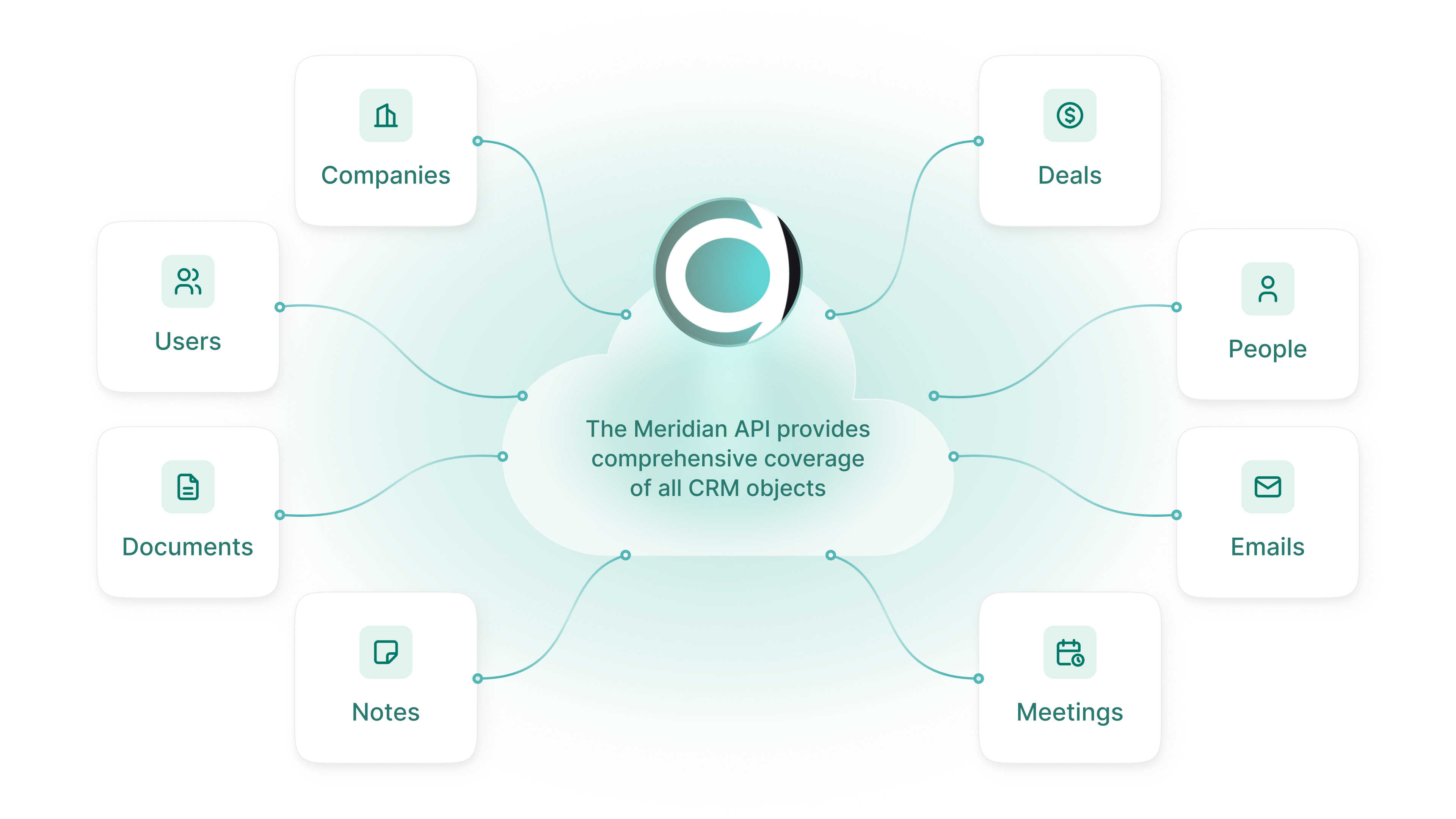
You now have full create, retrieve, update, and delete access to notes, tags, meetings, and attributes through the API. Push auto-generated notes from Granola or Fireflies straight to the right meeting in Meridian, no manual copy-paste. The context your team captures elsewhere lands in the record automatically, tied to the deal it belongs to. Your workflows write to Meridian, so the system of record stays current without anyone maintaining it.
Your Meridian data now lives inside ChatGPT. Your team can query companies, deals, people, meetings, notes, documents, interactions, emails, and saved reports without leaving the conversation, so deal context follows you into the AI tool you already work in. No exporting, no copy-paste, no switching windows to check the record. This is the open architecture in practice: Meridian as the system of record, ChatGPT as one more place it works.
Setup guides:
ChatGPT admin MCP setup guide
ChatGPT business user MCP setup guide
ChatGPT personal user MCP setup guide
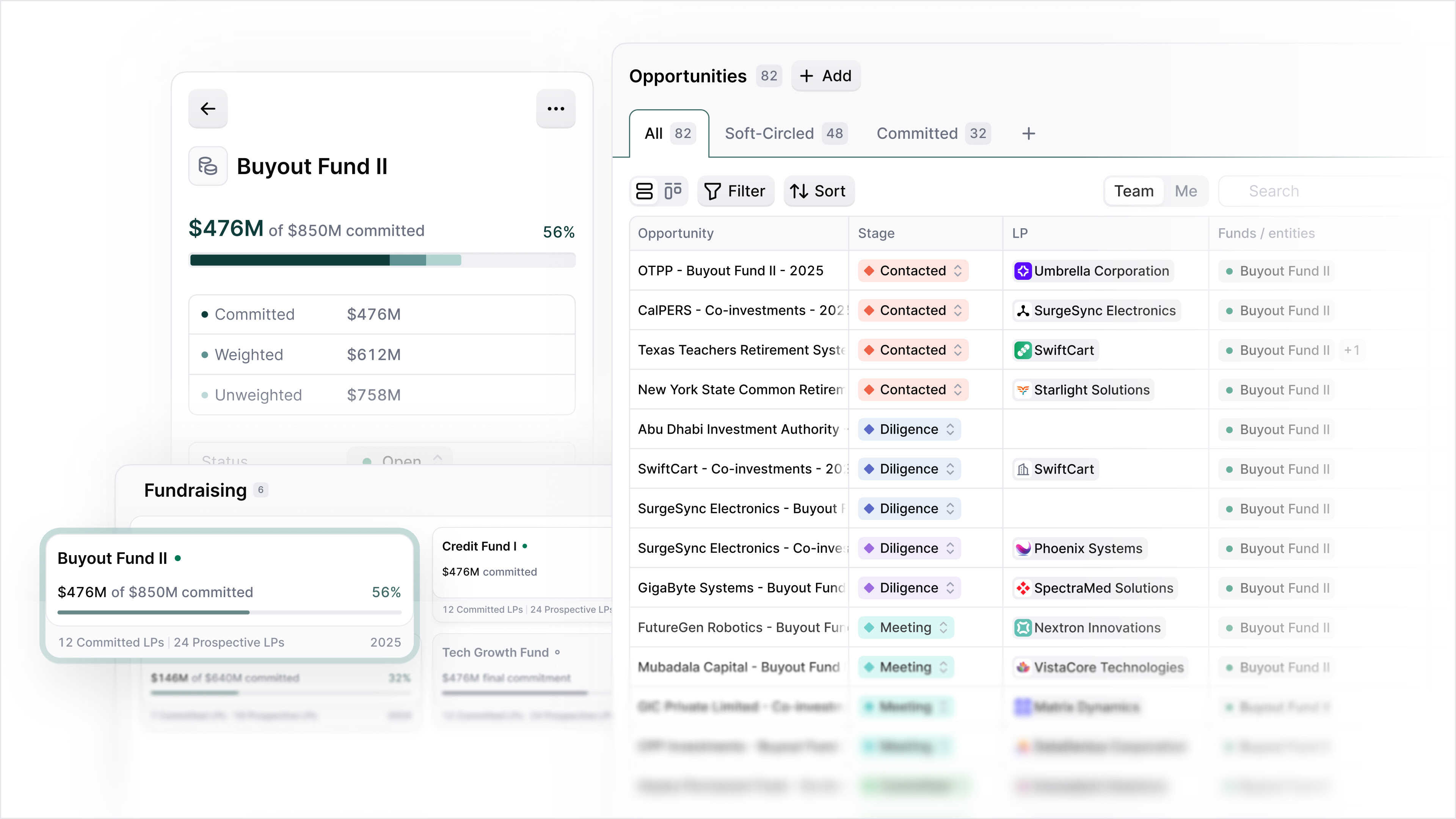
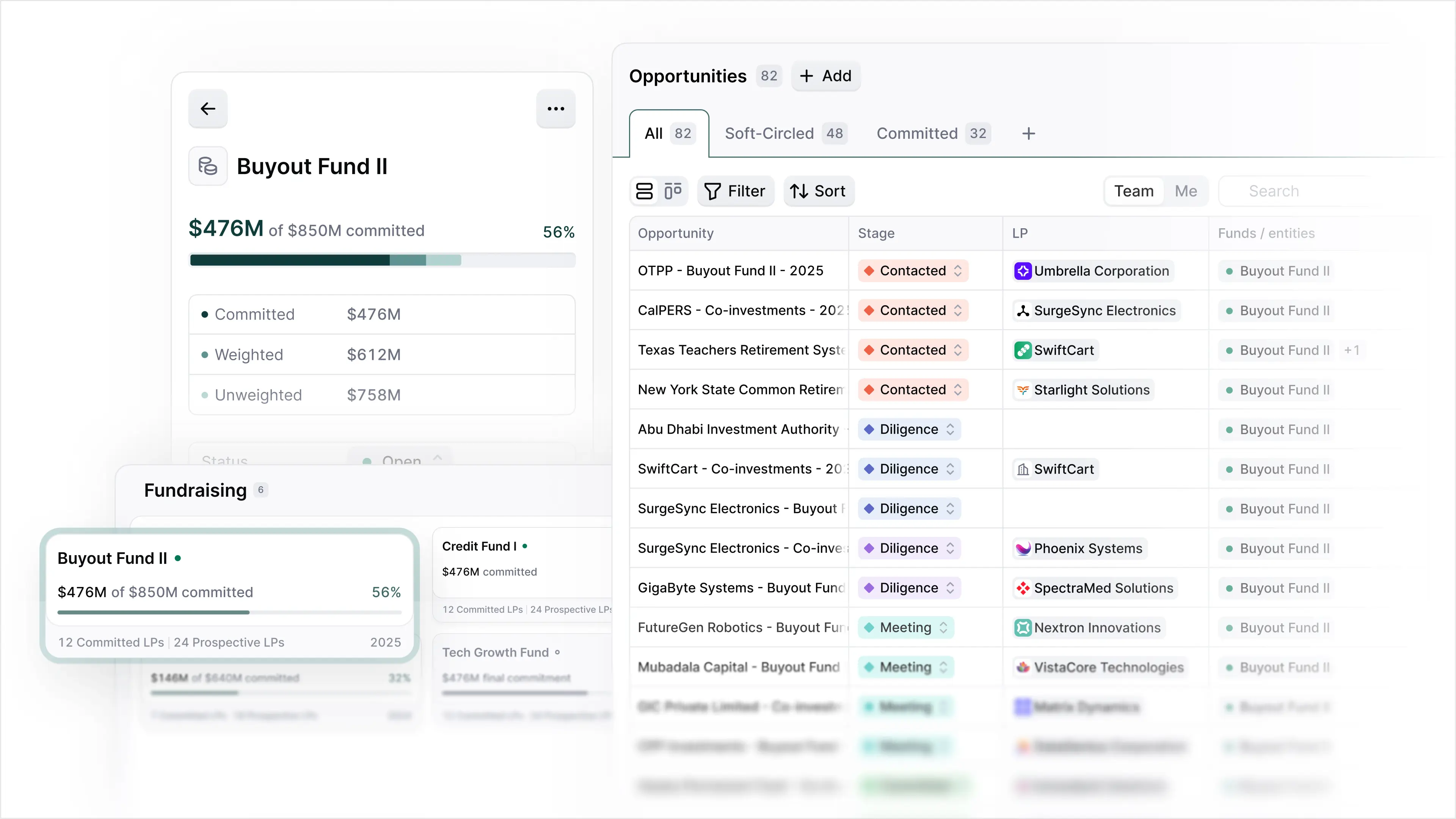
Your raise no longer needs a separate spreadsheet or a second system. IR and fundraising teams now have a dedicated home for funds and LP opportunities, running on the same tagging and search you already use across companies and deals. Set your own pipeline stages, filter tables down to the cut you need, and work the raise in a Kanban view. The deal side and the capital side finally sit in one system of record.
Your sourcing hierarchy now breaks out across table views, with each level (Sector, Sub-sector, Industry, and Niche) getting its own column on Companies, Deals, and People tables. Sort, filter, and reorder by any level in Reports to slice your coverage universe exactly how your thesis is organized. Every level carries through to Excel and PDF exports, so the structure holds when you take it out of Meridian.

Fundraising now runs inside Meridian. The new Fundraising module gives IR and fundraising teams a dedicated home for funds and LP opportunities, so your raise no longer lives in disconnected spreadsheets or a separate tool. Build customizable pipeline stages, switch between table and Kanban views, and use the same tagging and search you already rely on for companies and deals.
Meridian's public API now supports full create, retrieve, update, and delete access to Notes, Tags, and Meetings. Teams running auto-generated notes from tools like Granola or Fireflies can push them straight into the right meeting in Meridian, with no manual copy and paste. Your deal record stays complete without anyone rekeying context by hand.
