
Get the Meridian mobile app!
Your deal data travels with you.
Learn More

Meridian raises $7M seed round led by 645 Ventures.
Read More
The 2026 deal sourcing landscape for PE, VC, IB, and corporate development teams: the four tool categories, how sourcing differs by segment, and a six-point framework for evaluating platforms before you buy.
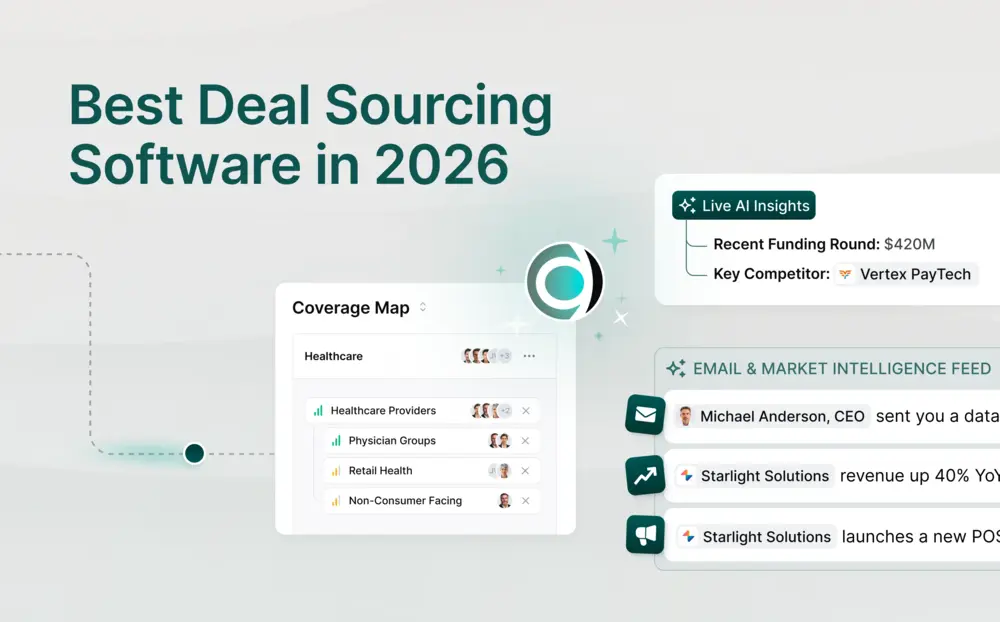
The deal sourcing stack has never been larger, and the visibility problem has never been worse. Investment teams in 2026 have access to more company databases, deal networks, and AI screening tools than at any point in the industry's history. Most still depend on the same three channels they used a decade ago: banker relationships, conference introductions, and database screening.
Axial's research captures the scale of the problem: The median PE firm captures only 18% of intermediated deals relevant to its strategy. The other 82% of relevant opportunities never reach the desk.
More tools haven't solved this. The issue is that the tools don't connect to each other. Sourcing data lives in one system, pipeline in another, and relationship context in a third. Every handoff between systems loses information, and the compounding intelligence that should build over time across hundreds of reviewed companies never accumulates.
A newer generation of platforms addresses this directly. Rather than exporting a PitchBook list into Excel and uploading it to a CRM manually, these platforms embed discovery, enrichment, and pipeline management in one system. When a company matches the investment thesis, it flows into the deal pipeline with enrichment data and relationship context already attached.
This guide maps the 2026 deal sourcing landscape for private equity, venture capital, investment banking, and corporate development teams. We cover the four categories of tools, how sourcing workflows differ by investment type, why embedded sourcing is replacing the fragmented multi-tool approach, and a practical framework for evaluating platforms.
The deal sourcing market divides into four functional categories: company databases and screening platforms, deal networks and intermediary platforms, AI-powered screening and discovery tools, and CRM-embedded sourcing. Understanding which category fits which part of your workflow is more useful than evaluating individual platforms in isolation.
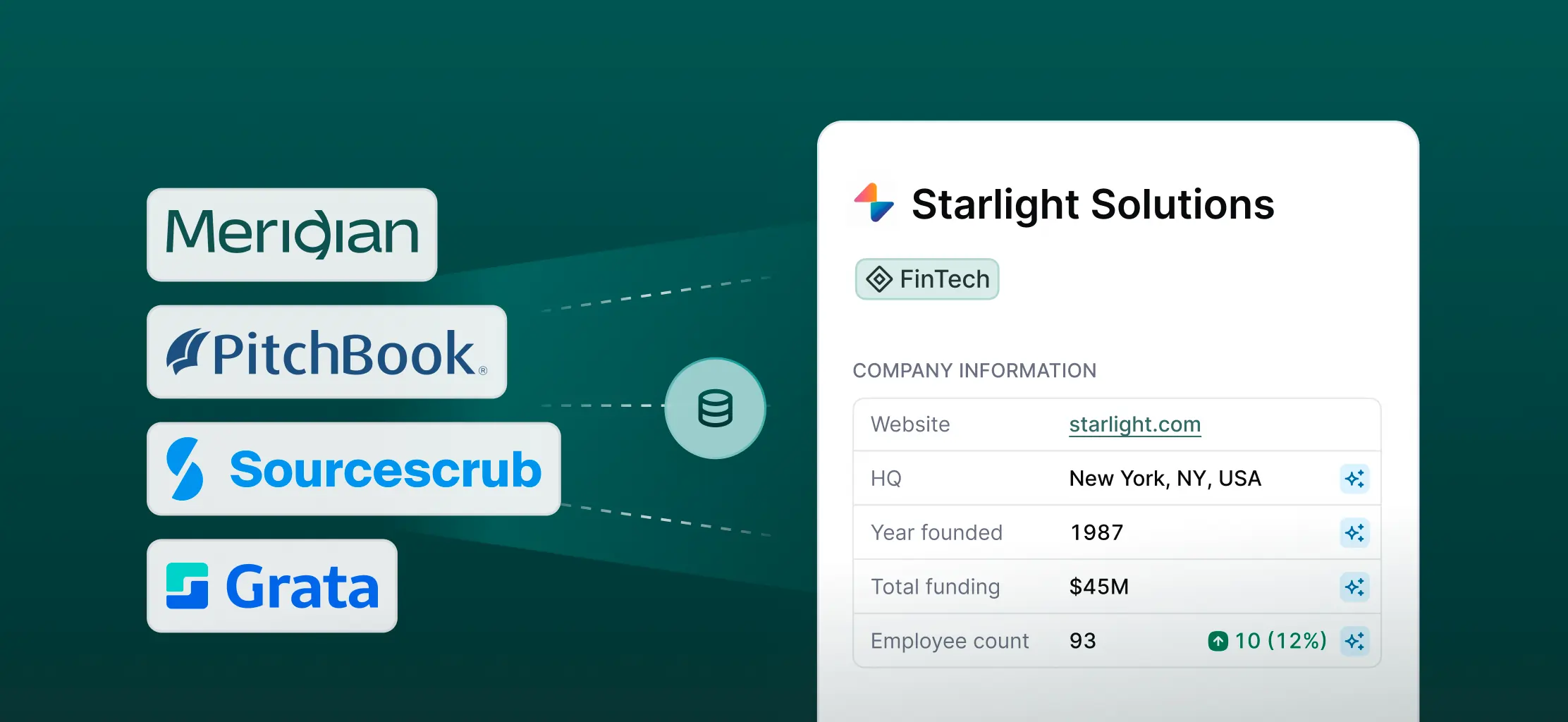
Company databases give investment teams a searchable universe of targets for building thesis-driven lists. PitchBook is the most widely deployed for institutional coverage, with deep fund performance data, LP information, global deal history, and public company financials. Crunchbase and Preqin serve overlapping needs in venture capital and alternative assets, respectively.
For PE teams screening private, founder-owned businesses in the mid-market and lower middle market, PitchBook undercounts the available universe. Grata and SourceScrub are purpose-built for private company coverage, using AI-assisted methods to index businesses that don't generate institutional research or analyst following. A team screening for founder-owned industrial distribution companies with $10M to $50M in revenue will find Grata's coverage of that segment materially better than PitchBook's.
The structural limitation of databases is data freshness. Records update on batch cycles rather than continuously, and executive contact information degrades quickly. A 200-company target list may include a significant share with outdated revenue estimates or departed leadership by the time outreach begins.
A practical test when evaluating any database: Ask the vendor to show coverage within a specific revenue range and geography that matches your target market. The gap between what the vendor describes and what you find in the sample is the most reliable indicator of coverage quality for your use case.
Deal networks connect qualified buyers with broker-represented deal flow. Axial is the dominant platform for lower-middle-market transactions, connecting PE buyers with boutique bankers running sell-side processes for founder-owned businesses. With Intelligence (formerly Sutton Place Strategies) aggregates intermediary relationship data and tracks boutique banker deal flow. Finalis provides compliance infrastructure for the emerging boutique advisory segment.
The practical limitation is that every qualified buyer on the network sees the same deal simultaneously. Networks are valuable for ensuring comprehensive coverage of broker-represented flow, but they don't generate sourcing advantage on their own. Differentiation comes from preparation speed, relationship depth with the specific banker, or access to the seller through a channel other buyers don't have.
Deal networks are also useful as a relationship benchmark. Tracking which intermediaries are most active in a target sector and which deals your firm sees versus misses gives a concrete picture of coverage gaps in the firm's intermediary relationships. For PE firms, the accountant who calls three days before engaging a banker is more valuable than any network subscription, and that relationship needs to be tracked as deliberately as any other.
AI screening tools apply machine learning to company datasets to surface thesis matches proactively. Rather than running a filtered database search and reviewing 200 results, a firm defines investment criteria, and the platform monitors a defined company universe for signals that precede deal readiness: leadership changes, hiring velocity, revenue milestones, regulatory filings, and press events. Inven.ai takes this approach for PE thesis matching. Grata has added AI discovery features on top of its private company database.
The workflow position for AI screening tools is between the database and the CRM. They surface candidates proactively, but still require a step to import discoveries into the deal pipeline. Without a native connection to the deal management system, sourcing intelligence still gets lost in the handoff, and the firm loses the context that made a company interesting in the first place.
The analyst who ran the screen and the deal team reviewing the company six months later start from different information sets. That gap is what CRM-embedded sourcing eliminates.
CRM-embedded sourcing integrates discovery, enrichment, and pipeline management in a single system, eliminating the handoff step where information gets lost. When a company matches the investment thesis, it flows into the deal record with enrichment data and relationship context attached. Meridian, Affinity, and 4Degrees each take this approach with different architectural emphases.
Meridian's Scout AI runs thematic market mapping, surfaces company matches against the firm's mandate, and enriches profiles automatically from a database of 26M+ companies and AI web crawls. The sourcing output connects directly to the deal pipeline, so a Scout AI match becomes a deal record with enriched company data and relationship history already visible.
The honest trade-off: CRM-embedded sourcing is strongest when CRM adoption is already high. For firms that need PitchBook's depth on fund performance data, LP information, or financial benchmarking across large company universes, a dedicated database subscription still makes sense alongside the CRM. See the Meridian deal sourcing page for more on how embedded sourcing works in practice.
For a broader tool inventory, SourceScrub's roundup of 25 PE deal sourcing and analysis tools provides additional context on the database and network categories.
Deal sourcing differs across investment segments because each segment's primary deal source, relationship structure, and deal economics are fundamentally different. PE relies on thesis-driven outreach and intermediary networks, VC on founder referrals and signal monitoring, IB on coverage relationships, and corp dev on strategic adjacency screening.
PE firms source through three channels:
The performance advantage in sourcing comes from the first two.
Funds where more than half of closed deals originated from proprietary sourcing delivered a median IRR of 23% versus 16% for funds that relied heavily on intermediaries, per V7 Labs citing Bain's research. The gap comes from entry pricing: Companies accessed through early, direct conversations price at a discount relative to those sold through competitive auction.
Getting there first requires knowing a target is deal-ready before the owner decides to run a process, which means the intelligence has to be in the sourcing system before the banker's teaser arrives. Meridian's thematic sourcing feature maps the market against the firm's investment mandate and surfaces companies matching the thesis before they go to auction. Scout AI enriches those matches automatically from 26M+ records and connects them directly to the deal pipeline.
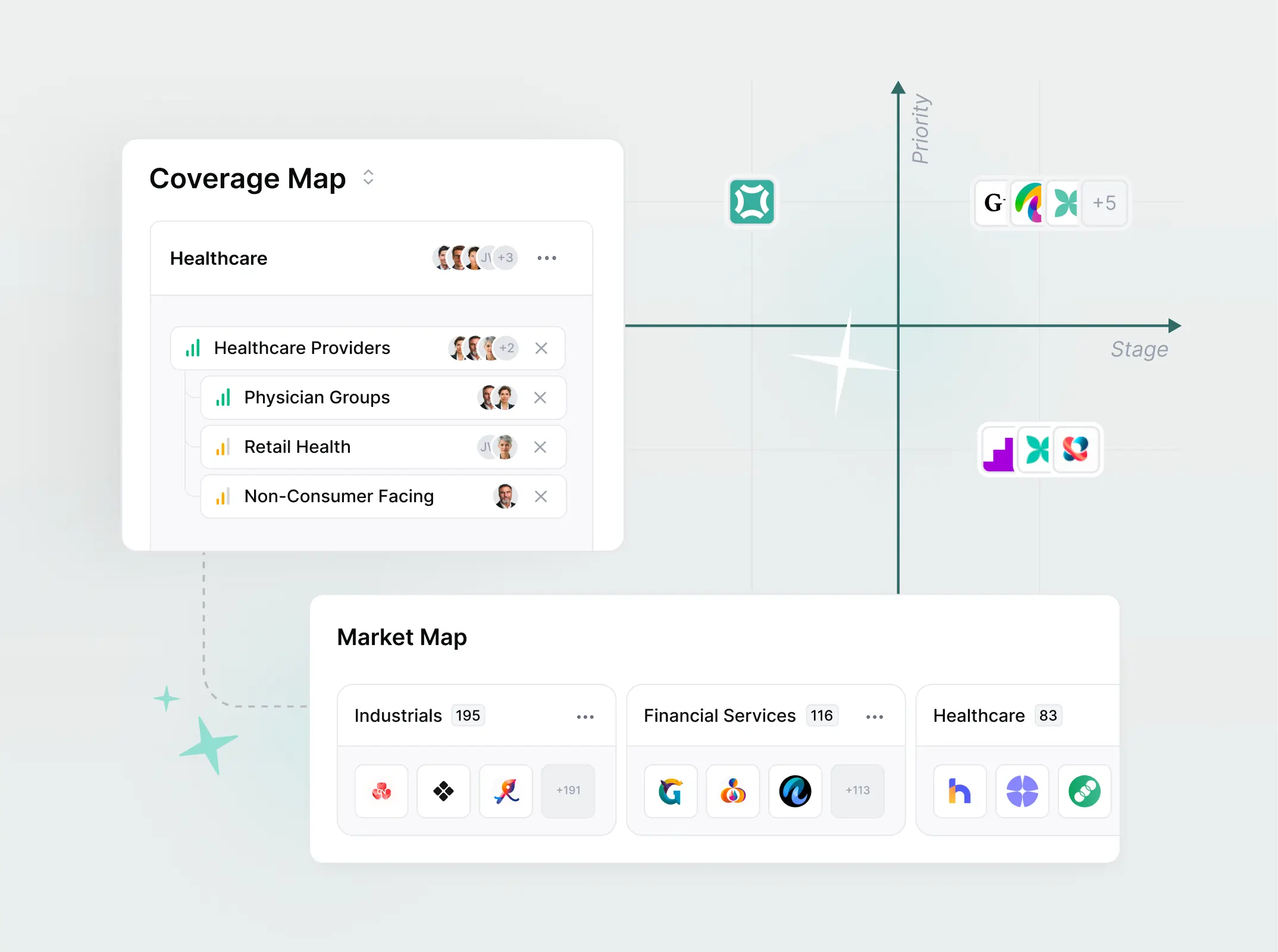
The firm has a relationship with the company's accountant or regional lender, has tracked the company in its CRM for 18 months, and has a warm introduction path through an LP or portfolio company. None of that happens without a sourcing system that connects company tracking, relationship context, and signal monitoring in one place. Each piece managed in a separate tool means the team has to manually assemble the picture every time a deal heats up.
Meridian brings your entire pipeline into one powerful platform built for private equity.
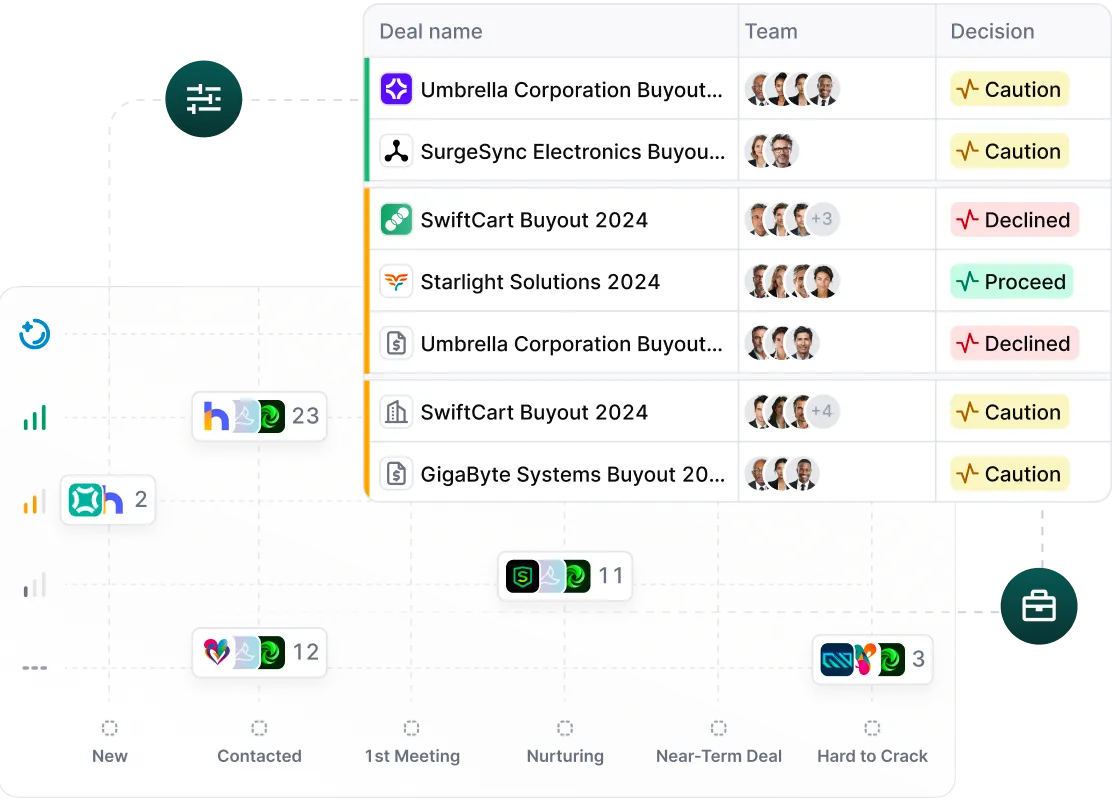
VC firms source through inbound referrals from portfolio founders, LP networks, and accelerators; proactive monitoring of signals that precede fundraising; and direct coverage at conferences and demo days. A mid-stage VC fund evaluating 1,000+ opportunities per year faces a prioritization challenge more than a volume challenge. The question isn't how to see more companies. It's how to see the right ones earlier and know who in the network already has a relationship with the founding team.
Signal monitoring shifts sourcing from reactive to proactive. Tools that track a defined company universe for hiring velocity, product launches, leadership announcements, and revenue signals can surface a high-priority target six to twelve months before the founder starts talking to investors. When those signals connect to the firm's existing relationship network, the team knows immediately whether anyone in the portfolio or LP base has a relationship with the founding team before the first outreach.
The operational challenge in VC sourcing is not finding companies. It is finding the right ones at the right time and approaching them through the right channel. Research on warm introductions at the executive level shows they generate up to 15 times more engagement than cold outreach. A CRM that surfaces relationship strength at the point of sourcing turns that intelligence into action rather than leaving it buried in a contact database the team checks manually.
Investment banks source deal mandates through coverage relationships, not company databases. Coverage-driven origination means maintaining active contact with CFOs, board members, and strategic advisors in the firm's target sectors, with the goal of surfacing deal interest before a company decides to run a formal process. The CRM's sourcing function in IB is identifying relationship gaps before they become missed mandates.
The failure point is the coverage gap. A company the firm should have advised goes to a competitor because no one maintained the senior-level relationship consistently over the prior eighteen months. Relationship strength scoring surfaces these gaps automatically, alerting the team when engagement with a key contact drops below a threshold before the competitive window closes.
For IB teams covering hundreds of relationships across a sector, systematic tracking of engagement depth is the difference between active coverage and a contact list no one checks. The sourcing value of the CRM in banking is converting that contact list into a live, monitored view of relationship health across the firm's target universe.
Sourcing attribution also matters in IB in a way it doesn't in PE or VC. When the firm wins a mandate, understanding which relationship, which touchpoint, and which banker's coverage effort generated the deal is the data that informs how to build the coverage model for the next fund cycle. A CRM that captures this at the contact and interaction level turns mandate sourcing into a compounding institutional asset rather than a collection of individual wins.
Corporate development teams source through bolt-on acquisition screening and through relationships with bankers and advisors who run sell-side processes in the firm's target sectors. The structural difference from PE sourcing is the strategic framing. A corp dev team must demonstrate that a target accelerates the parent company's strategic objectives, and that rationale needs to hold up to board and executive scrutiny.
AI-powered thematic mapping serves corp dev teams in two ways. It generates a structured view of the opportunity landscape in adjacent markets, identifying companies across size ranges, geographies, and business models that fit the strategic criteria. It also produces the documentation trail that internal stakeholders require: a systematic record of how targets were identified, why they were prioritized, and what criteria drove the evaluation.
When a deal requires board approval, showing that the target was on a monitored strategic watch list rather than found opportunistically makes the sourcing case materially stronger. Thematic mapping operationalizes the acquisition thesis in a way that supports governance as well as deal generation.
Fragmented sourcing stacks, where database, AI screening, and CRM run as separate systems, create three specific problems that compound over time:
Information loss is the first problem. When sourcing data lives in a database and pipeline data lives in a CRM, the intelligence that led to a company's identification doesn't transfer with the deal. The analyst who found the company and the analyst writing the IC memo six months later are working from different information sets, and the original thesis reasoning has to be reconstructed from scratch.
The second problem is duplicated effort. Without sourcing data connected to the pipeline, the same company gets re-researched at each stage. Sector context established during initial screening has to be recreated during diligence. Relationship notes from early outreach don't appear when the deal moves to IC.
The third is adoption failure. Investment professionals manage high volumes of activity across multiple systems. Every additional tool in the stack is friction. When that friction accumulates, teams route around the formal system and fall back to email and spreadsheets. A CRM that isn't used doesn't generate the relationship data that makes sourcing smarter over time.
Embedded sourcing addresses all three. When Scout AI surfaces a thematic match in Meridian, that company enters the pipeline with enrichment data from 26M+ records already populated, relationship history visible, and a direct connection to the deal record where diligence materials and IC notes will eventually live. Nothing gets re-entered.
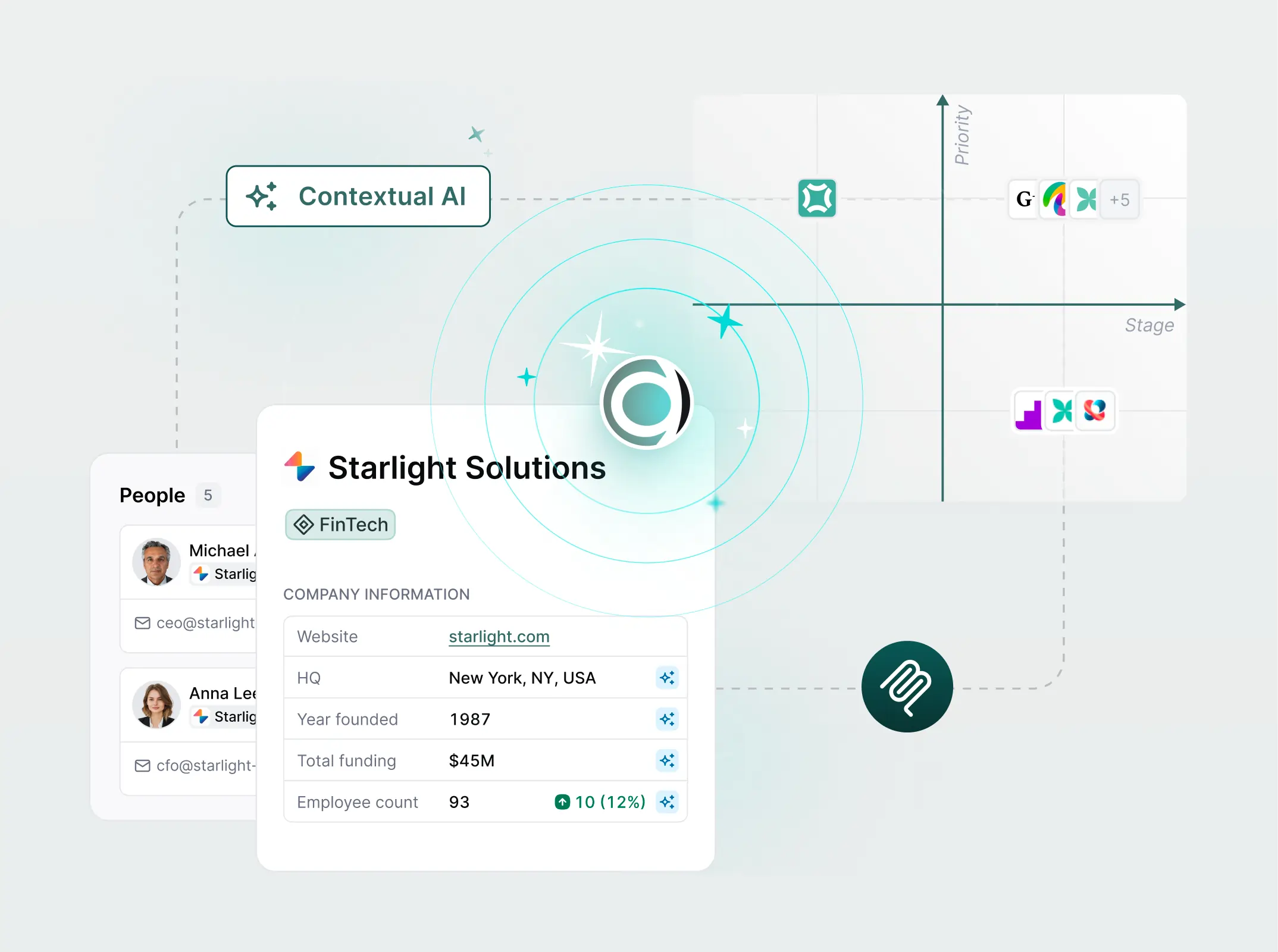
Based on the hundreds of conversations we've had with investment teams across PE, VC, IB, and corp dev, the firms that get the most from embedded sourcing treat the CRM as the system of record for everything deal-related from first identification through close. When the CRM is that system, sourcing intelligence doesn't need to be imported. It's already there.
The six criteria that determine whether a deal sourcing platform delivers value in practice are: coverage of private companies, signal monitoring depth, CRM integration quality, thematic mapping capability, total cost accounting, and adoption metrics. Here is what to interrogate in each.
One more evaluation step that often gets underweighted: Ask each vendor to walk through a specific end-to-end scenario before signing. A deal team receives a company suggestion from the sourcing tool. Walk through every step to get that company into a pipeline record with enrichment, relationship history, and a deal stage assigned. Platforms that struggle to demonstrate that workflow in a demo will struggle more when the team is mid-quarter under real time pressure.
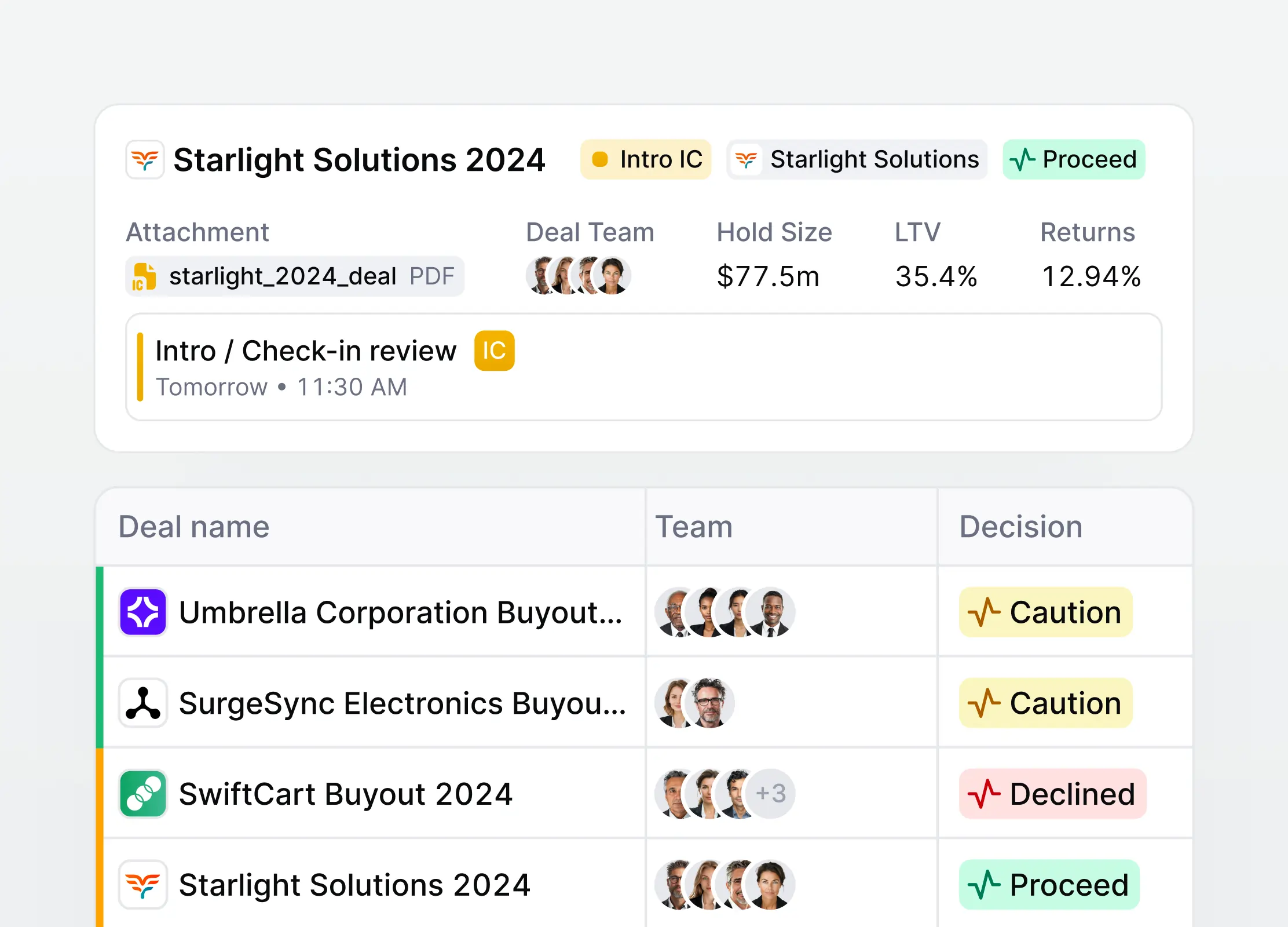
The firms sourcing the best deals in 2026 are the ones whose sourcing connects directly to their pipeline, relationships, and historical deal intelligence. The visibility gap that keeps the median firm seeing only 18% of relevant deal flow is not solved by adding another database. It is solved by connecting the tools that already exist.
When discovery, enrichment, and pipeline management run in a single system, the intelligence that surfaces a company at the top of the funnel is still visible when the IC memo is being written months later. Relationship context from early outreach informs how the deal team approaches the seller. Sector knowledge built from prior reviews in the same space accumulates into a research advantage that compounds over time.
The sourcing advantage in 2026 is not about exclusive network access. Networks commoditize. Information travels. The firms that build sourcing edges that compound are the ones where every reviewed company, every declined deal, and every relationship touchpoint becomes a searchable, structured part of the firm's institutional memory. That asset only accumulates when the sourcing system and the deal system are the same system.
Discover how Meridian can streamline deal sourcing and enhance your decision-making

Find out how leading PE firms are using Meridian to enhance their deal workflows.
.webp)
What is deal sourcing software and how does it work?
Deal sourcing software helps investment teams identify, track, and evaluate potential acquisition or investment targets. Platforms range from searchable company databases that help build target lists, to deal networks that connect buyers and sellers through broker-led deal flow, to AI screening tools that surface thesis matches proactively, to CRM-embedded systems that connect discovery directly to pipeline management. The right combination depends on the investment segment and where the firm needs the most workflow support.
How do PE firms find proprietary deals?
PE firms access proprietary deal flow through thesis-driven direct outreach to companies matching the investment mandate, relationships with accountants, attorneys, and regional lenders who refer clients before a formal process begins, and thematic market mapping that surfaces companies ahead of an auction. Funds where more than half of deals were proprietary delivered a median IRR of 23% versus 16% for intermediary-reliant funds, per V7 Labs citing Bain's research, making proprietary sourcing a measurable performance factor.
Can a CRM replace PitchBook or SourceScrub for deal sourcing?
An AI-native CRM with bundled data enrichment can reduce reliance on separate database subscriptions for top-of-funnel screening, but is not a full replacement for PitchBook's depth on fund performance data, LP information, or private company financial benchmarking. The strongest configuration layers CRM-embedded sourcing on top of existing database subscriptions, eliminating the manual export steps between tools rather than replacing every data source.
What is the difference between a deal sourcing platform and a CRM?
A deal sourcing platform is purpose-built to identify investment targets and surface them based on thesis criteria. A CRM tracks relationships, communications, and deal pipeline progress. The distinction matters less than it used to because modern CRM platforms increasingly embed sourcing capabilities, and standalone sourcing tools have added pipeline tracking features. The meaningful question is whether the sourcing output connects automatically to the deal record, or whether the team still has to manually transfer companies from one system to the other. Platforms that have collapsed the two functions into one system eliminate the workflow step where the most deal intelligence gets lost.
What percentage of deals do investment teams typically miss?
Research by Axial found that the median PE firm captures only 18% of the intermediated deal flow relevant to its strategy. That figure covers only broker-represented deals, the most visible segment. The miss rate is not primarily a data problem. It is a coverage and workflow problem: teams rely on the same few channels, and opportunities outside those channels do not surface until they are already in an auction process.
How should investment teams measure the ROI of deal sourcing software?
The most reliable measures are pipeline conversion rate from sourcing to IC, the percentage of closed deals that originated from the platform, and time from first identification to first meeting. The cost of a missed deal is the metric that gets underweighted most often. A firm that wins one additional deal per year that it would otherwise have missed by a week will recover the cost of most sourcing subscriptions many times over.
How do investment teams avoid duplicating research across the deal lifecycle?
The root cause of duplicated research is tool fragmentation: sourcing data lives in a database, pipeline data in a CRM, and diligence materials in a shared drive or email thread. When a deal moves from initial identification to IC review, the context from each prior stage has to be manually reassembled. The analyst who did the initial screen is often not the same person writing the IC memo months later. Embedded sourcing solves this by keeping every company record, contact note, and prior review in a single system from first identification through close. When a company resurfaces, the prior work is already there.

Table of Contents