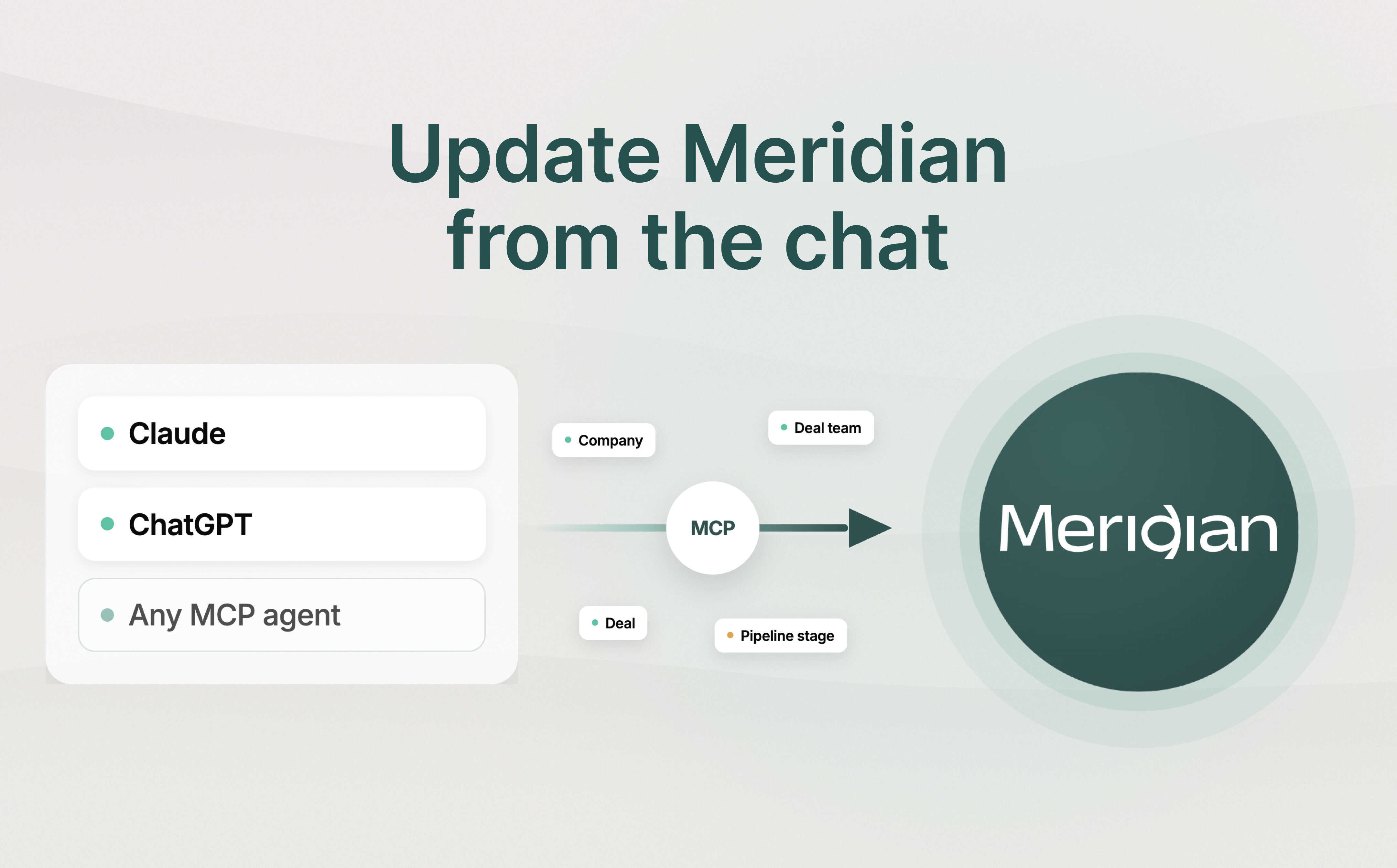

Meridian MCP is live!
Connect your deal sourcing data to any AI tool.
Learn More
Meridian raises $7M seed round led by 645 Ventures.
Read More
The top investment banking CRM and deal management platforms for 2026, compared on automated capture, mandate management, and time to adoption.
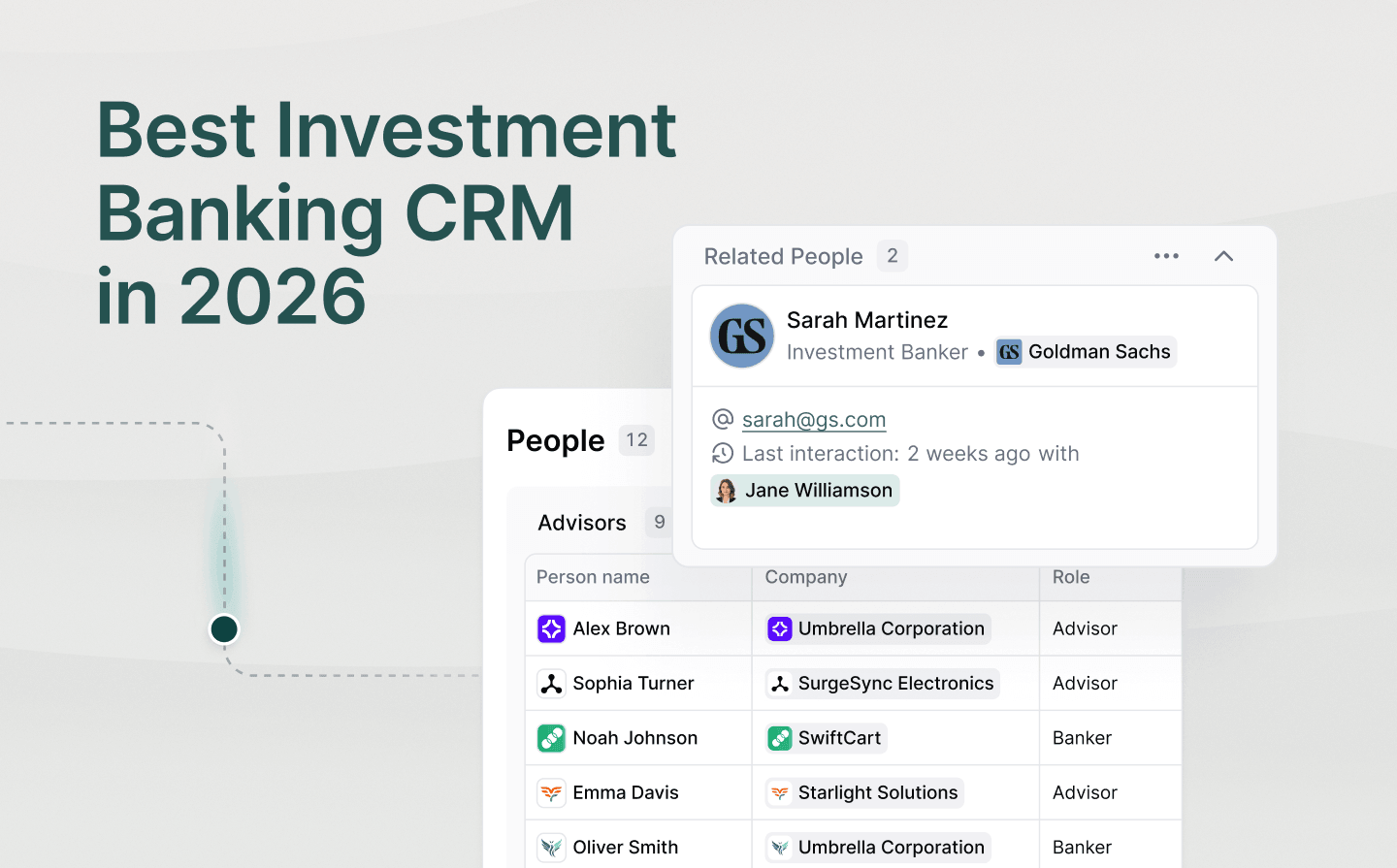
Investment banking teams primarily use DealCloud, Salesforce, or some combination of both alongside analyst-maintained spreadsheets; and in most cases, the CRM is only current as of whenever the last analyst was told to update it. Senior bankers with the most valuable relationship context are also the ones least likely to log a call. So the system that was supposed to be the firm's institutional memory becomes, in practice, a reporting obligation that nobody fully trusts.
The investment banking CRM market is now splitting into two categories: legacy enterprise platforms that require months of implementation and dedicated administration to function, and AI-native platforms that capture banker activity automatically and are productive from day one. For mid-market and boutique advisory firms, that split is the most important thing to understand before starting an evaluation.

This guide covers the leading CRM and deal management platforms for investment banking in 2026, with honest trade-offs for each, including ours. We will focus on the criteria we know, from hundreds of conversations we've had with advisory firms, actually determine adoption in banking environments: automated activity capture, mandate lifecycle management across advisory types, relationship intelligence, and time to productive use.
Investment banking runs on two parallel tracks that a generic sales CRM can't model. The first is coverage: the ongoing relationship with clients, targets, buyers, and intermediaries, tracked at the contact and firm level across years. The second is mandates: active engagements with their own counterparty lists, confidentiality requirements, deal stages, and timelines. A CRM built for a linear sales funnel handles neither well.
On the coverage side, the problem is institutional memory. When a banker who has covered a CEO for three years leaves, that coverage context — the deal history, the preferred communication cadence, what came up in the last three conversations — should stay with the firm. It almost never does, because it lives in the departing banker's inbox. Whoever picks up that coverage relationship starts from scratch, and the client notices.
On the mandate side, the problem is information barriers. A sell-side advisory mandate creates a buyer list that grows, narrows, and changes through the process. Bankers on that engagement cannot see deal data from a concurrent buy-side process involving a competing buyer. That deal-level permissioning is a basic operating requirement in investment banking. Most generic CRMs don't have a native model for it, which means firms either build expensive custom permissioning or rely on manual workarounds that create their own data integrity problems.
Buy-side and sell-side mandates also require different pipeline stages, different document flows, and different counterparty tracking structures. A capital markets mandate is different again. A CRM that forces all of those into a single generic deal stage doesn't reflect how any of them actually work, and bankers will ignore it in favor of the spreadsheets and email threads that do.
There's also a data model problem that compounds over time. Generic CRMs track contacts and companies. IB deal management requires tracking the relationships between them: which banker introduced which sponsor to which target company, who on the client side has approval authority for a given deal size, and which intermediary has sent the firm the most valuable deal flow over the past three years. That relational context is what separates a contact database from a deal-sourcing tool.
For more on how private markets CRMs differ structurally from standard sales platforms, see our piece on private equity CRMs vs. standard CRMs.
The most important criterion is this: Will your senior bankers use it without being told to? A CRM that requires behavioral change from MDs will not get behavioral change from MDs. Everything else is secondary to it.
Based on the hundreds of advisory firm conversations we've had, the firms with the highest CRM adoption share one operating model: the system captures data on its own, so bankers don't have to think about logging. The firms with the lowest adoption share a different one: the system is theoretically comprehensive, but it depends on human discipline that busy dealmakers don't reliably apply.

Automated activity capture. The CRM should log emails and calendar events from Outlook or Google Workspace without any action from the banker. Platforms that don't automate this step will see adoption erode as soon as initial rollout energy fades. Bankers generating high-volume activity across coverage, origination, and execution will not manually log emails and meetings.
Mandate-level pipeline management. Buy-side, sell-side, and capital markets mandates each need configurable pipeline stages with their own counterparty lists, document flows, and milestone tracking. Not a shared generic deal stage with custom fields grafted on.
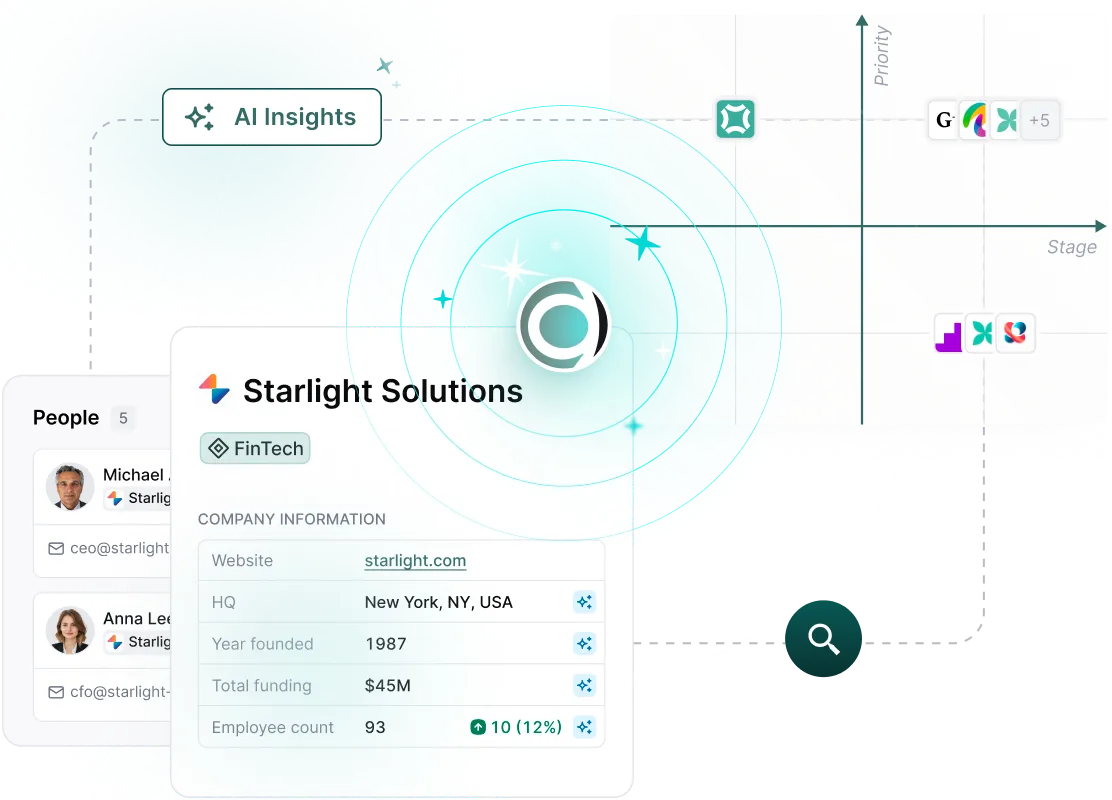
Coverage and relationship intelligence. Who at the firm has the strongest relationship with a given CEO, CFO, or sponsor partner? When was the last meaningful touchpoint? Which relationships have gone quiet? These answers should be visible without anyone having to manually update a contact record.
Deal-level confidentiality controls. Granular permissions that enforce information barriers between mandates. This is not a configuration task to handle post-deployment; it's a requirement to validate during evaluation.
Email and calendar integration. Bankers spend their day in Outlook or Gmail. A CRM that requires them to open a browser tab to log something will not get used. The integration should surface deal context and relationship history inside the inbox, not just sync contacts.
Time to productive use. The first 60 to 90 days after deployment are when adoption either takes hold or doesn't. A platform that requires months of configuration before the deal team sees value will lose that window. Purpose-built platforms with IB-specific defaults can be productive in weeks; enterprise platforms customized from scratch often can't.
Meridian is built for private markets deal teams, including investment banking advisory. For IB teams specifically, it covers the three workflows that matter most: automated activity capture from Outlook and Google Workspace (Gmail and Google Calendar), configurable pipeline management across mandate types, and relationship intelligence that surfaces organization-wide connection strength without requiring anyone to manually maintain a contact record.
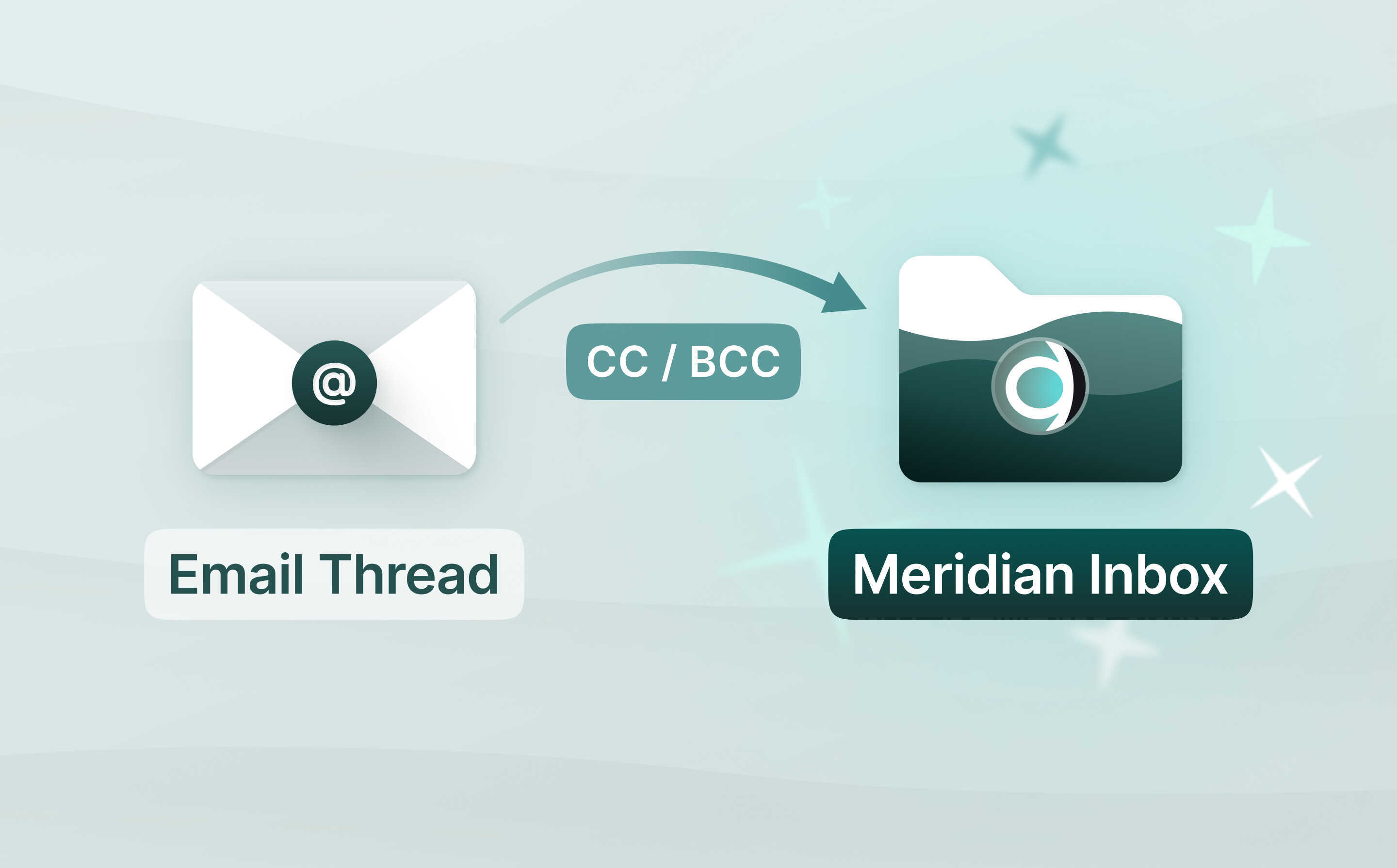
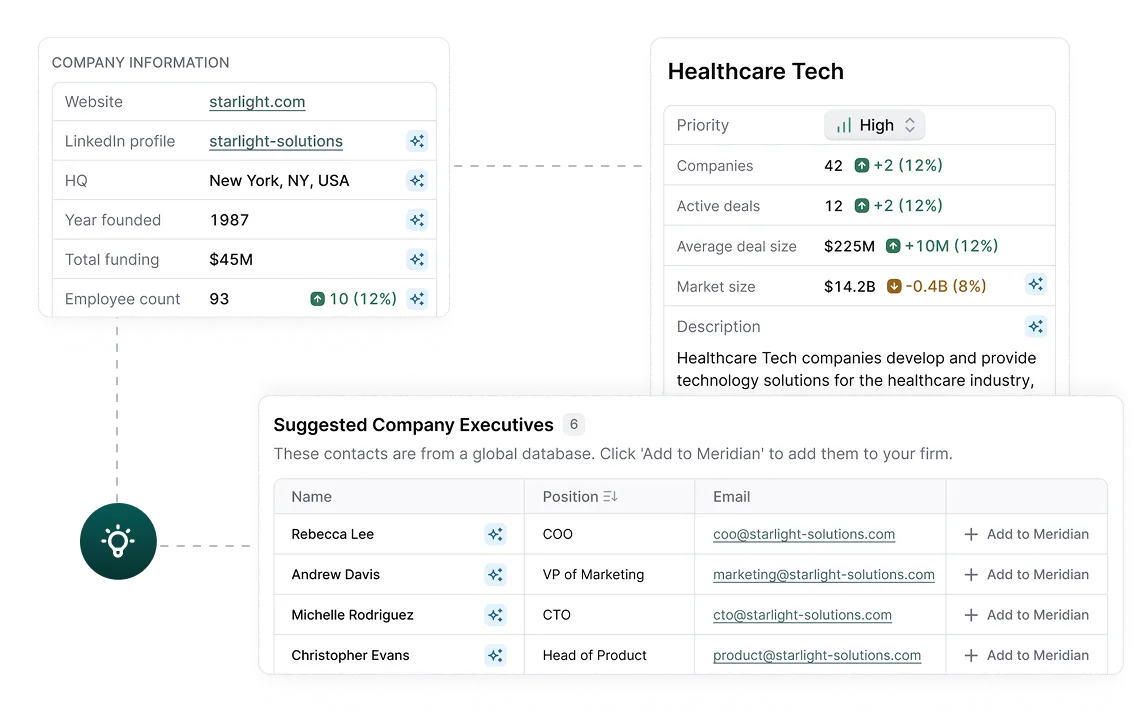
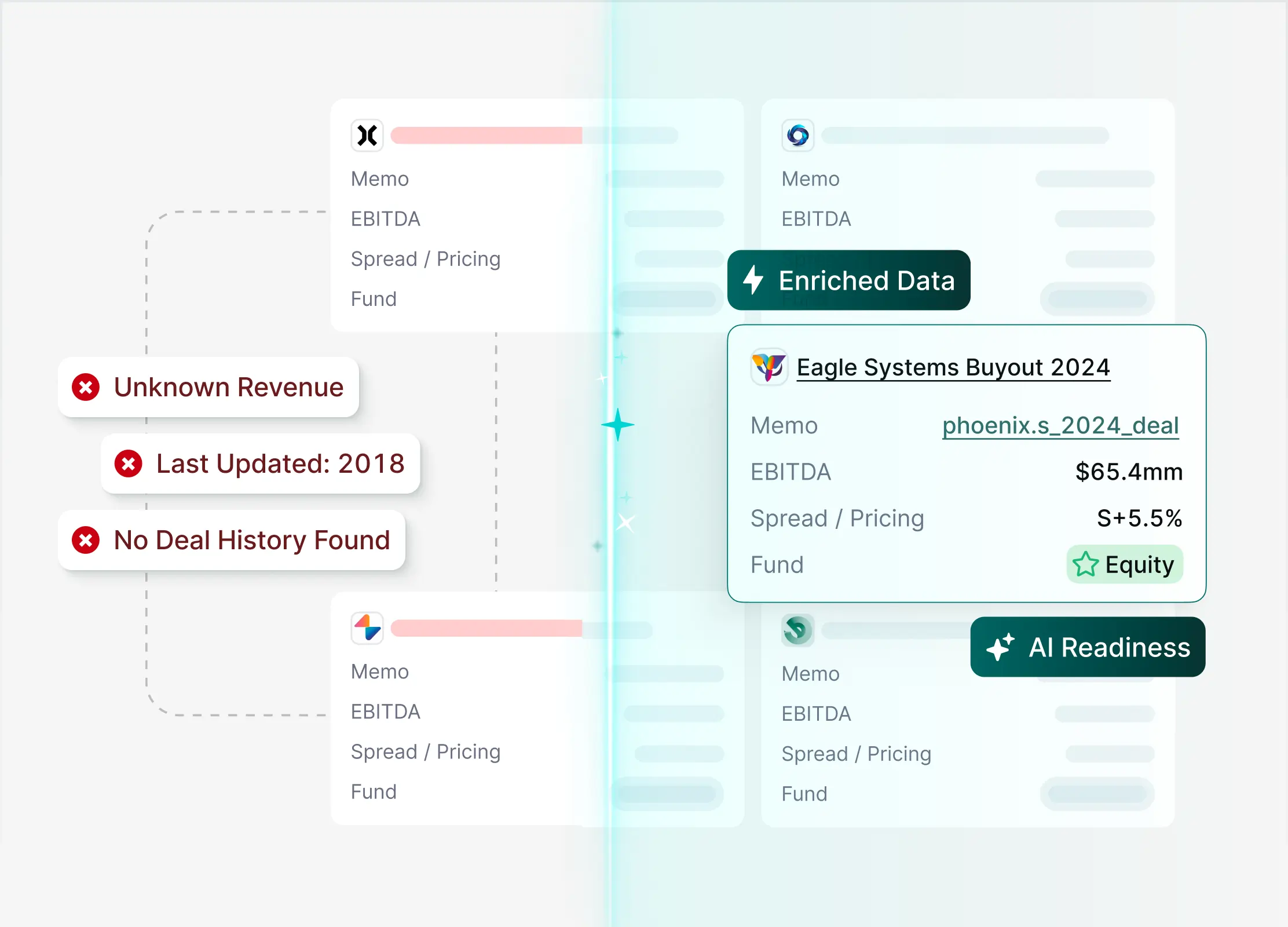
AI is built into Meridian's architecture at every layer, not added as a chatbot on top of a traditional database. Scout AI captures emails and calendar events automatically, enriches company and contact profiles from a database of more than 26 million companies, and continuously updates records based on live data signals. A banker returning from a week of meetings arrives back at their desk with a current CRM.
Meridian is more than a CRM; it’s a system of record that allows you to connect your data to any AI you use. Explore Meridian MCP here.
Deal flow management supports separate pipeline configurations for buy-side, sell-side, and capital markets workflows, so each mandate type tracks through stages that reflect how that advisory process actually moves. Deal sourcing extends that with proactive market mapping, surfacing targets that fit a firm's coverage mandate rather than waiting for inbound flow.
For IB teams, the practical result is a CRM that stays current without depending on banker discipline to maintain it.
Meridian is newer to the IB market than DealCloud. It's strongest for mid-market and boutique advisory firms that want sophisticated functionality without a multi-month implementation. Very large banks with deep enterprise system integrations may find DealCloud a better fit for their environment.
See the full investment banking CRM capabilities on Meridian's solution page for more detail on how Meridian compares to DealCloud.
Meridian was built by and for PE professionals, providing tools that keep your firm strategic, efficient, and ahead of the game.
DealCloud is the most widely deployed CRM at large investment banks and bulge-bracket institutions. Its position comes from genuine depth: highly configurable workflows, compliance-grade infrastructure with ethical walls between deal teams, and a broad integration ecosystem across financial data providers including PitchBook, FactSet, and Preqin. It handles investment committee workflows, LP management, and structured reporting requirements that enterprise-scale firms need.
The trade-offs are implementation and AI-connectivity. DealCloud deployments require heavy configuration before the platform reflects a specific firm's workflows, typically involving professional services support. For firms with dedicated CRM administrators and governance requirements that justify the complexity, that investment is defensible. For mid-market advisory teams that need to be productive and AI-connected in weeks, it's a significant commitment that often delays the adoption window past the point where momentum is easiest to build.
DealCloud's data maintenance also relies more on structured manual entry than newer AI-native platforms. Teams that need bankers to actively update the system will need to invest in change management to make that work. Where DealCloud excels is in environments with structured investment governance, large LP bases, and complex compliance requirements, where depth of configurability and institutional track record outweigh deployment speed.
For mid-market IB firms that want DealCloud's configurability without the full enterprise deployment, implementation partners can shorten the timeline, though meaningful configuration work and a change management process are still required before the deal team is productive. Firms in that position should model that total path against purpose-built alternatives before committing.
Affinity is built around automated relationship mapping. It captures firmwide email, meeting, and calendar activity and builds a relationship graph that surfaces connection strength, communication history, and warm introduction paths across the entire team's network. For IB teams where origination and network leverage are the dominant CRM use cases, that depth is a genuine advantage over platforms that ask bankers to maintain those relationships manually.
Affinity's approach is relationship-first, which means pipeline management and mandate lifecycle tracking are built around that relationship layer rather than the other way around. Teams that need heavy sell-side process tracking or structured counterparty management across multiple concurrent mandates may find the fit varies depending on the specific workflow.
Affinity works best for advisory teams where the CRM's primary job is origination and network leverage: knowing who at the firm knows whom, staying connected with the right counterparties, and surfacing warm paths to targets before a process goes live. For teams that also need structured mandate management across concurrent buy-side and sell-side engagements, evaluating how the pipeline and workflow depth hold up alongside the relationship intelligence is worth doing directly before committing.
4Degrees is built for deal-driven financial services with automated Outlook and Gmail capture, configurable deal-stage tracking, and third-party data enrichment. Implementation is faster than enterprise-tier platforms, which suits smaller advisory shops that need to be productive quickly. The platform's strength is relationship intelligence and deal origination tracking. Firms that need heavy mandate lifecycle management, complex compliance infrastructure, or enterprise-scale governance should evaluate it against those requirements directly.
4Degrees also integrates with PitchBook for enriched company and contact data, which is useful for IB teams that need current executive contact information and deal history on targets without maintaining a separate data subscription. (Meridian takes a different approach to this, bundling company data directly inside the CRM so enrichment happens automatically rather than requiring a manual lookup.)
Salesforce Financial Services Cloud gives investment banks a financial services data model on top of the broader Salesforce platform. For firms already committed to the Salesforce ecosystem with internal administrators and existing AppExchange integrations, FSC can be a practical foundation. The data model, reporting tools, and ecosystem breadth are genuine strengths.
The consistent challenge is IB-specific configuration. FSC requires meaningful customization to reflect coverage model tracking, mandate-level permissioning, and the non-linear deal cycles of advisory workflows. Firms that go this route should plan for multi-month deployments and ongoing administration overhead.
One practical advantage FSC has over most alternatives is ecosystem breadth. If a firm is running Salesforce for marketing, sales, investor relations, and other functions alongside its deal CRM, consolidating on FSC reduces integration complexity and gives leadership a unified reporting view across functions. For firms where that multi-function consolidation is a priority, the implementation investment can be worth modeling against the alternative of running multiple best-of-breed platforms in parallel.
Dialllog takes a mandate-based approach built specifically for M&A advisory, with pipeline stages and contact structures designed around advisory workflows rather than generic deal tracking. It's worth evaluating for boutique shops; the trade-off is a narrower ecosystem and less breadth in firmwide relationship intelligence compared to larger platforms.
Rings.ai positions itself as a relationship intelligence layer for IB teams, with real-time company profiles, network mapping, and activity enrichment. Gitnux's IB CRM software roundup and ZipDo's investment banking CRM rankings offer broader category context, though both skew toward larger name-brand platforms.
Carta entered the private markets CRM space in March 2026 when it acquired ListAlpha and launched Carta CRM, connecting deal CRM and relationship intelligence with its existing fund administration platform. For firms already using Carta for cap table management and fund admin, the integration is worth evaluating. The deal CRM is new, and how deeply the components connect will become clearer over the next 12 months.
For context on how IB and PE CRM requirements overlap, our best private equity CRM tools guide covers the PE side of the market in detail.
Getting senior bankers to use a new CRM is harder than selecting one. Managing directors who have managed client relationships through Outlook and personal judgment for a decade will not change their behavior because a vendor demo was impressive. They change behavior when the tool saves them time on day one and doesn't ask them to work differently.
The platforms that stick in banking environments share one characteristic: they work from within the daily workflow rather than competing with it. This means automatic email and calendar capture, relationship context surfaced in the inbox before a call, and meeting notes logged without the banker opening a separate application. When the CRM adapts to how bankers work rather than asking bankers to adapt to the CRM, adoption follows.
Data migration is where deployments often stall. Firms that launch with clean, enriched data in the new system from day one see faster adoption than firms that migrate raw records and expect the team to improve them over time. That 60-to-90-day window is when the habit forms or doesn't. A platform requiring months of configuration before the deal team can use it productively will lose that window.
Senior banker behavior sets the standard for everyone else. When group heads and MDs use the CRM as part of coverage reviews and pipeline meetings, associates and analysts follow. The firms that see the fastest adoption treat CRM rollout as a leadership initiative, not an IT project.
One detail that gets underweighted is the migration itself. Firms that move from an existing CRM or Excel trackers with clean, enriched data already in place enter the new system with something bankers will trust. Firms that migrate raw records and plan to clean them later will usually find that later never comes.
Build in this evaluation step: Ask each platform vendor to walk through a specific scenario end-to-end before signing. A sell-side process from initial outreach through first-round bids, or a coverage model showing relationship ownership across a client list. Platforms that struggle to demonstrate those workflows in a demo will struggle more when the team is mid-mandate under time pressure.
For guidance on structuring a CRM deployment, see Meridian's CRM implementation resources.
Most IB CRM deployments fail for the same reason: the platform depends on bankers doing something they won't do. Automated activity capture and email-first workflow design are what make the difference between a system the firm trusts and one it routes around.
For mid-market and boutique advisory firms, Meridian is built for exactly that operating model: AI-native, productive from day one, with mandate lifecycle management and relationship intelligence designed for private markets deal teams.
Treat your CRM selection as an operations decision. The practical test is: Will your MDs open it the morning after a busy travel week, without being asked?
Discover how Meridian can streamline deal sourcing and enhance your decision-making

Meridian’s Scout AI agent surfaces and benchmarks new opportunities so you can find winning deals before the competition.
What is the best CRM for investment banking?
The right platform depends on firm size and workflow priorities. Mid-market and boutique advisory teams get the most value from purpose-built private capital CRMs like Meridian that automate activity capture and support mandate lifecycle management with fast deployment. Larger banks with dedicated CRM administrators tend to stay on DealCloud for its enterprise infrastructure integration. Origination-focused teams often prefer Affinity for depth of relationship intelligence.
How do investment banks manage deal flow and client coverage?
Most IB teams run two tracking layers simultaneously: ongoing coverage relationships at the contact and firm level, and active mandates at the deal level with their own pipeline stages, counterparty lists, and information barriers. Purpose-built CRMs model both and enforce deal-level permissions that prevent data from crossing between mandates. Generic CRMs require significant customization to replicate this, which increases implementation time and administration overhead.
What is the difference between DealCloud and other IB CRMs?
DealCloud is the most widely deployed CRM at large investment banks, with deep configurability, compliance-grade infrastructure, and a broad integration ecosystem. Its trade-off is implementation complexity and greater reliance on manual data entry than AI-native alternatives. Platforms like Meridian offer automated activity capture and faster time to value.
Do investment bankers need a different CRM than private equity firms?
The underlying technology can overlap, but the workflow requirements differ. PE firms primarily need deal sourcing, portfolio monitoring, and IC management. IB teams need coverage model tracking, multi-mandate pipeline management across advisory types, and deal-level confidentiality controls for information barriers between concurrent mandates. See our private equity CRM comparison for the PE perspective.

Table of Contents

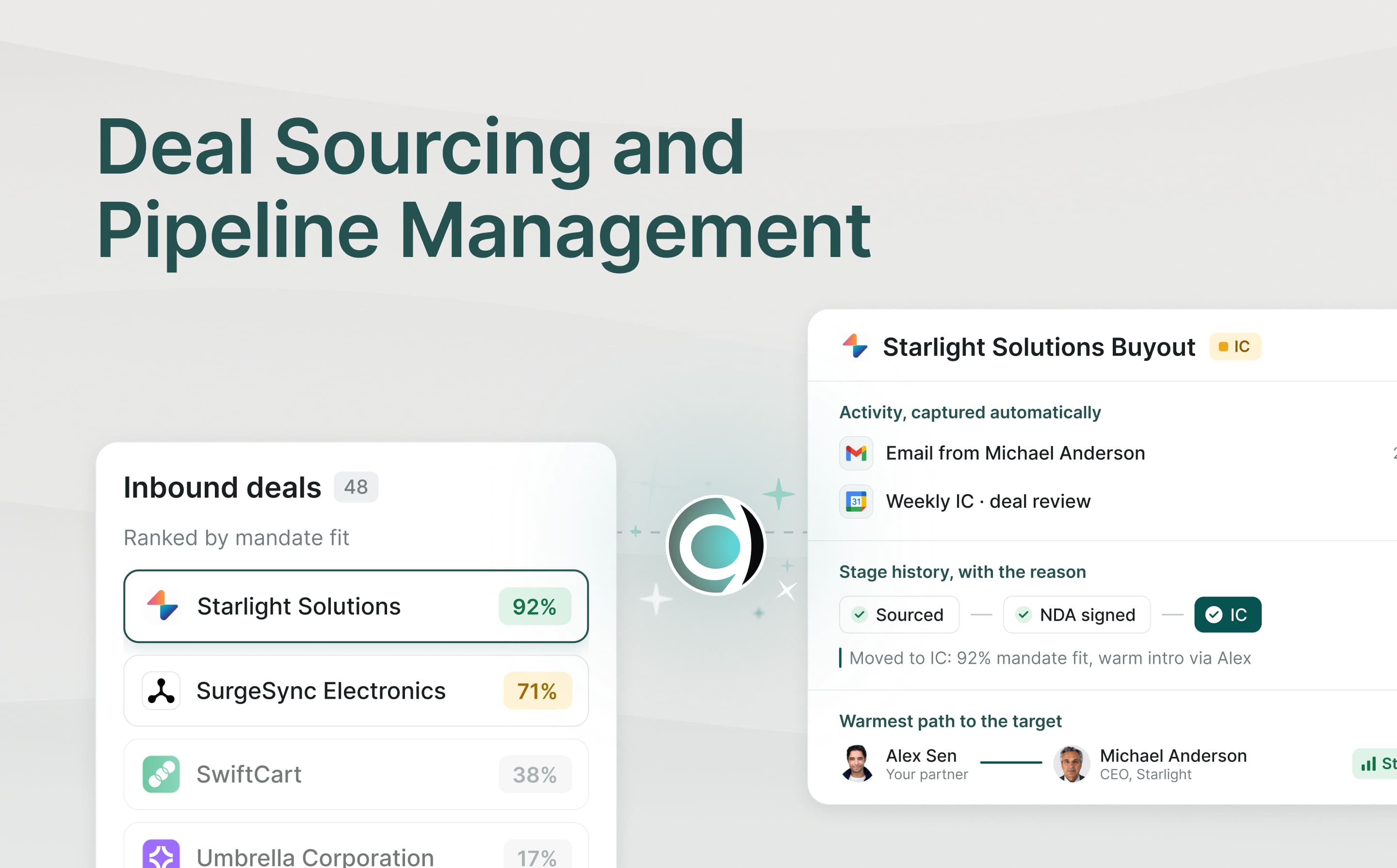
Why deal sourcing and pipeline management belong in one system, how proactive thematic sourcing wins proprietary deals, and how to stop pipeline leakage.