
Get the Meridian mobile app!
Your deal data travels with you.
Learn More

Meridian raises $7M seed round led by 645 Ventures.
Read More
Why CRM adoption fails at investment firms, how to migrate without losing momentum, and the metrics that tell you if it worked.
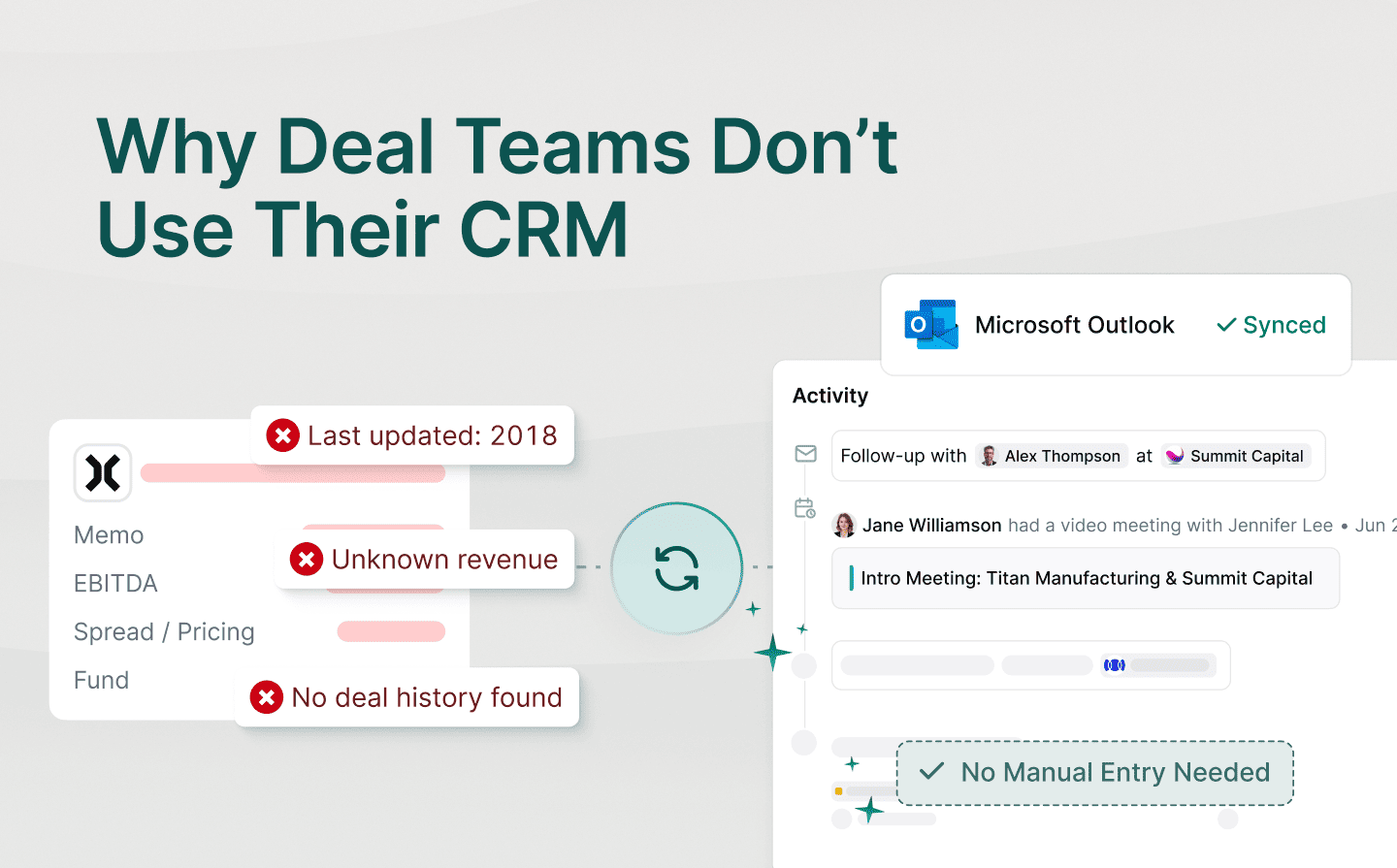
Deal teams resist using their CRM because most CRMs require manual data entry — and let’s be honest, senior professionals will not do it as a daily habit. The partner who emails a target CEO three times but never logs a single contact is not being careless. The associate who keeps a shadow Excel tracker because the CRM data is two weeks stale is being rational. A six-figure platform that produces a recurring maintenance line and an empty database is the normal outcome, not the exception, and it happens because the system asks for effort before it delivers any value.
The scale of the problem is well documented. Industry research puts the failure rate of CRMs at roughly 55%, with poor user adoption named as the leading cause more often than any technical shortcoming. At investment firms, where the people holding the most valuable relationship context are also the least willing to log a call, the rate runs higher still.
Firms that reach high adoption share one common trait: They choose a platform that captures data automatically. When the CRM populates itself from email, calendar, and external sources, the question changes from how to get people to log activity to how to get the most from the activity already captured. That single design choice is what separates the systems deal teams live in from the ones they route around.
This guide covers why CRM adoption fails at investment firms, what successful implementations have in common, how to evaluate platforms through the lens of adoption probability, how to run a migration without losing data or momentum, and how to measure whether any of it worked.
Manual data entry is the single largest reason CRM deployments fail at investment firms. Deal professionals are not salespeople, and logging calls is not part of their job identity the way it is for a quota-carrying rep. Salesforce's own research finds that sellers spend 60% of their time on non-selling tasks, including manually entering notes into the CRM. At firms where professionals are paid to source and evaluate rather than maintain databases, that friction is even more acute.
The CRM was usually chosen for operations management, not for the deal team. Most platforms at investment firms are selected by the COO or operations group for reporting visibility, so the system is optimized for the Monday morning pipeline review rather than the associate's Tuesday afternoon. Those two use cases want different things from a platform, and the deal team feels the mismatch every day.
A CRM with no inbox integration competes with the inbox, the tool the team already uses. Investment professionals live in Outlook or Gmail, and a platform that requires switching to a separate application is asking them to leave the place where their actual work happens. Platforms that surface relationship context and deal status alongside an email, through a plugin in the inbox itself, remove the switching cost rather than adding to it.
Bad data starts a downward spiral that is hard to reverse. When the CRM has incomplete records, people stop trusting it; when they stop trusting it, they use it less; when they use it less, the data degrades further.
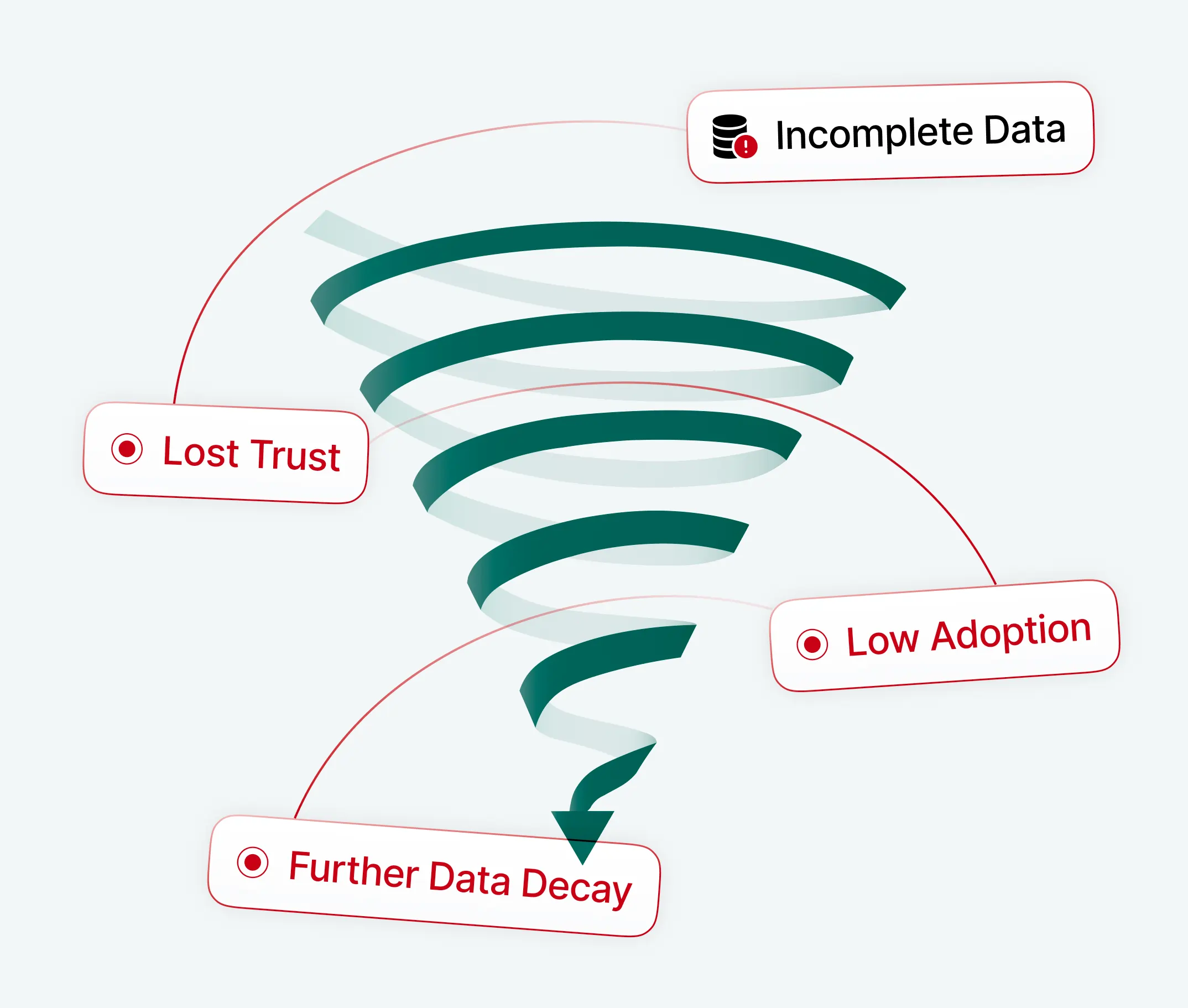
Breaking the loop takes a structural fix — either automated capture to stop the decay or a clean migration to a new platform — because more training and stronger mandates do not repair data nobody is maintaining.
For a deeper look at why sales-first platforms struggle in private markets, see our piece on private equity CRMs vs. standard CRMs.
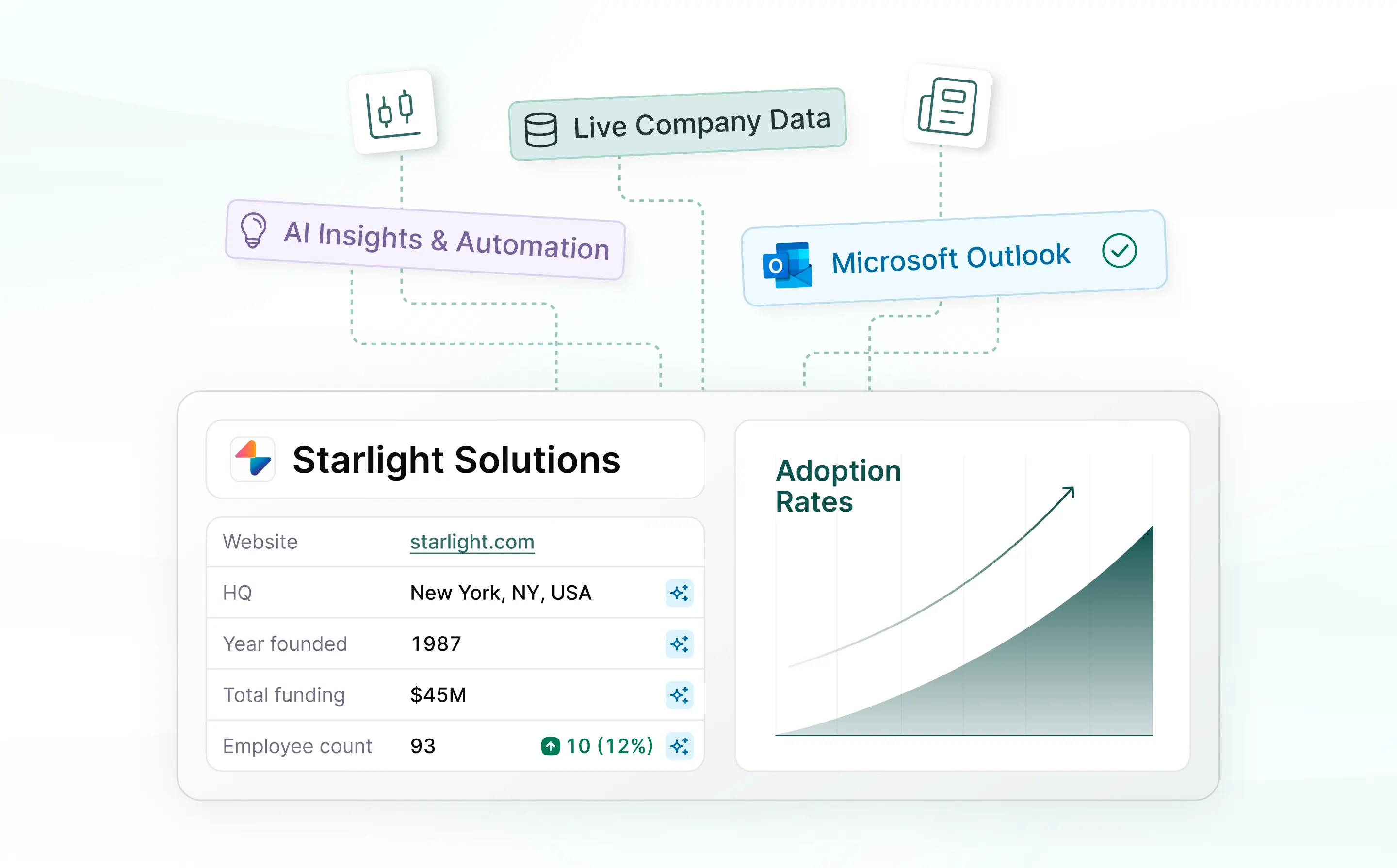
High-adoption implementations capture email and calendar data automatically. They build deal and relationship records without anyone logging anything by hand, which is why leading PE and VC firms running purpose-built CRMs with automated capture regularly reach adoption rates above 90%. Automated capture is the foundation everything else sits on, because no amount of process discipline substitutes for a system that maintains itself.
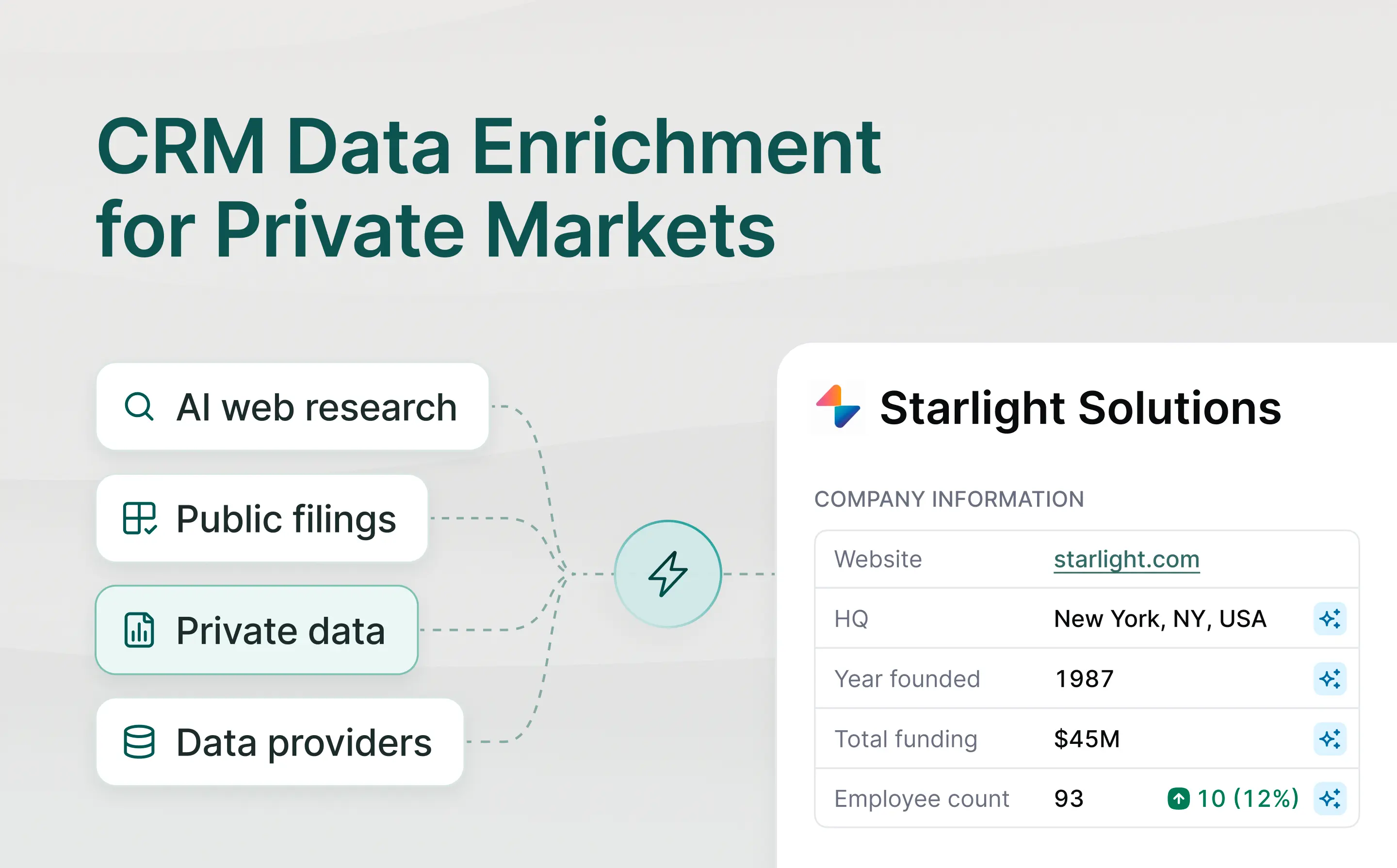
Successful rollouts show the team something useful before asking for anything. Enriched company profiles, an auto-populated pipeline, and relationship maps built from existing email history give the deal team an immediate reason to open the platform and trust what it says. When the first experience is a blank database requesting manual input, adoption never starts, because the system has taken effort and returned nothing.
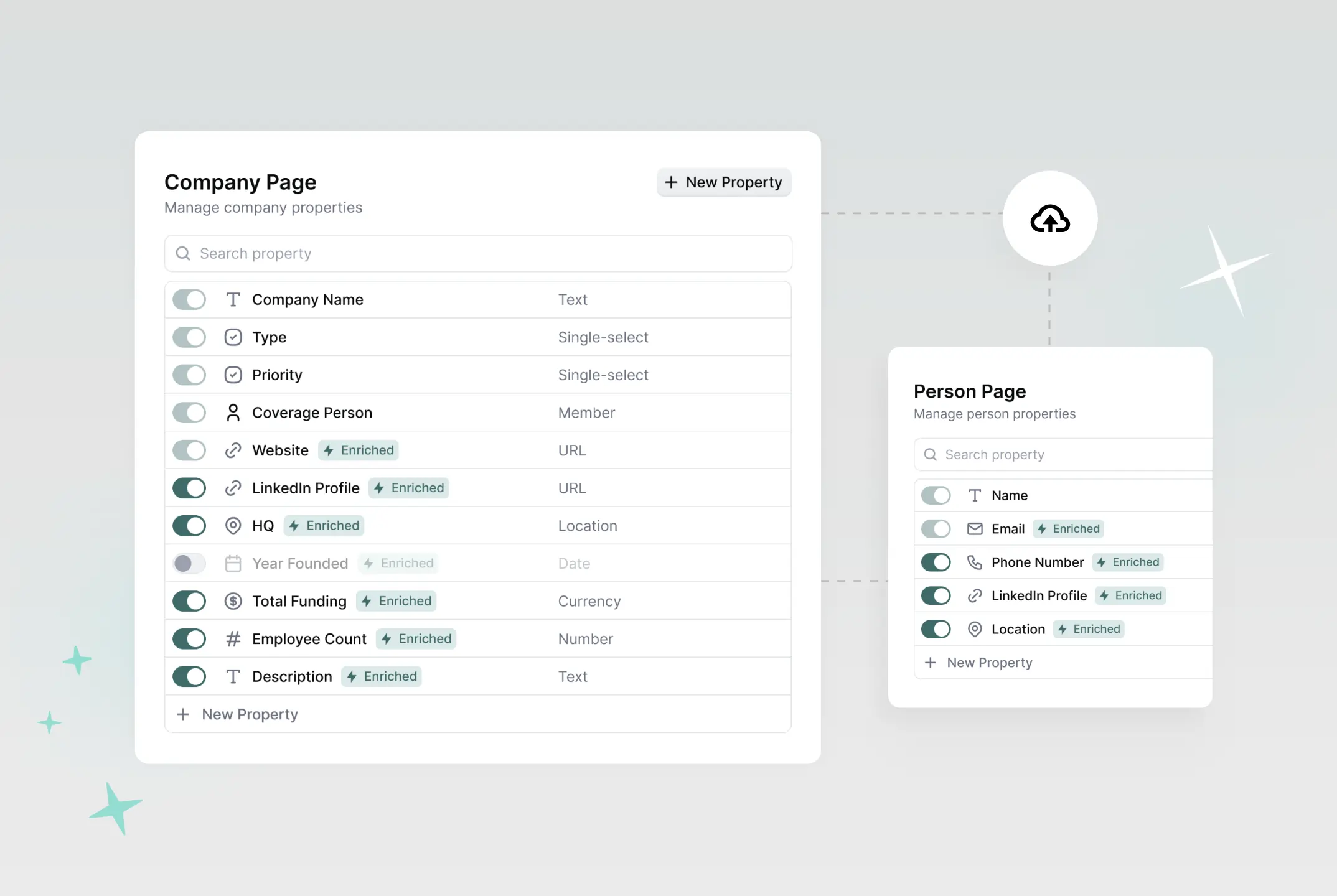
The best CRM implementations meet deal professionals inside the inbox. Platforms that surface relationship context, activity history, and deal status inside Outlook or Gmail see far higher daily engagement than platforms that demand a context switch. Daily engagement is what turns a CRM from a reporting obligation into the tool people actually reach for.
The most durable enforcement tactic in private equity is the Investment Committee gate. If a deal is not in the CRM, it does not get discussed at IC. This creates accountability without manual monitoring, because partners cannot present deals they have not logged, and associates cannot advance opportunities they have not documented. The CRM becomes the prerequisite for the firm's most important meeting, and adoption follows the incentive.
The test for every evaluation criterion is this: Will this feature increase or decrease the odds that the deal team uses the system in daily practice? Feature checklists measure what a platform can do; the adoption lens measures what the team will actually do with it. The four criteria below are the ones that move that number.
Meridian was built by and for PE professionals, providing tools that keep your firm strategic, efficient, and ahead of the game.
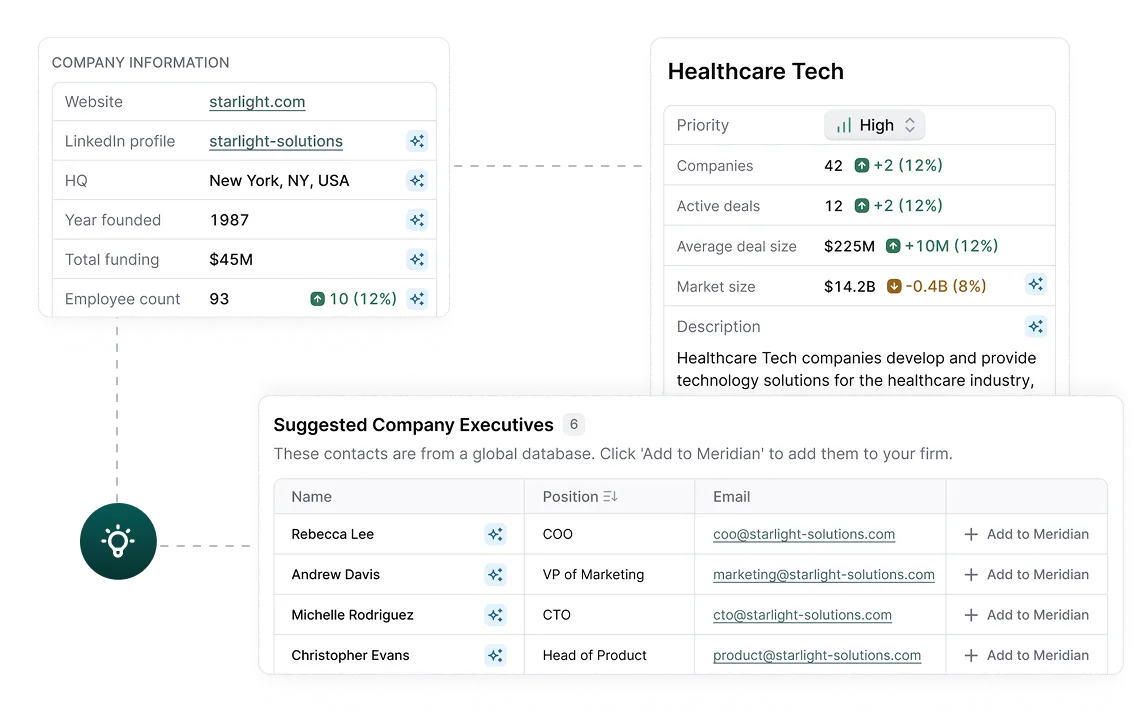
Scout AI captures email and calendar data automatically, populates company profiles from a database of more than 26 million companies plus AI web crawls, and our onboarding includes white-glove migration that cleans and enriches legacy CRM data on the way in. The trade-off is that we are newer to market than DealCloud, and a firm with an existing enterprise implementation faces a genuine switching cost that goes beyond the technology decision itself.
For more detail on how onboarding and migration work, see CRM implementation at Meridian.
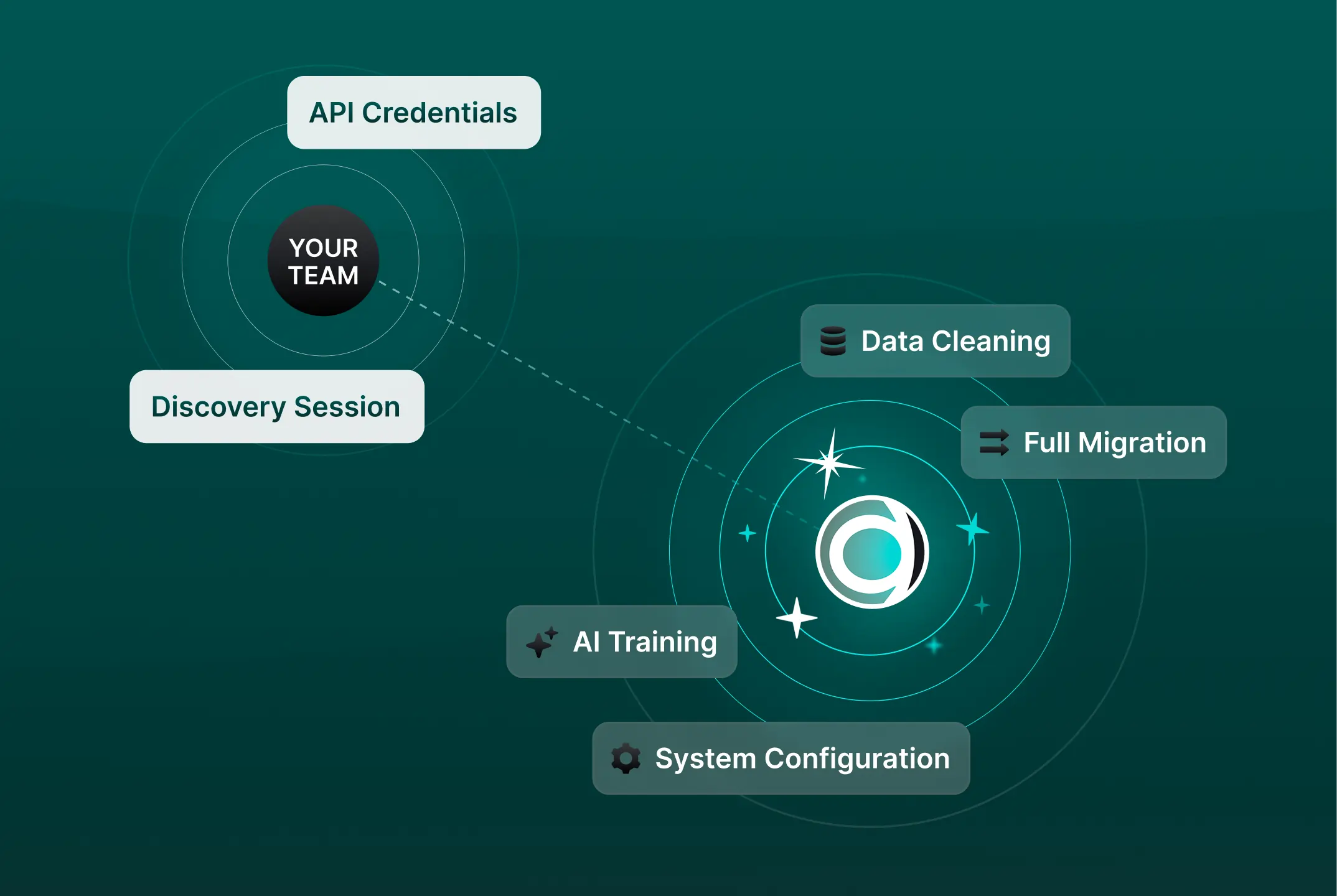
Migrating from one CRM to another, or off spreadsheets entirely, is a five-step process, and it is the part of the journey no competitor documents for private markets firms. The steps below are written as advice from having watched firms do this well and badly. The order matters more than any single step.
A migration succeeds or fails on the data audit, and it is the step most firms skip. Before moving a single record, map which fields are populated, which are empty, and which hold data in inconsistent formats. Many migrations fail because firms move dirty data into a new system, and the new system launches with the same problems as the old one. So decide up front what to migrate, what to clean first, and what to leave behind.
Field mapping and workflow design come before any data moves. Map existing fields to the new platform's structure, then identify the workflows the platform must support from day one. This includes deal stages, permission structures, and reporting views. Configure these before the launch date rather than after. Configuration done after go-live is configuration done while the team is already forming its first impression.
A parallel run of two to four weeks is a step most firms skip, but it can protect the migration. Running both systems at once surfaces gaps in the new configuration before the old system is switched off, and it gives the team time to trust the new data before they stop maintaining the old. The overlap feels redundant, which is exactly why it gets cut, and cutting it is where momentum is lost.
Workflow-specific training produces adoption, where feature walkthroughs produce only compliance. The most effective training covers five concrete tasks:
A comprehensive tour of every menu teaches people what the software has; teaching the five things they do daily teaches them to use it.
Adoption metrics defined before launch and measured at 30, 60, and 90 days are what turn a rollout into a managed process. If adoption is not above 80% at 60 days, investigate the specific workflows creating friction before attributing the problem to change management. The metrics that matter are covered in the next section, and they should be agreed on before go-live, not invented afterward.
Daily active users against licensed seats is the metric that most directly shows whether a platform has become a daily tool or a weekly obligation. Target 70% or more daily active users by 60 days post-launch for a purpose-built platform with automated capture. A high license count with low daily use is the clearest early signal that adoption is failing.
The ratio of automatic to manual data creation shows whether the platform is earning its place. Measure what share of contact records, activity logs, and deal updates the platform created through automated capture versus what people entered by hand. A high automatic ratio means the system is doing the work; a high manual ratio means you have bought a more expensive spreadsheet.
Pipeline reporting freshness reveals whether deals are actually being managed in the CRM. Track how old the most recent activity is on the average deal in the pipeline, because records untouched for more than two weeks signal that the real work is happening somewhere else. Stale pipelines are shadow trackers by another name.
Contact record completeness distinguishes a system of record from an address book. Measure the share of contacts with email, company affiliation, interaction history, and enrichment data populated, since low completeness means either the enrichment layer is not working or the platform is being used for names and numbers alone. Completeness is what makes the data worth querying.
A quarterly deal team satisfaction score catches what usage metrics miss. A short survey asking whether the CRM helps people do their job better surfaces problems that daily active user counts hide, because a professional who logs in every day but finds the experience frustrating is both a churn risk and a shadow-tracker risk. Qualitative signal is the leading indicator; usage is the lagging one.
The table below summarizes how these factors diverge between a manual-entry platform and an automated-capture one.
The private markets CRM market is consolidating, which matters when you are choosing a platform to migrate onto. Take Carta, for example. The company entered the CRM category in March 2026 through its acquisition of ListAlpha, folding a standalone deal-tracking tool into a broader fund administration suite. A migration decision made today should account for whether a given platform is an independent product with its own roadmap, or a feature inside someone else's, because that shapes how it will develop over the life of your contract.
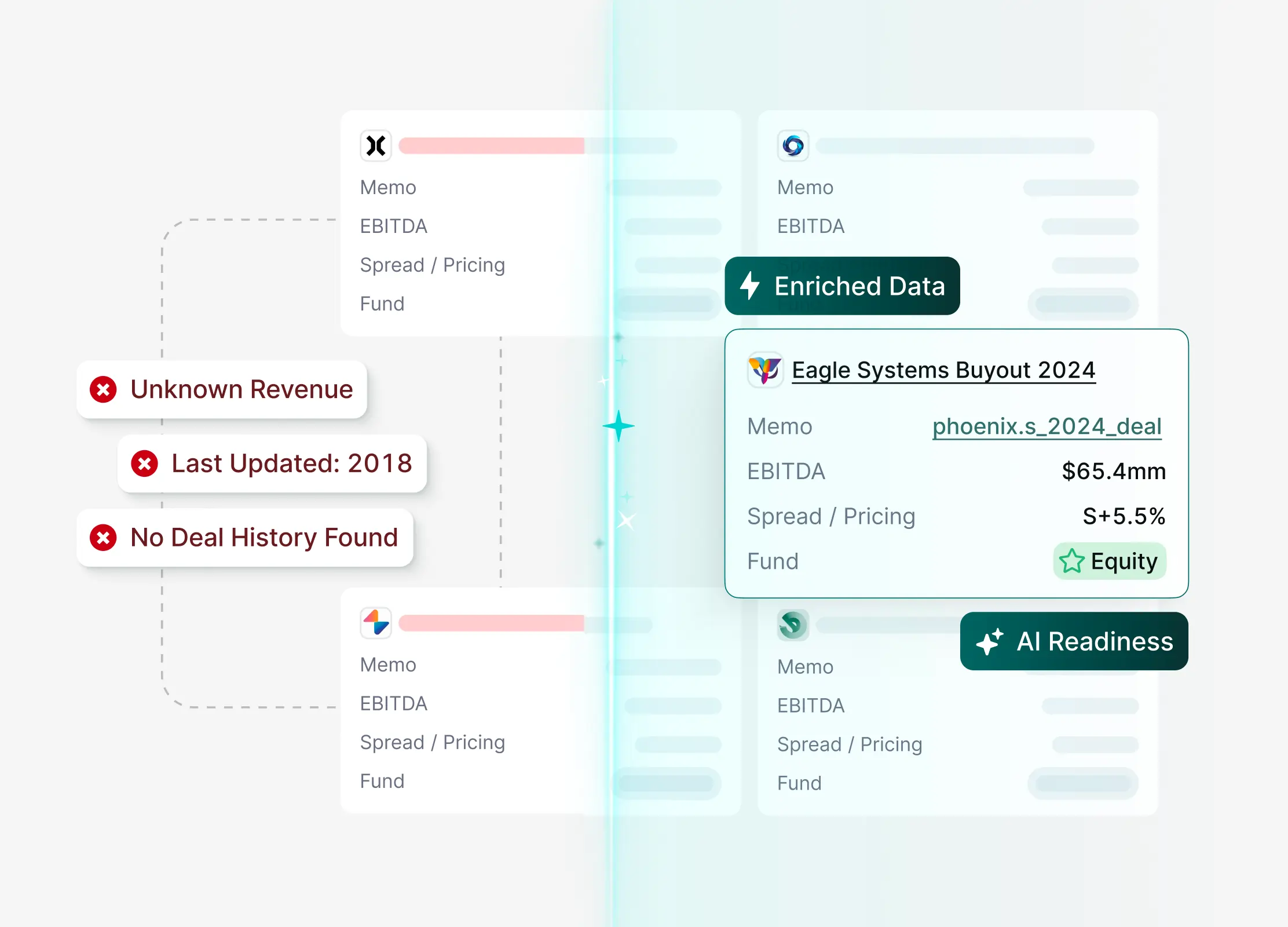
CRM adoption at an investment firm is not a training problem, and it will not yield to a stronger mandate or a better onboarding deck. Firms that choose a platform aligned with how deal teams actually work get adoption; firms that choose a platform aligned with how management wants to report get an empty database and a maintenance bill. The decision that determines the outcome is made during evaluation, not after go-live.
The one question worth answering before any other is whether the system captures data on its own or asks senior professionals to do it by hand. Everything else follows from that answer.
Discover how Meridian can streamline deal sourcing and enhance your decision-making

Find out how leading PE firms are using Meridian to enhance their deal workflows.
.webp)
Why do private equity firms struggle with CRM adoption?
Most CRMs require manual data entry, and senior deal professionals will not log calls and update records as a daily habit, so the system fills with gaps and people stop trusting it. The structural fix is automated data capture that builds records from email and calendar without anyone logging anything. Between 55% and 70% of CRM deployments fail to meet their objectives, with user adoption the primary cause.
How long does it take to implement a CRM at an investment firm?
AI-native platforms built for private markets typically onboard in four to eight weeks with white-glove migration included. Enterprise platforms with deep customization requirements can take three to six months and often need dedicated consulting throughout. The shorter timeline matters because the window for adoption is widest right after launch.
How do you migrate from Salesforce to a private markets CRM?
Follow five steps: Audit the existing data, map fields and design workflows, run both systems in parallel for two to four weeks, train on specific workflows rather than features, and measure adoption at 30, 60, and 90 days. The data audit is the step most firms skip and the one that most determines whether the migration succeeds.
What adoption rate should an investment firm expect from a CRM?
Leading PE and VC firms running purpose-built CRMs with automated data capture regularly reach adoption above 90%, while platforms that require manual entry typically land at 20% to 40% at investment firms. If adoption is not above 80% at 60 days, the cause is almost always product fit rather than change management.

Table of Contents