

Meridian MCP is live!
Connect your deal sourcing data to any AI tool.
Learn More
Meridian raises $7M seed round led by 645 Ventures.
Read More
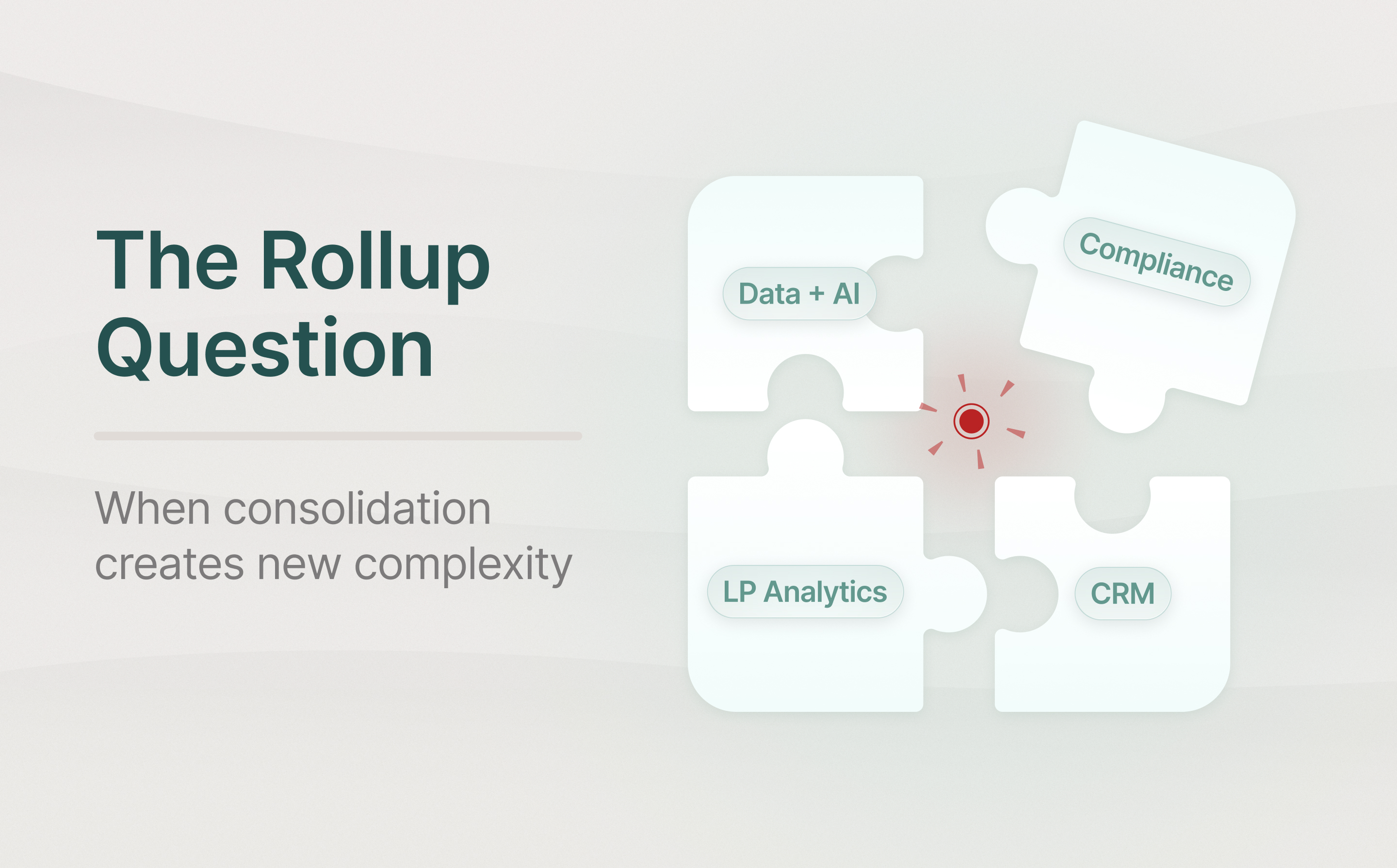
CRM vendors are rapidly consolidating through acquisition. Here's what that means for the firms buying from them.
A PE shop I recently spoke to signed with a CRM vendor last March. Six weeks into implementation, the vendor announced it had been acquired. The account rep went quiet for two weeks. The onboarding specialist they'd been working with left the company. Nobody could tell them whether the pricing they'd signed at would hold past the current contract term.
They finished the implementation eventually. But the firm's ops lead told me the acquisition cost them more time than the original vendor evaluation did.
This is happening across private markets software right now, and I’m raising awareness of it here because it's the next fragmentation problem firms will face.
Take Carta for example, which has spent the last year turning itself into an ERP for private capital through acquisition. It bought ListAlpha to get a CRM. It bought Accelex to get LP portfolio analytics. It bought Sirvatus to get loan administration for private credit funds. It bought Avantia to get legal and compliance. Carta had the accounting and fund administration layer already. Now, with these acquisitions they are buying the front office, deal by deal, module by module.
Intapp is running a similar playbook, but from the other direction, and with a legacy asset at the center of it. Intapp acquired DealCloud back in 2018, and DealCloud still owns the CRM seat at a lot of mid-market and mega-cap shops. But it's an aging platform, and firms using it aren't shy about saying so.
The complaints are consistent: implementation timelines measured in months, customization that requires professional services for anything non-standard, and a UX that feels built for compliance officers rather than deal professionals. Intapp has made ten acquisitions on top of that foundation since, most recently TermSheet, Transform Data International, and delphai. Where Carta started with back-office infrastructure and bought its way into the front office, Intapp started with a front-office product that's showing its age and is buying its way into everything adjacent to it.
Now that we have the history, here's the problem: Post-acquisition integration takes twelve to eighteen months, sometimes longer. The pitch a rollup vendor makes is “stop paying the integration tax yourself.” But for the better part of two years after any given acquisition, the vendor is the one doing that integration work internally, and the firm using the product is the one absorbing the disruption while it happens. Support contacts change. Product roadmaps get reprioritized around the newly acquired asset. Sometimes the acquired product gets sunset entirely, and firms who bought it six months earlier find themselves migrating again. This is what happened when Grata gobbled up Sourcescrub.
Fragmentation didn't disappear when these acquisitions happened. It moved up a layer, from the firm's stack to the vendor's cap table.
I'll say plainly where I sit on this, because Meridian competes directly with the companies running the acquisition playbook, and the difference isn't cosmetic. We didn't buy our way into CRM, or LP analytics, or deal sourcing. We built the platform natively, as one system, for how PE, VC, and IB teams actually work. That means there's no 18-month integration window, because there's nothing bolted on to integrate. When a firm asks how fast they can be fully operational, the honest answer doesn't depend on how recently we made an acquisition. It depends on how fast they want to move.
Whether you're evaluating a vendor that just made an acquisition, or one that just got acquired, ask these before you sign or renew:
Consolidation in this market isn't inherently good or bad. But it changes what you're buying. If you're evaluating a platform that has recently acquired or been acquired, you're not just buying a tool anymore; you're buying a bet on how fast a product gets integrated. Compare that to a platform that was never fragmented to begin with. Ask the roadmap questions before you sign, not after.
Discover how Meridian can streamline deal sourcing and enhance your decision-making


Table of Contents

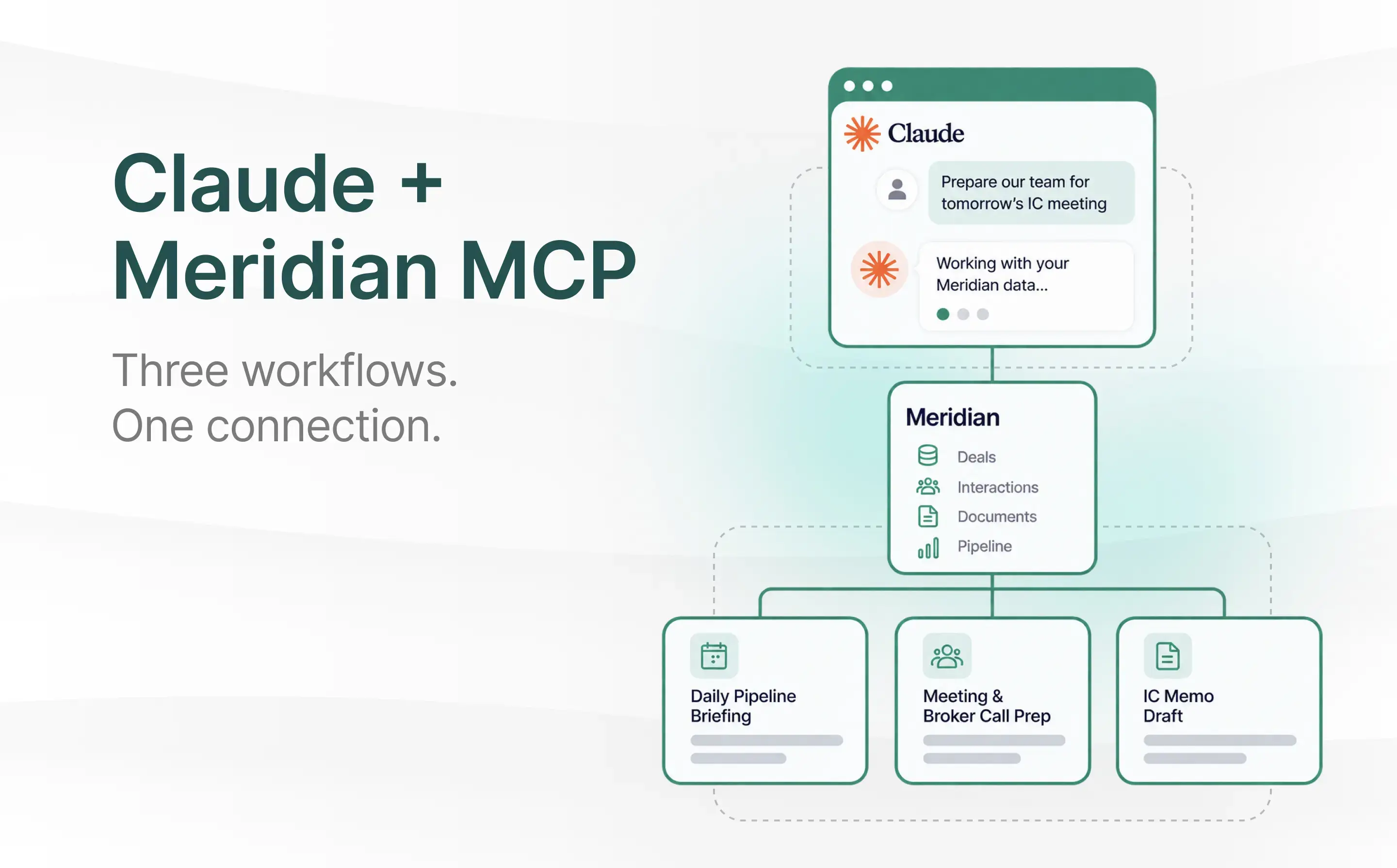
Learn how a private equity firm is using Claude with Meridian MCP in their real daily workflows.

.webp)