

Meridian MCP is live!
Connect your deal sourcing data to any AI tool.
Learn More
Meridian raises $7M seed round led by 645 Ventures.
Read More
How to tell that your firm's tech stack has degraded from deliberate to duct-taped, and how to fix it before the friction costs you revenue.
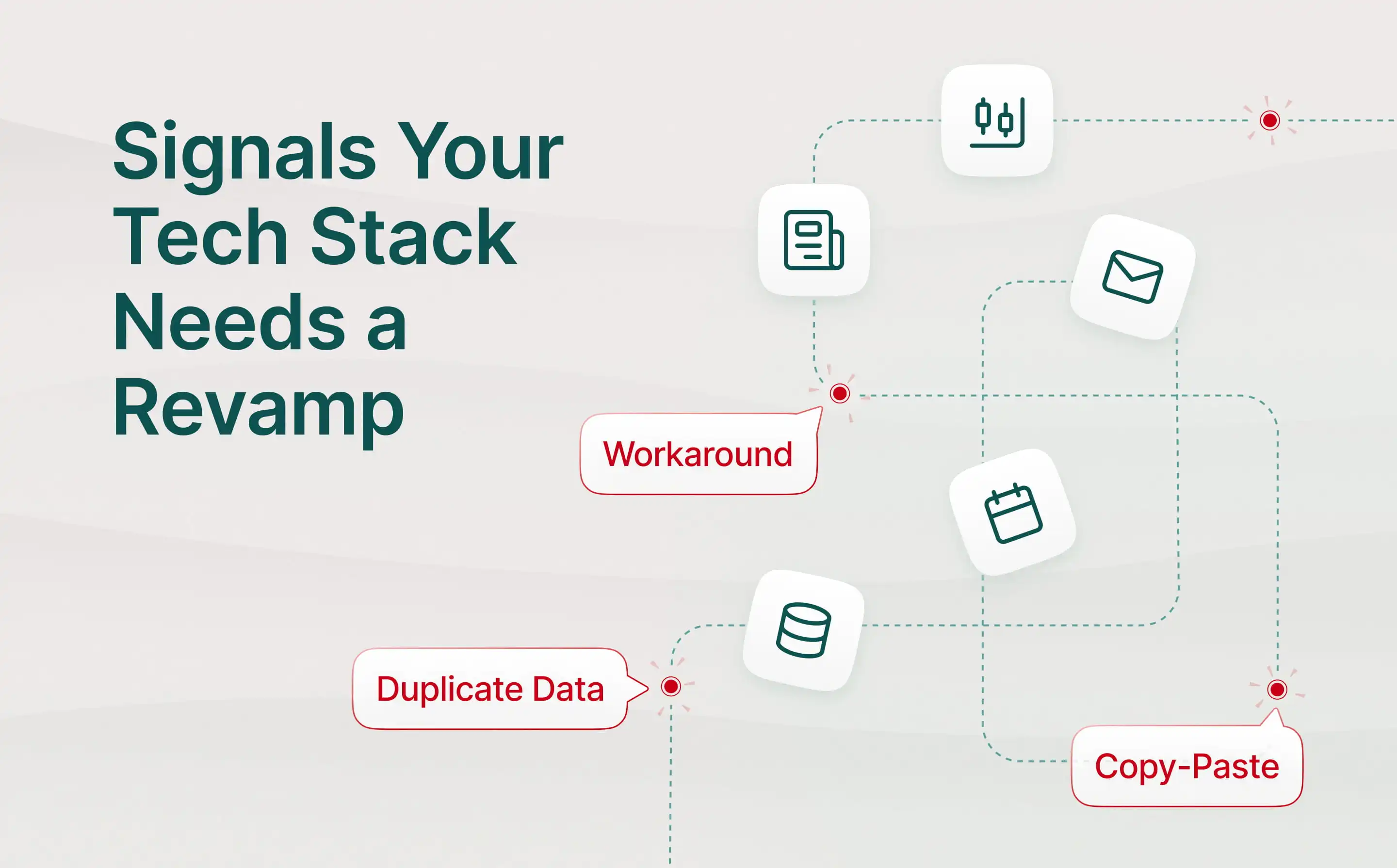
Every tech stack starts with good intentions. One tool for pipeline. One for communication. One for tracking deals. Clean, deliberate, purposeful.
You picked each tool for a reason. Then six months pass. And inevitably, a new hire brings their favorite app. Someone builds a workaround for a workflow the original tool never quite handled. A vendor pitches a free trial that turns into a line item nobody remembers approving. A spreadsheet gets created "just temporarily" and somehow becomes load-bearing infrastructure.
Before long, you're not running a stack, you're managing one.
I think about this a lot here at Meridian, where we're constantly evaluating our own tools. One of the best parts about a startup environment is the ability to move fast. To try something, adopt it, pivot off it, cut it. No bureaucracy, no six-month procurement cycles. But in a private markets investment firm, that same speed makes the tech stack messy if you're not paying attention.
Here's what I've found: The stacks that slow down teams don't usually fail dramatically. They degrade one workaround at a time.
These are the seven signals I watch for and how I recommend firms tackle them before they become issues.
You know the feeling. There's a specific app that makes you exhale before you click it. Slow, clunky, confusing, or just fundamentally misaligned with how you actually work.
That dread is product feedback.
Fix: Audit your team's actual usage data. If people aren't logging in, they're working around it. That's a signal to replace, not retrain.
This one's sneaky because the workaround usually works. At first. Then it becomes tribal knowledge. Then someone new joins and spends three weeks figuring out why the process looks nothing like what the tool was designed to do.
Fix: Map the actual workflow, not the intended one. Whatever the workaround is solving, that's your real requirement. Find a tool that handles it natively instead of forcing your team to paper over the gaps.
There's a version of onboarding where you explain the tool. Then there's the version where you explain the tool, and the shadow process that lives alongside it, and the exceptions, and the exceptions to the exceptions.
If your process lives in tribal knowledge rather than the tool itself, the tool isn't doing its job. The best platforms — especially ones built for specific verticals — encode the workflow. The learning curve is the job, not the software.
Fix: Look for platforms purpose-built around your specific workflow, not general-purpose tools you've duct-taped together.
Pull a login report right now. I'll wait.
If you have tools sitting at under 50% adoption after 90 days with no documented reason, cut them. A shelfware line item is more than wasted budget; it’s a signal that the tool never fit the job to begin with.
Fix: No exceptions. Cut any software under 50% adoption at 90 days unless there's a clear, documented reason to keep it.
This one compounds. Someone pulls a number from the CRM. Someone else pulls it from the spreadsheet. A third person has a different figure in their email. Now you're spending 20 minutes in a meeting debating which version is real instead of making a decision.
Fix: Pick a system of record like Meridian and enforce it. Everything else should feed into it, not compete with it. For relationship-driven teams, this almost always means the CRM has to be the hub — not a tool people remember to update every few weeks.
This is the copy-paste tax. It's invisible on any given day, but it compounds into hours per week across a team. Log the call here. Update the status there. Send the follow-up from a third place.
The best tools today are purpose-built for specific workflows. They eliminate the manual syncing that generic platforms leave behind. At Meridian, this is the exact problem we set out to solve. Investment teams shouldn't have to update a deal in their CRM, their pipeline tracker, and their inbox separately.
Fix: Look for platforms that consolidate. The copy-paste tax is real and it compounds.
I hear this one constantly. And I get it. It feels like reasonable sequencing. Get the tool first, then build the process around it.
But it rarely works that way. The right tool won't fix a broken process. What it will do is make a good process feel effortless. Start with the workflow. Get clear on how work actually needs to move. Then find the tool that fits. Not the other way around.
Fix: Start with the workflow. Then find what fits.
Every one of these signals represents time, attention, and energy your team is spending managing tools instead of doing the actual work. And friction rarely shows up as a crisis. It shows up as a slightly slower quarter, a slightly longer ramp, and a slightly higher turnover rate among the people who get tired of fighting their software every day.
The best operators I know treat their tech stack like a product. They're constantly shipping, cutting what isn't earning its place, and doubling down on what's working. They don't wait for a painful moment to do an audit; they build the habit of evaluation into how they run the business.
I truly believe every org should operate this way regardless of size or stage. The firms that stay sharp are the ones that stay honest about what's working.
Discover how Meridian can streamline deal sourcing and enhance your decision-making


Table of Contents


AI adoption has outpaced results in private markets. The four workflows that change deal-team output, and why the data layer matters more than the model.

.webp)