

Meridian MCP is live!
Connect your deal sourcing data to any AI tool.
Learn More
Meridian raises $7M seed round led by 645 Ventures.
Read More
Discover how the right CRM can automate research, enrichment, and workflows to help PE teams source faster and get ahead of high quality deals.
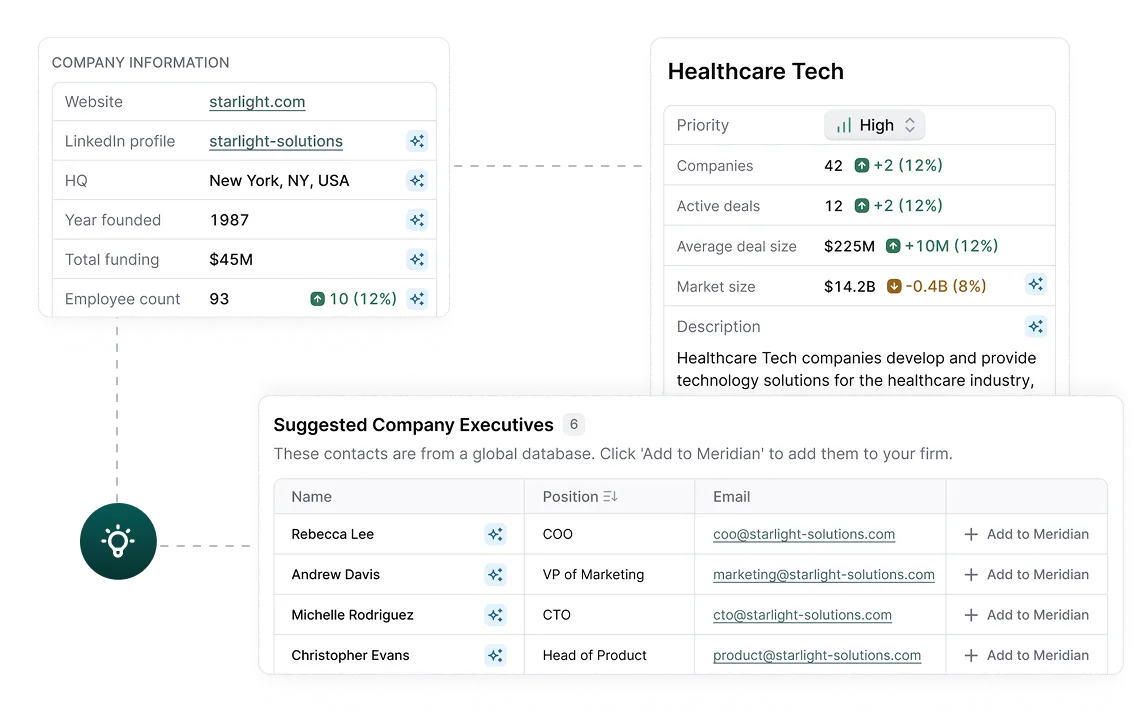
A private equity CRM with built-in automation features takes care of real-time updates and eliminates the need for manual data entry. Unlike traditional CRMs, which are built for sales and marketing teams, PE-specific solutions address PE firms’ most pressing automation needs.
Private equity teams deal with endless spreadsheets, scattered research, slow follow-ups, and fragmented communication. And tracking hundreds (or thousands) of companies across long deal cycles leaves little time for high-value work, like building relationships or evaluating opportunities
These inefficiencies can lead to decaying relationships, delayed decisions, and missed deals. But CRM automation can fix this.
This guide explores the core automation categories a PE CRM should offer and shows real examples of the benefits of these solutions.
In private equity, workflow automation CRM tools mark the difference between being reactive and proactive. These solutions give your team the bandwidth to make smarter investment decisions and help prevent you from missing opportunities.
In many private equity firms, junior team members spend a huge portion of their day on what’s essentially manual busywork, like:
It’s not uncommon for up to 60% of a sourcing team’s time to go into these repetitive, administrative tasks. And when firms rely on manual reminders in calendars or ad hoc systems to make sure follow-ups happen, this approach doesn’t scale.
One person can only manually cover so many companies, and coordinating across teams makes it even harder to track opportunities. Miss a small update on a company or forget to check in with a banker, and suddenly a potential deal slips through the cracks.
CRM automation tools change that dynamic, and tasks like list building, data entry, and follow-up reminders happen without any manual input.
A PE CRM also flags updates that actually matter, like acquisitions, leadership changes, or headcount shifts. That means you can track companies continuously as they grow and evolve, without creating any additional work for your team.
Automation frees up time for your deal team to do what it does best: build relationships with founders and bankers and find and assess opportunities.
Key takeaway: The impact of CRM automation compounds over time. Deal teams can cover more market territory, focus on high-priority companies, and schedule more meetings with founders who fit their mandate.
A CRM for private equity makes every stage of deal flow management faster and more accurate. Here’s what an automated CRM system can do for PE firms.
Manually tracking emails, meetings, and contacts across deals and banks can get messy fast. Automation features capture activity automatically and keep records accurate.
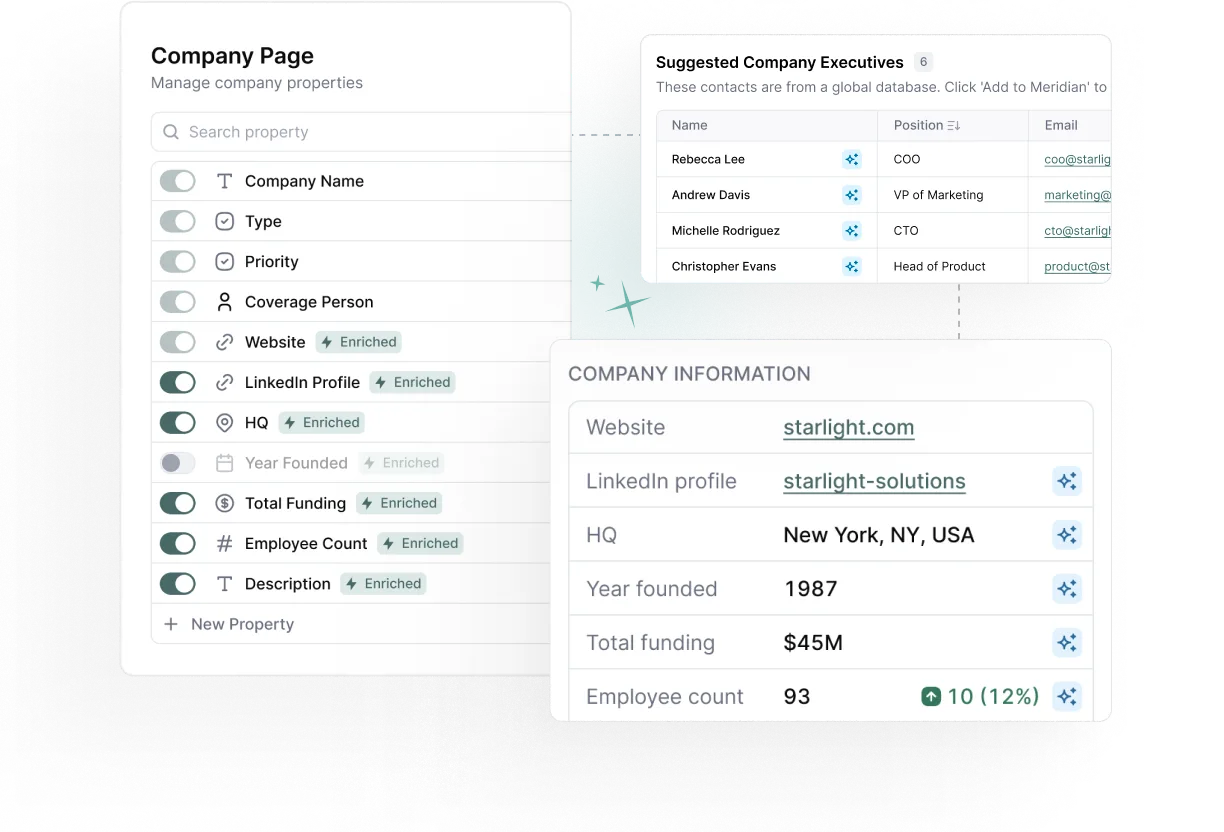
One of the most tedious parts of deal sourcing is manually logging every email, meeting, and new contact.
In a typical private equity workflow, team members could be spending hours tagging messages and copying information from Outlook or Google Workspace into a CRM. Mistakes happen, and important context can be missed. Or worse, people use their own spreadsheets and bypass your firm’s company-wide system.
A CRM with automation handles all of this for you. Emails and meetings are synced directly from tools like Outlook and Gmail, contacts are updated in real time, and everything links to the correct CRM object.
This means PE teams get a complete, accurate record without the manual work, and junior staff can focus on outreach, analysis, and building relationships.
Keeping every piece of deal-related activity organized is a significant challenge for private equity firms. Emails, calls, meetings, and documents all need to be associated with the right company or opportunity, which is a task that’s easy to get wrong when done manually.
Inaccurately tagged activity can lead to missed follow-ups, incomplete deal history, and weaker investment cases.
A CRM automatically captures and tags all activity to the correct deals and companies. Every interaction, from a quick call with a founder to a CIM by an intermediary, is accurately linked without any manual input.
Keeping track of every interaction with intermediaries manually is a major burden on PE teams’ time, especially when a firm is covering dozens of banks across multiple sectors.
Missed follow-ups or forgotten conversations can mean losing access to high-priority opportunities, sometimes without even realizing it.
Private equity CRM automation features take the strain off your team. AI-powered deal flow management monitors every interaction with intermediaries and automatically links communications to the right bank and opportunity.
For example, if a deal is announced in a press release and a bank hasn’t shared it with your firm, the system flags it, which allows you to follow up with the intermediary.
This level of tracking helps ensure you never miss an auction-led deal or lose sight of key relationships. And by automatically capturing and flagging who delivers the most promising opportunities, teams can prioritize their outreach with high-value bankers.
Tracking every LP meeting, follow-up, and capital commitment manually is time-consuming and prone to mistakes. Missing a detail can create friction with investors and slow down fundraising efforts.
A PE CRM captures all fundraising activity automatically. These activities are linked to the right LP or fund, so your entire team has visibility into interactions without duplicating work.
The tool can even capture small details, like personal anecdotes or conversation highlights, to help partners show up to conversations with better context so they can build stronger rapport.
Maintaining clean, accurate data is another challenge for private equity teams. Contact lists, company records, and historical deal information can quickly become outdated or duplicated. And incomplete or inaccurate information leaves teams at risk of making misinformed decisions.
Automated CRM tools handle data cleansing automatically. As new contacts and company data are added, the system deduplicates entries, corrects errors, and enriches records with missing information.
This ensures a reliable foundation for deal sourcing, outreach, and reporting. With accurate, up-to-date records, teams can trust that every interaction is linked to the right person or company.
Parsing CIMs and creating tear sheets takes hours, and manual entry slows deal teams down. Automation in relationship management software can extract key metrics and summarize information instantly.
Teams often have to manually enter company financials, employee counts, revenue figures, or other key metrics into the CRM. This leaves less time for deal sourcing, relationship building, and portfolio management.
But thanks to AI-powered data extraction, a PE CRM can scan documents, emails, and notes to automatically pull structured fields and populate the correct company or deal record.
Metrics like revenue, employee count, ownership structure, or fundraising history are captured accurately and instantly.
This ensures all the relevant data is consistently recorded, saving deal teams significant time. Associates and VPs can focus on evaluating opportunities and prepping for IC, while knowing that deal data is complete and ready to use.
The first pass of a deal often starts with reviewing a CIM, but parsing these detailed documents can take hours. Deal teams need to extract financials, market data, and strategic insights before deciding whether a company fits the firm’s investment thesis, all while keeping track of dozens of other deals.
CRM automation software significantly speeds up this process. Using AI, it instantly summarizes CIMs, highlighting key takeaways such as revenue, growth rates, and market positions. This gives teams a clear, organized snapshot at a glance.
In the past, teams had to compile company summaries, financial metrics, and deal highlights when creating tear sheets, which could take hours. Associates pull data from multiple sources, format it into a readable document, and make sure everything aligns with IC’s expectations.
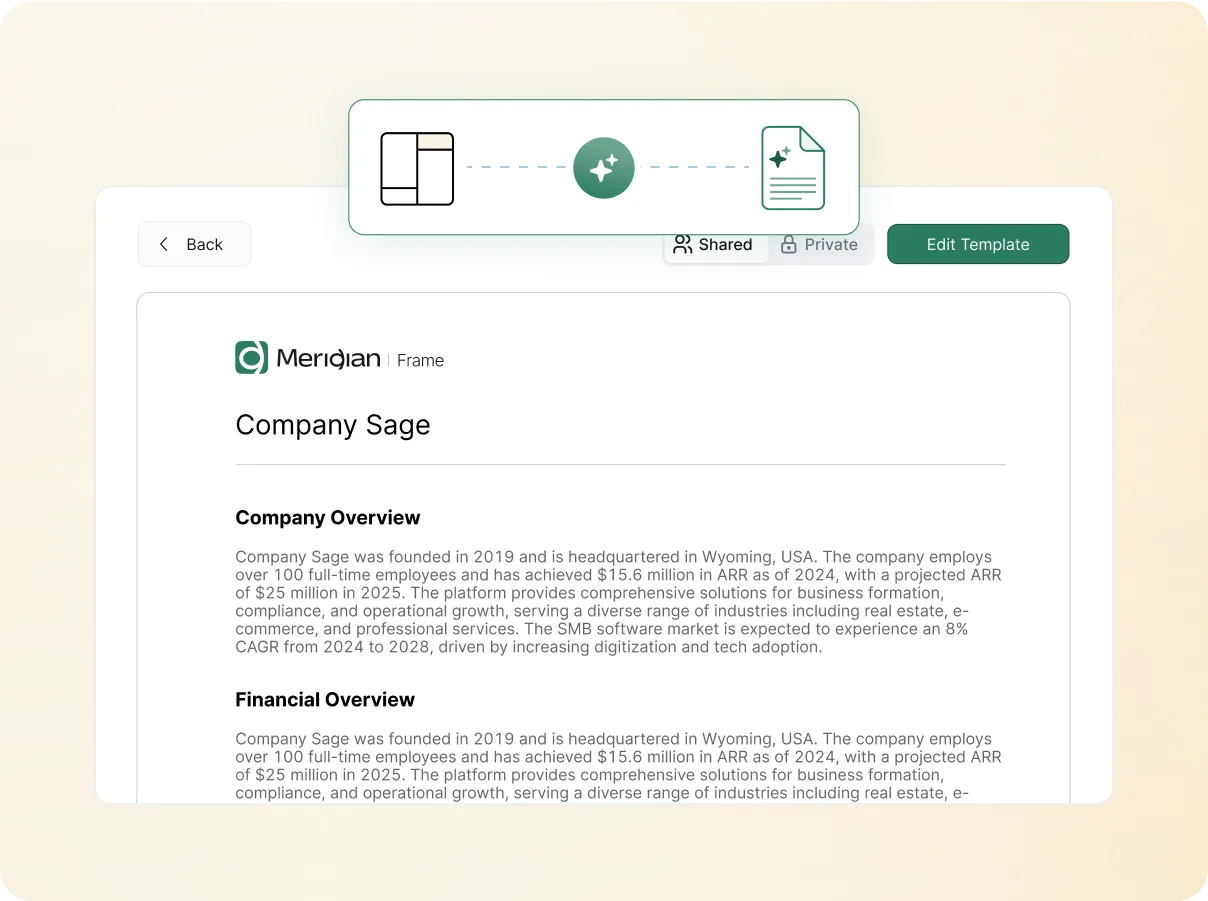
The right CRM can automate this task. Meridian, for example, generates tear sheets directly from CIMs to produce a clean, standardized summary in minutes.
Key metrics, recent developments, and strategic insights are automatically pulled from the CIM and organized, so teams always have accurate, ready-to-share documents.
This improves the quality and consistency of materials for internal review or IC meetings. Analysts can focus on sourcing and assessing deals rather than formatting, while partners receive concise, reliable tear sheets to make evidence-based decisions.
From data enrichment and IC workflow automation to thematic sourcing and deal flow management, Meridian handles all your firm’s most important processes.
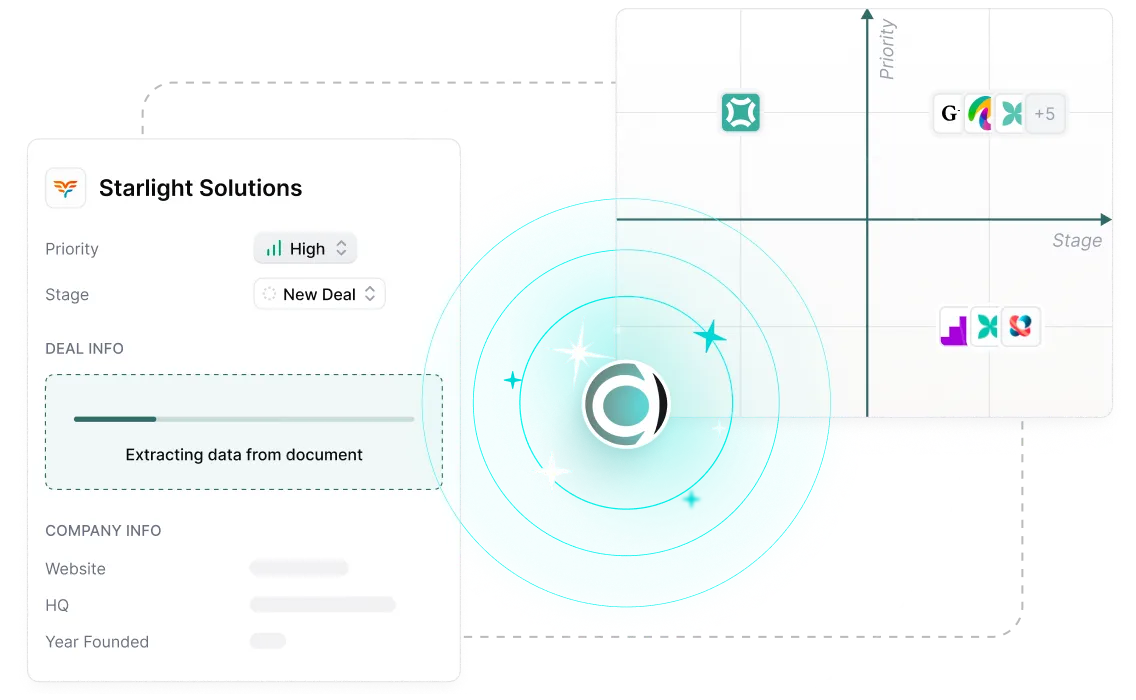
PE teams rely on accurate, up-to-date company and deal information. Automated CRM tools continuously refresh data, flag key changes, and ensure teams are always working with current insights.
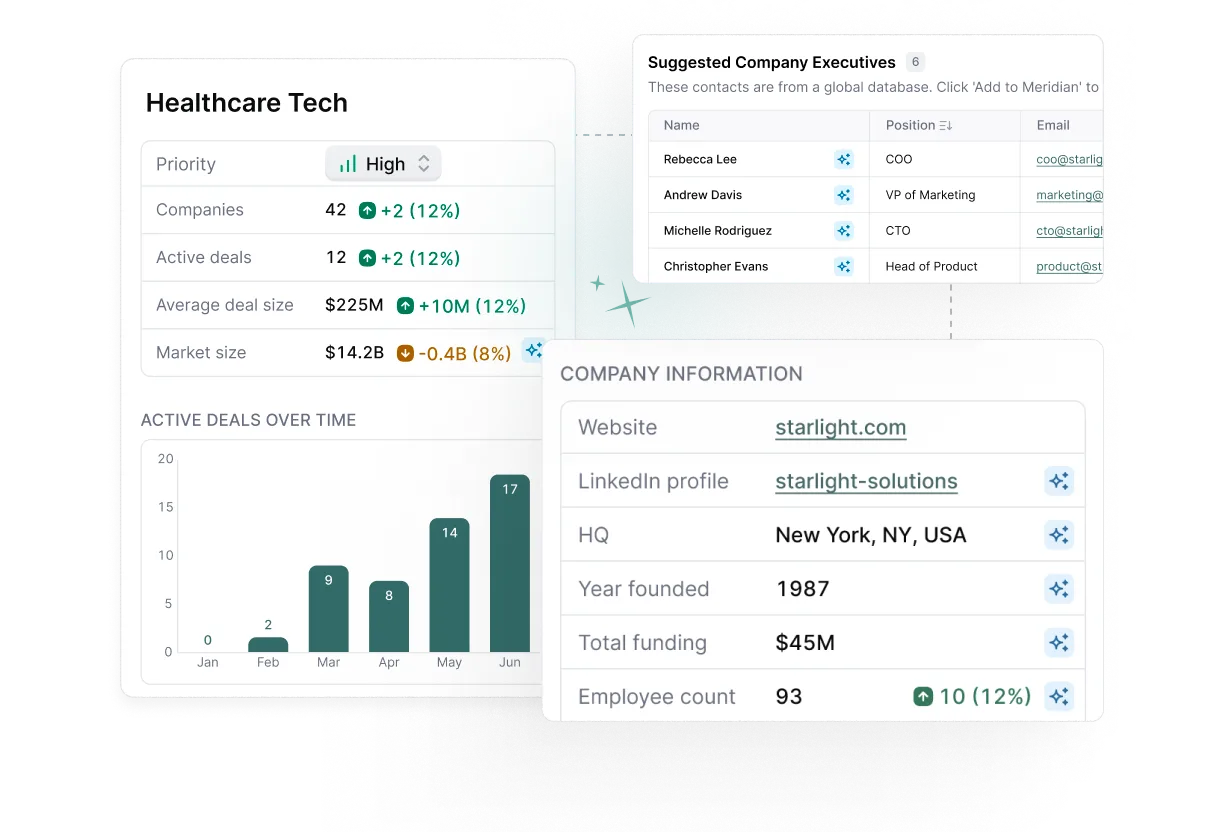
Company information isn’t static. Businesses grow, shrink, get acquired, or change leadership, and missing these updates can mean lost opportunities or poorly informed decisions.
But manually tracking these changes across hundreds or thousands of companies is virtually impossible.
The right PE CRM will continuously enrich company data. It pulls updates from both public and private sources to fill in missing details automatically and flag significant changes, like acquisitions or funding rounds.
Teams can set alerts for the metrics that matter most, which ensures they’re notified when a high-priority company moves or evolves.
And deal teams get back up to 20% of the time they previously spent on list monitoring and data maintenance. Analysts and associates can track more companies with confidence, while principals and partners can focus on building relationships and conducting strategic outreach, knowing the CRM is constantly providing an accurate picture of the market.
Timing is everything in private equity. A single overlooked signal, like a new hire in leadership, a funding round, or a change in company strategy, can mean missing an opportunity.
With CRM automation, users can set customized alerts for events with impact. So when a company on your list posts a new job, grows its headcount, or raises capital, the system instantly notifies the deal team.
These alerts are delivered in context, linked to the company record and relevant deals. This proactive approach keeps deal teams ahead of the market without adding manual tracking.
Identifying and prioritizing opportunities across a crowded market is a challenge for most firms. Deal sourcing automation and intelligence helps private equity teams surface high-fit companies and focus their efforts on the targets most likely to fit their investment thesis.
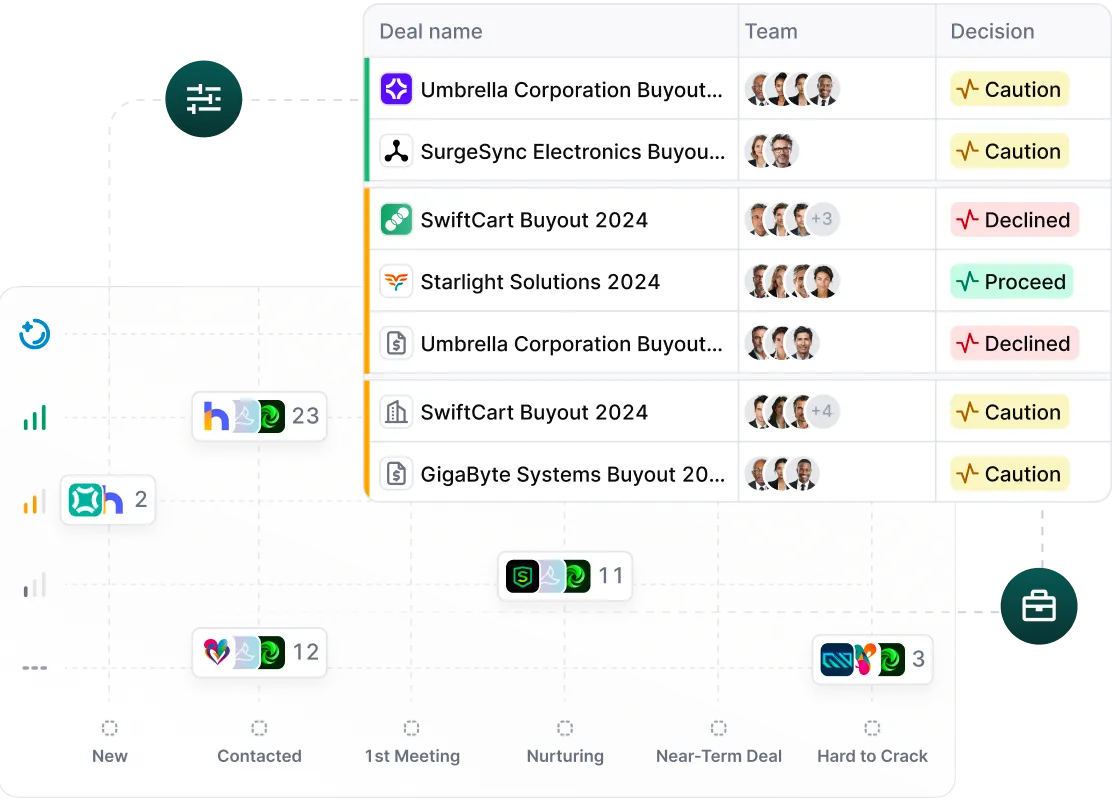
The best private equity CRMs can map target markets based on investment themes, highlighting both new companies and previously tracked opportunities that may have evolved.
The system builds a dynamic market map that’s continuously updated by consolidating live data from public sources, proprietary research, and previous interactions.
This enables teams to spot gaps and identify high-priority targets where it matters most. Analysts can quickly see which companies align with the firm’s thesis, while partners gain insight into sector coverage and opportunity density.
Traditional deal sourcing methods often rely on manual screening and gut instinct, which can mean wasted time on low-fit targets.
Meridian’s CRM, for example, solves this by proactively recommending targets that align with your firm’s investment thesis. Leveraging company data and thematic sourcing criteria, the system highlights the opportunities most likely to lead to a successful deal.
Recommendations include both companies that match current strategies and previously overlooked targets showing new signals, which helps teams expand coverage efficiently.
Analysts and associates spend hours consolidating notes, tracking decisions, and summarizing discussions for IC, while partners often need a distilled version of this intel to make informed judgments.
Market-leading PE CRMs are able to streamline this process. Before each meeting, these tools can generate concise summaries and highlight key takeaways from IC memos, which ensures partners enter discussions fully briefed without sifting through a 30-page document.
Then, the software captures meeting notes, decisions, and action items for clear takeaways and next steps.
CRM automation reshapes how firms operate. From sourcing to IC prep, these tools give firms faster insights and make it easier for every team member, from analysts to partners, to collaborate.
This leads to measurable benefits across firm performance. Explore some of them below.
Meridian’s private equity CRM improves efficiency across your firm, preserves institutional knowledge, and makes evidence-based investment decisions easier without relying on spreadsheets or manual processes.
That’s all possible thanks to CRM automation features, like:
The result is a CRM that serves as your ultimate content provider, enabling your team to make more informed decisions without doing more manual work.
Discover how Meridian can streamline deal sourcing and enhance your decision-making

Meridian is your team’s ultimate context provider, driving better deals while minimizing manual data entry.
CRM automation in private equity is the use of software to handle repetitive deal sourcing, data capture, and relationship tracking tasks automatically. This includes updating company profiles and logging interactions, as well as surfacing signals.
A private equity CRM can automate contact logging, deal activity capture, data enrichment, follow-up reminders, pipeline updates, IC preparation, and intermediary monitoring.
CRM automation uses integrations, AI tools, and predefined workflows to capture and record emails, meetings, documents, and company data. Rules and triggers organize information and flag changes in target companies, and alerts are also generated for follow-ups.
With CRM automation, teams save time, reduce errors, and consistently have access to accurate data. Automation improves relationship management, accelerates IC prep, surfaces proprietary deals early, and allows firms to scale their coverage without adding headcount.
CRM automation is set up through workflow features, AI tools, integrations, and data connectors. Users define rules for logging emails and updating company profiles and set parameters for tracking intermediaries and generating alerts.
Meridian is a leading PE-native CRM that captures deal activity, automatically updates profiles, monitors intermediaries, and supports IC preparation. It helps firms win more proprietary deals, nurture relationships with LPs, and connect the dots between all their data for more informed deal decisions.

Table of Contents

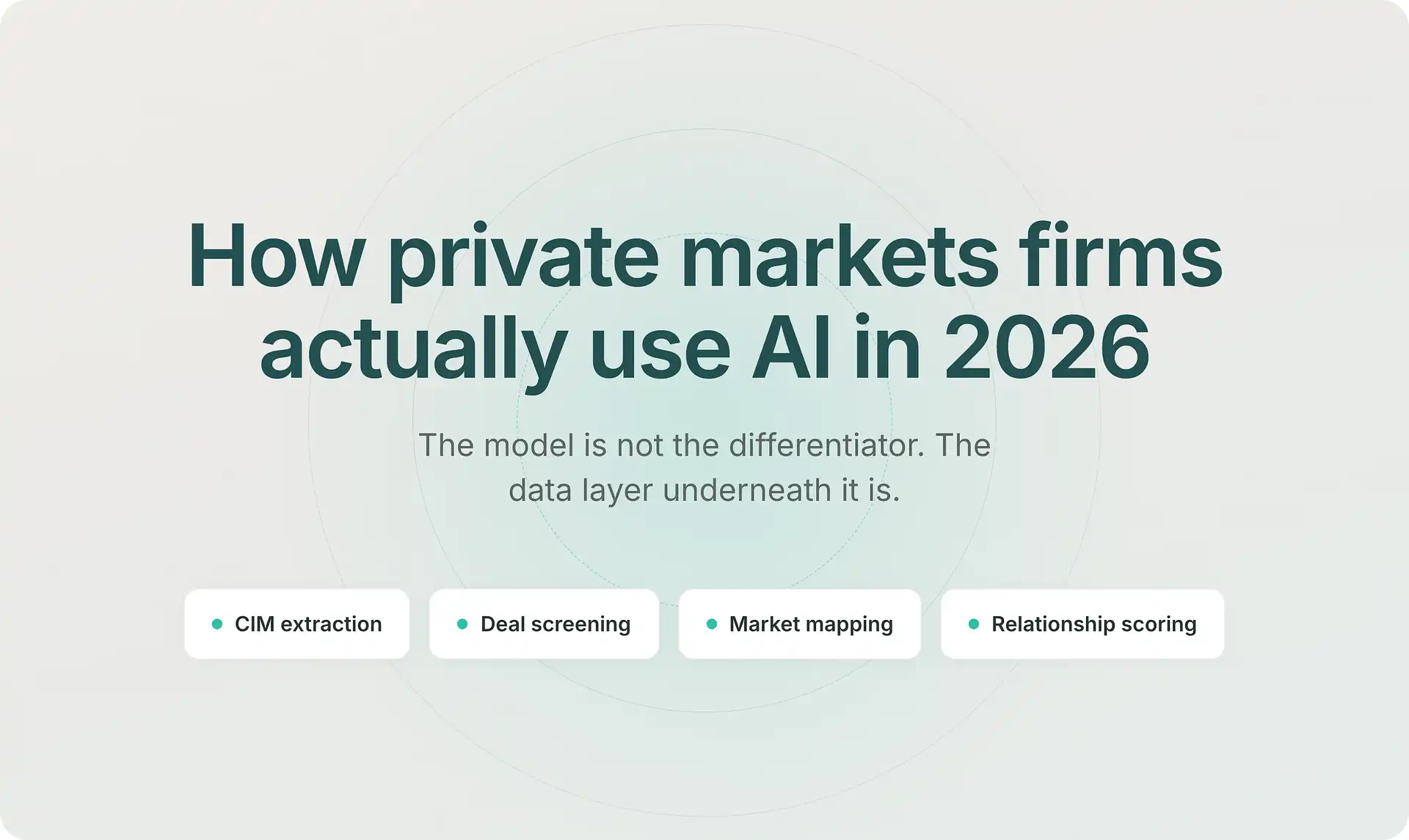
AI adoption has outpaced results in private markets. The four workflows that change deal-team output, and why the data layer matters more than the model.

.webp)