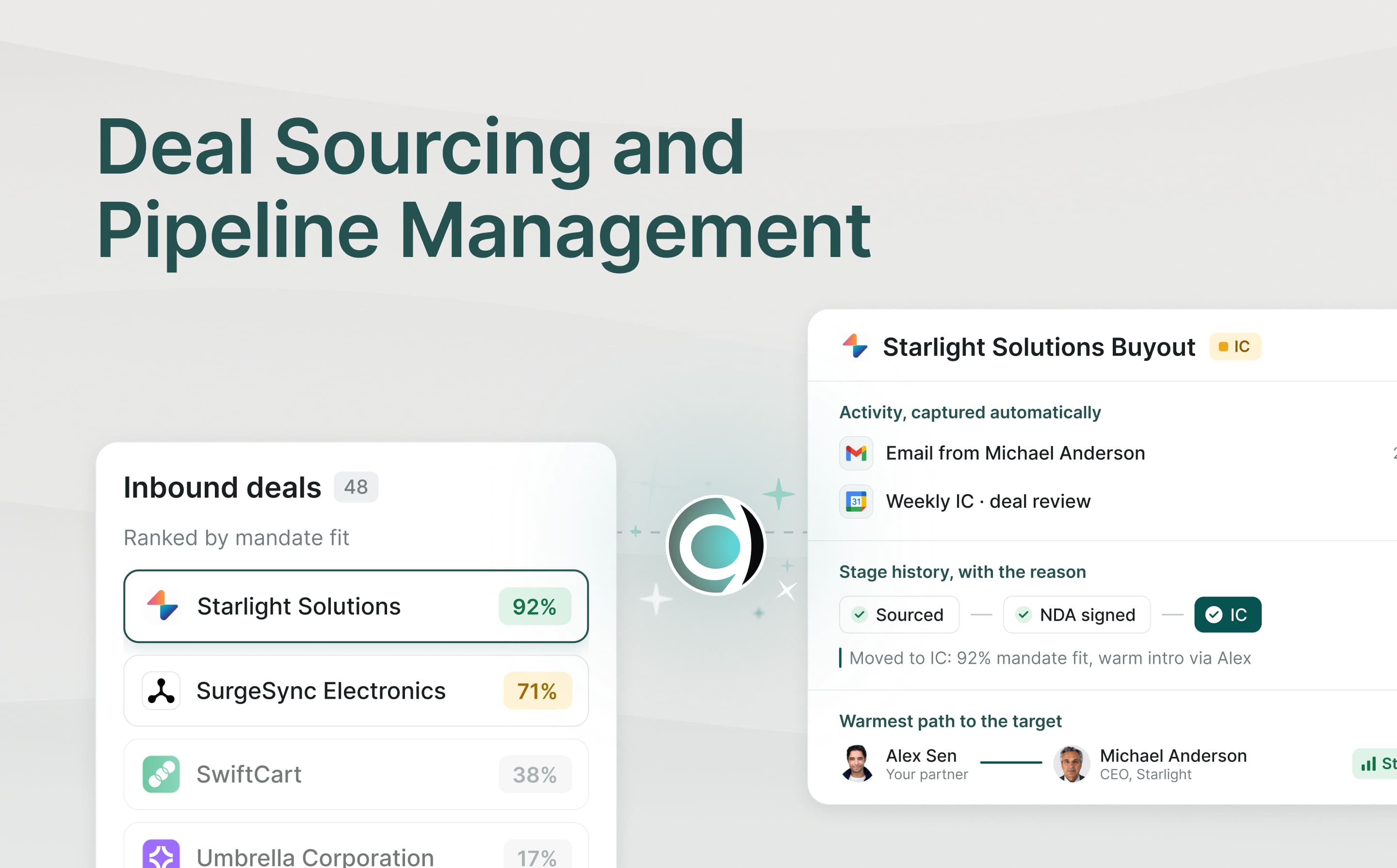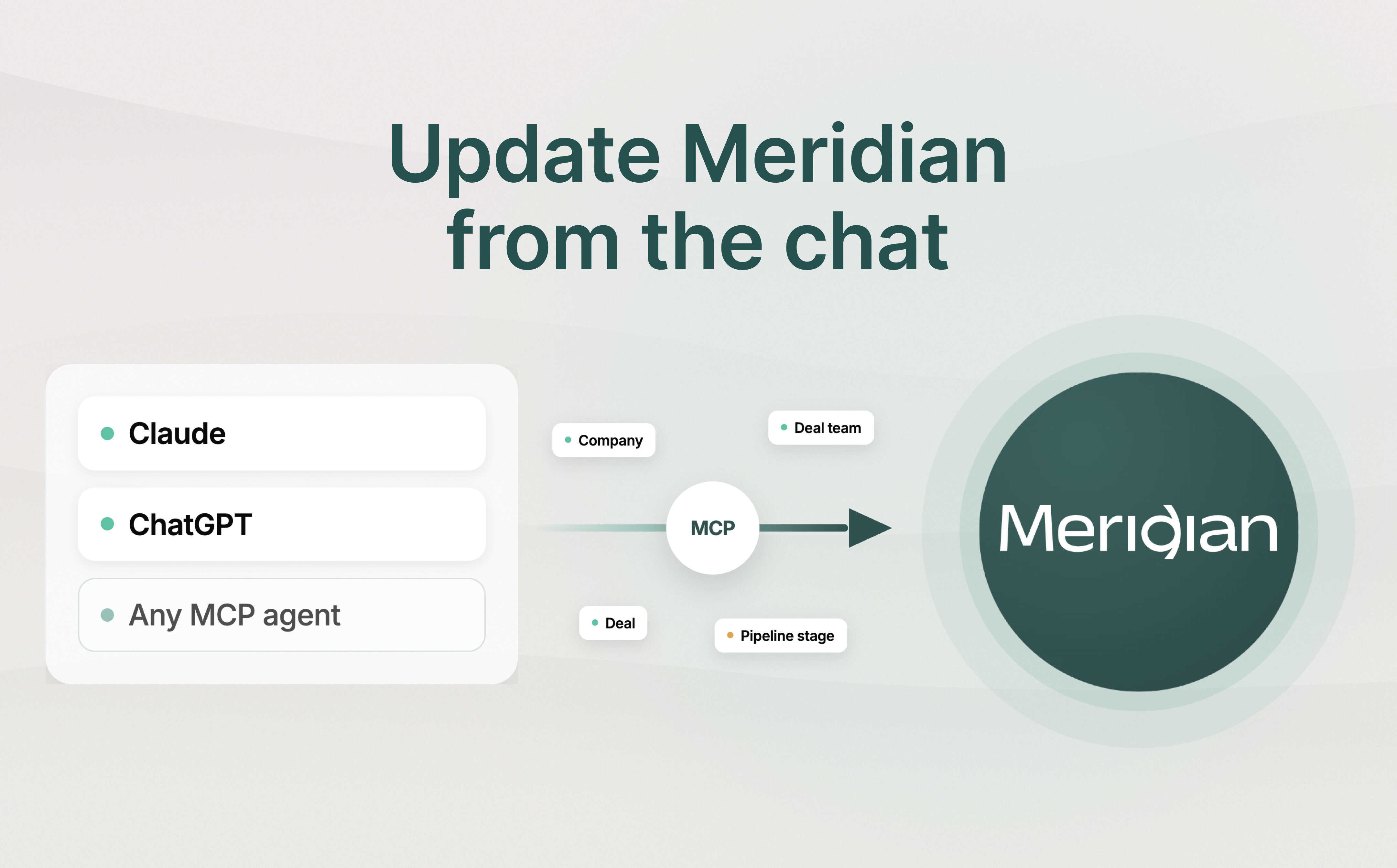

Meridian MCP is live!
Connect your deal sourcing data to any AI tool.
Learn More
Meridian raises $7M seed round led by 645 Ventures.
Read More
Take a deep dive into private equity CRM systems, from what they do and key functionalities to tips for choosing and top tools to consider.
A CRM purpose-built for private equity keeps deal teams focused on what matters most: sourcing and evaluating deals. It eliminates the manual tasks that eat up valuable time, like sifting through old CIMs and updating spreadsheets.
These platforms centralize deal and relationship data, automate repetitive tasks, and give you real-time insights that support better decision making. That way, your team can act on opportunities faster instead of wasting time passing information from one platform to another.
This guide covers what a CRM for private equity is, the key features and benefits firms should look for, how to choose the right platform, and examples of leading tools for firms to consider.
A private equity customer relationship management (CRM) tool is a purpose-built platform that helps firms track deals and relationships over multi-year timelines, evaluate opportunities, and manage every stage of the investment lifecycle.
These tools centralize conversations with management teams, bankers, advisors, and LPs. That way, deal teams can see the full history of an opportunity in one place without digging through inboxes or scanning spreadsheets.
A private equity CRM provides:
Most importantly, the platform serves as a centralized system for organizing research, conducting proactive due diligence, and keeping every team member aligned as opportunities develop.
When comparing private equity CRMs vs standard CRMs, there’s a major distinction: a private equity CRM helps you buy, not sell.
Standard CRMs are built for sales teams chasing short, traditional cycles. But in private equity, your CRM needs to help you purchase companies, often after years of monitoring relationships, markets, and signals.
Deals unfold over extended timelines, and the signals that matter can appear months or even years before you need to take action. A private equity-specific CRM is designed to handle this complexity. Here’s how.
Private equity deals rely on strong relationships with company management teams, as well as intermediary bankers. A CRM for private equity tracks these interactions over years, storing communications and historical activity all in one place.
This gives you instant context into a relationship at any point in time and enables your team to act strategically rather than reactively.
Beyond individual contacts, a PE CRM also helps map entire networks so you can see which bankers are connected to certain companies.
Key takeaway: Over time, the system becomes a living memory for your firm and captures information, like past conversations and historical commitments, to give your team a strategic advantage.
No two firms source and evaluate deals the same way. PE-specific CRMs enable you to design pipelines that match your unique approach. This reduces confusion and gives your team a clear view of where deals stand at any stage.
Team members can move deals through these stages consistently, which ensures everyone knows the status and the exact next steps without relying on manual updates or messy spreadsheets.
Pro tip: You can also set automated reminders, conditional notifications, and flags for stalled opportunities to keep deals moving forward efficiently.
Increasingly crowded auctions and competitive bidding processes mean you need to take action right away once a signal appears.
A PE-specific CRM captures early indicators, such as management changes or funding activity, and surfaces them in real time. And automated tracking of filings and communications ensures that your team is always aware of developments without manually scanning multiple sources.
Consider a scenario where a company signals it might divest a division. A PE CRM would alert your associates, which allows them to reach out to the banker immediately rather than discovering the opportunity weeks later when other firms are already in motion.
Key takeaway: This responsiveness directly translates into more proprietary opportunities and better deal outcomes.
A PE CRM enables teams to map markets, track company activity, and store intelligence on multiple targets simultaneously. This supports thematic sourcing processes to help you get ahead of promising opportunities before competitors.
These tools surface patterns across sectors and highlight which segments may be experiencing consolidation or where growth is accelerating. So when a company is ready to sell, your firm already has context and contacts ready, giving you an edge over competitors who are only sourcing reactively.
Key takeaway: This market intelligence allows your team to refine investment theses and prioritize the most effective, impactful outreach.
Most private equity firms rely heavily on individual team members’ knowledge and contacts. A CRM centralizes this information to make relationships and deal history visible firm-wide. This means you never depend on a single person for deal intelligence.
For instance, if a VP leaves your firm, the associate who takes their place can access all previous conversations and action items. This prevents deals from stalling and ensures that critical insights aren’t lost when people leave or switch roles.
Knock-on benefit: It also helps newer team members onboard faster and start contributing straight away, as historical notes and documents are easy to access.
IC prep entails compiling research, financials, and due diligence notes from multiple sources. A PE CRM simplifies this weekly process by centralizing all your materials and providing clear summaries.
For example, partners can quickly access all relevant documents, risk assessments, and historical interactions in a single view before the meeting. That way, IC can make quicker, more confident decisions without time-consuming back-and-forth.
Pro tip: Automated workflows can also generate summary reports, highlight follow-up tasks, and flag issues that need attention after the meeting.
A PE CRM can automatically generate overviews of your current deal pipeline, thematic sourcing activity, and prospect coverage tracking to give firms white-labeled, branded reports to share with LPs.
For instance, a partner can pull a summary which verticals are generating the highest quality proprietary deal volume, and the CRM provides investor-ready reports in minutes.
Key takeaway: This ensures consistency and accuracy when communicating with current and prospective investors.
A private equity CRM system provides these key functions that simplify daily workflows and automate mundane tasks, so your people can act on opportunities faster.
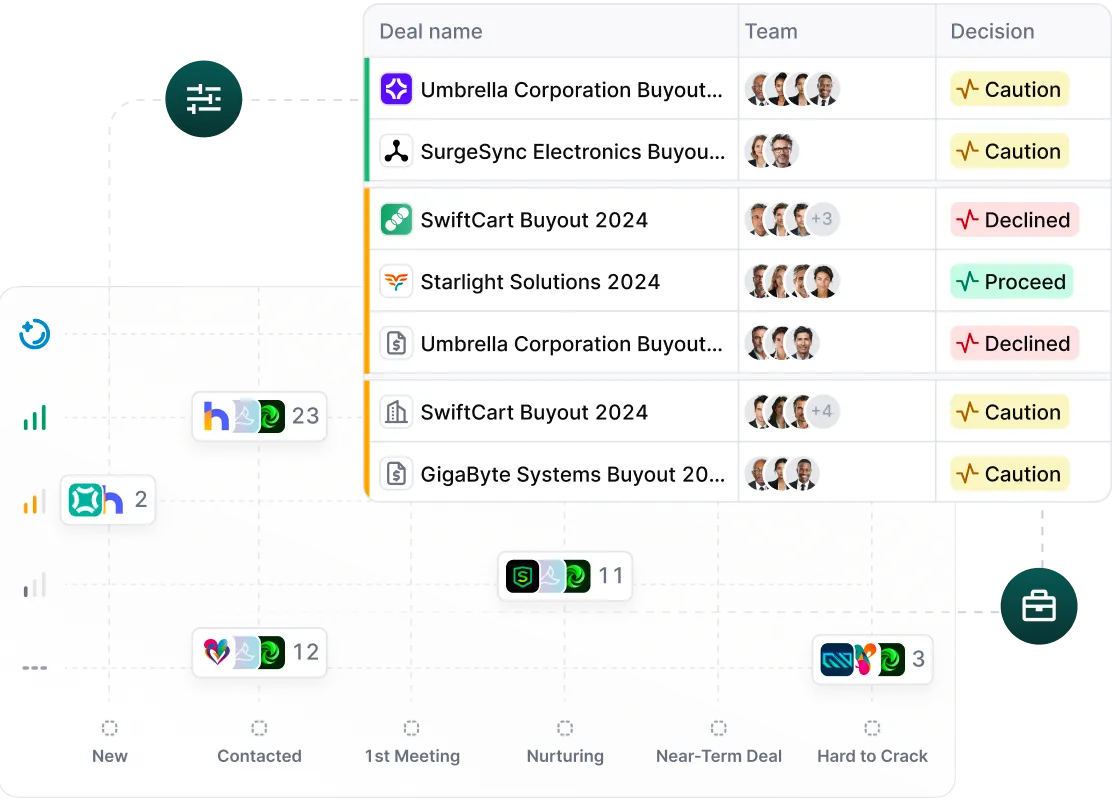
To prioritize the right CRM features for your private equity firm, ask these seven questions when evaluating CRM platforms.
Your investment strategy impacts what you need from a CRM. A private equity CRM designed for your investment model ensures your team can act on insights right away.
Firms that lean on thematic expertise will need market mapping tools to track trends, competitors, and active companies in very specific niches. And generalist firms will need a platform that can track multiple sectors and geographies without overwhelming the team.
The platform you choose should help your deal teams manage relationships and surface opportunities that are aligned with your investment thesis and sourcing approach, rather than forcing your firm to adapt to a one-size-fits-all workflow.
Implementation speed and support determine whether your CRM actually gets used by your team.
Some platforms can take months, or more than a year, to fully deploy, and require heavy IT involvement and extended training. But others can be up and running in weeks with dedicated onboarding and data enrichment built into the process.
When you adopt a CRM with an automated data capture, from day one, you get your entire history of emails, meeting notes, and deal interactions logged without manual data entry. That means everyone on your team can immediately jump into the tool and start incorporating it into their daily workflows.
Deals require input from multiple team members, from new associates to founding partners. The PE CRM you choose should centralize communications and documents so that your team can work together without duplicating efforts.
Imagine a situation where a principal is following up on an opportunity and needs context from previous conversations that a former VP had with the management team. With a CRM purpose-built for PE, the entire conversation history is right there. This enables your team to manage relationships effectively while keeping every interaction aligned with your broader deal strategy, no matter who’s doing the talking.
Collaboration features also help ensure that when opportunities move through multi-year cycles, no details or insights get lost. This makes handoffs smoother and less prone to gaps.
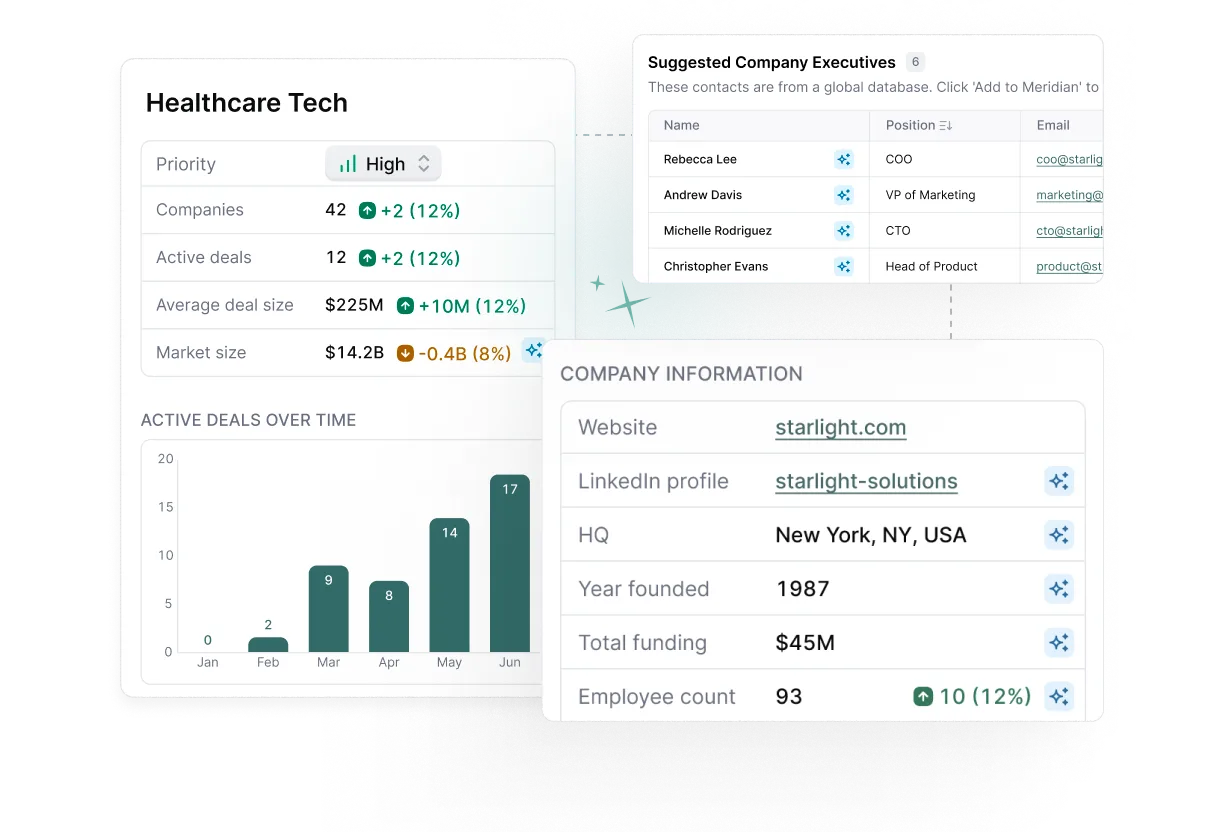
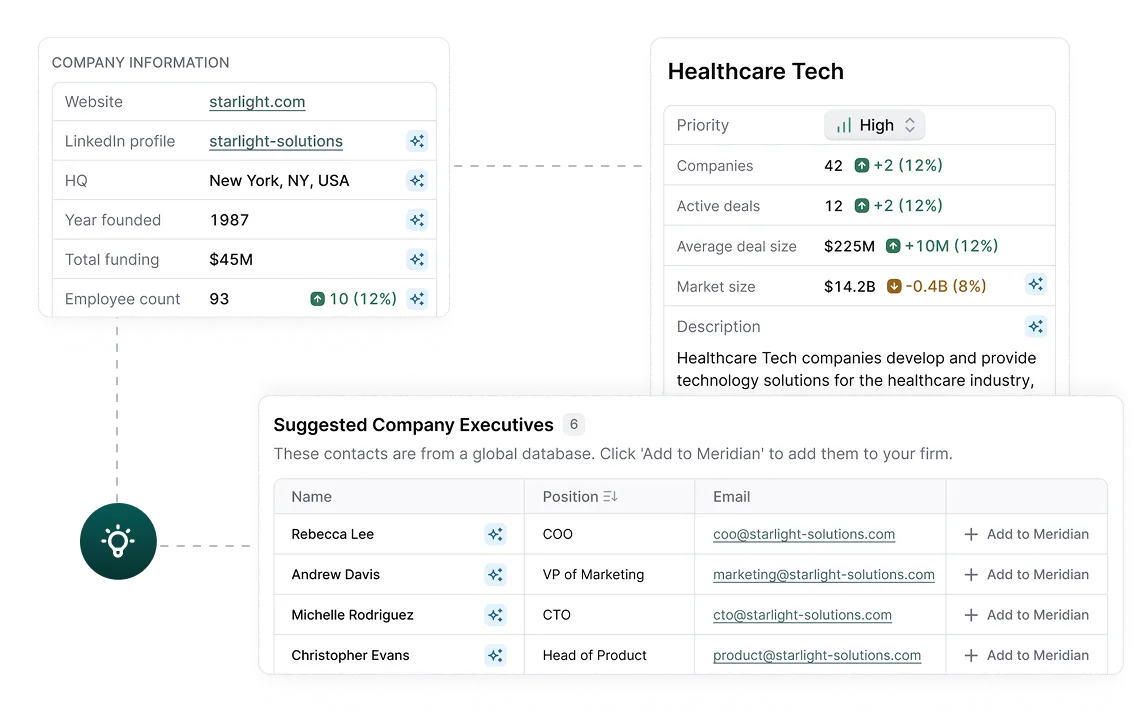
Data enrichment is a massive asset in the private equity industry, and it turns your contact database into actionable market intelligence. Beyond storing what your firm already knows, a strong PE CRM can pull in information from external data sources to provide context that your team might otherwise miss.
For example, the platform may be able to flag recent hiring growth based on publicly available company records and update profiles automatically.
This kind of automated data capture facilitates a head start on due diligence to ensure your team can act before competitors even realize a company is on the market.
Your CRM should let you tailor pipelines, dashboards, and reporting templates to reflect your team’s processes rather than forcing your workflows into a generic structure.
For instance, you can create stages for initial screening, pre-IC diligence, IC review, post-close monitoring, and portfolio oversight that reflect your approach to deal flow management.
This customization helps you run IC and reach decisions more efficiently, ensuring that all team members have visibility into what’s happening at each stage of the deal.
Your team relies on email, calendar apps, and file sharing and storage tools, and your CRM shouldn’t operate in isolation. A platform that syncs with these systems reduces manual work and prevents knowledge gaps.
For example, a native Outlook integration enables the system to log interactions automatically. That way, your team doesn’t have to manually transfer the information and context that arrives in their inbox; it just shows up in the CRM.
Integrations with the tools your team uses every day enable your people to spend more time sourcing and analyzing deals instead of reconciling data across platforms and jumping between tools.
Managing investor relationships is just as important as sourcing deals. A private equity CRM should help your team build trust and rapport with LPs by tracking commitments, reporting schedules, and communications consistently.
When you’re preparing updates for LPs, the best private equity CRM will generate standardized, investor-ready reports that demonstrate performance across portfolio companies and pending opportunities.
This saves you time while fostering confidence and transparency, which is essential for maintaining credibility with investors and securing future commitments.
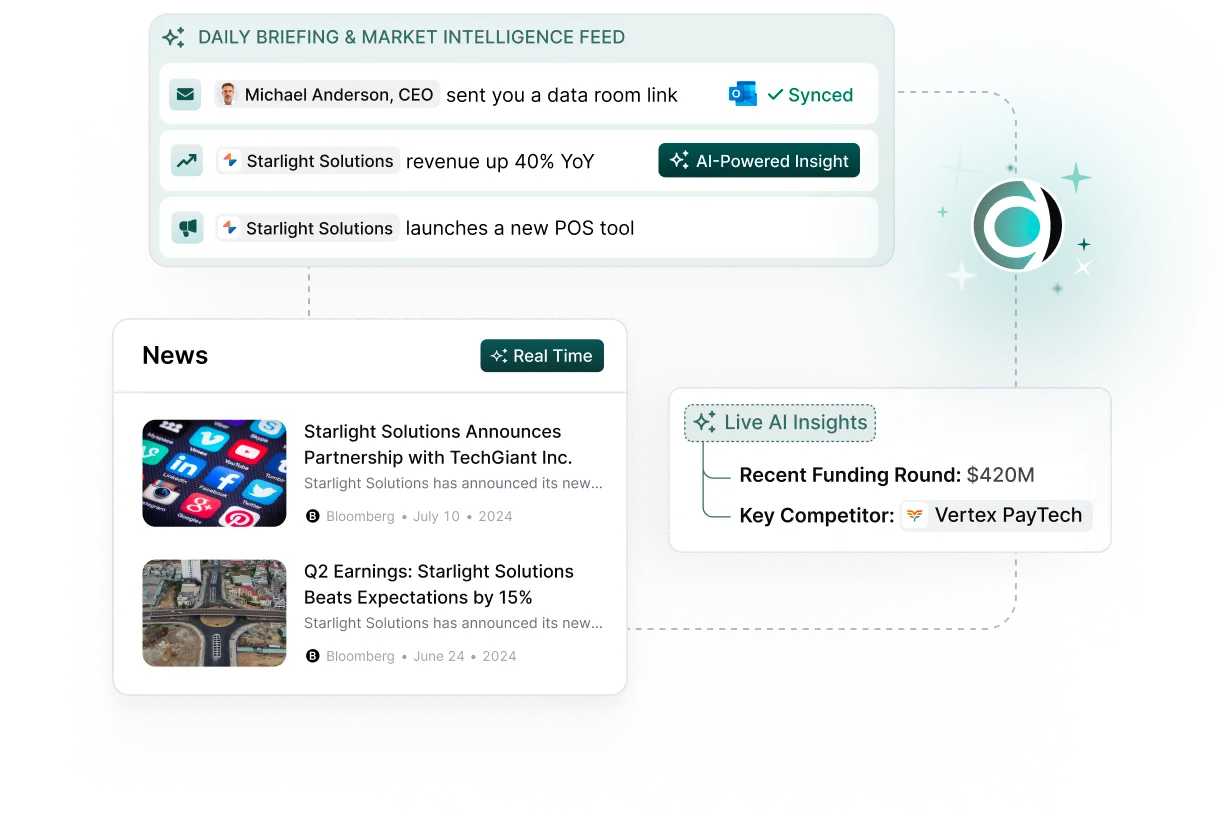
Best for: Meridian is the CRM for firms that want a purpose-built solution designed for deal intelligence, not just contact storage. Its key differentiator is Scout AI, an agent that simplifies key parts of the workflow: mapping your target market, enriching company data in real-time, and automating data extraction for faster deal reviews.
Where it falls short: The platform is relatively new, so some features are still evolving and expanding.
Meridian’s Scout AI agent surfaces and benchmarks new opportunities so you can find winning deals before the competition.
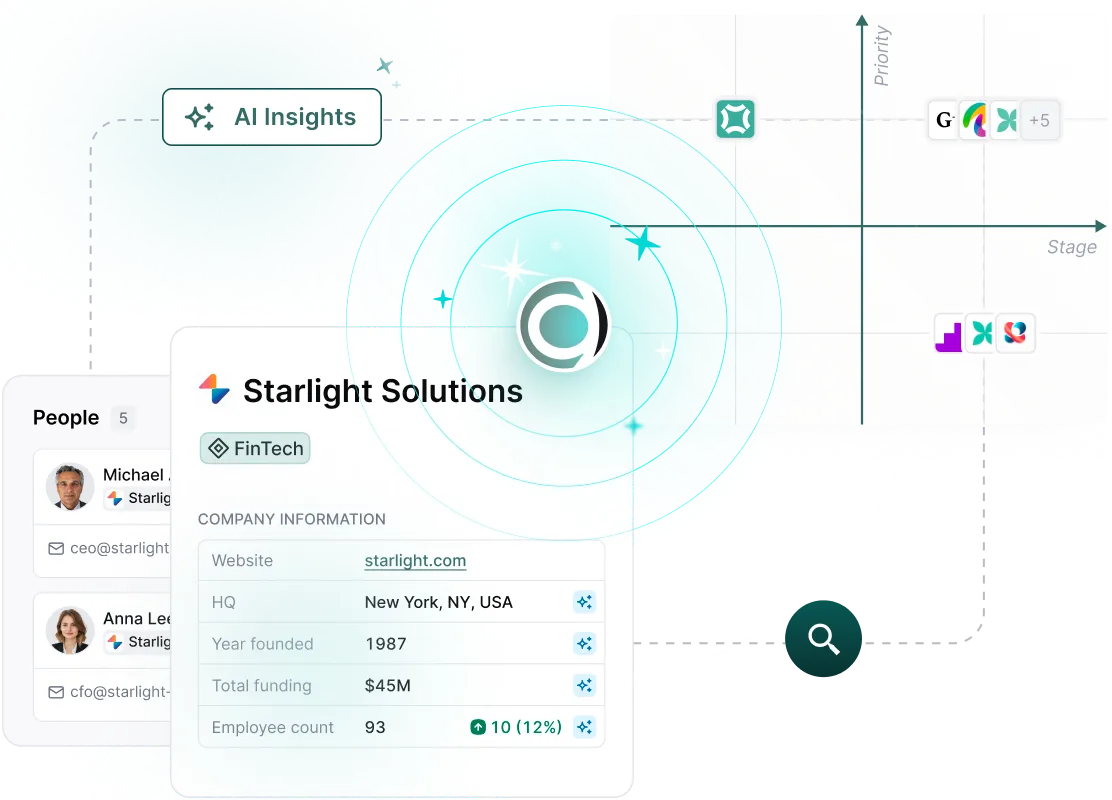
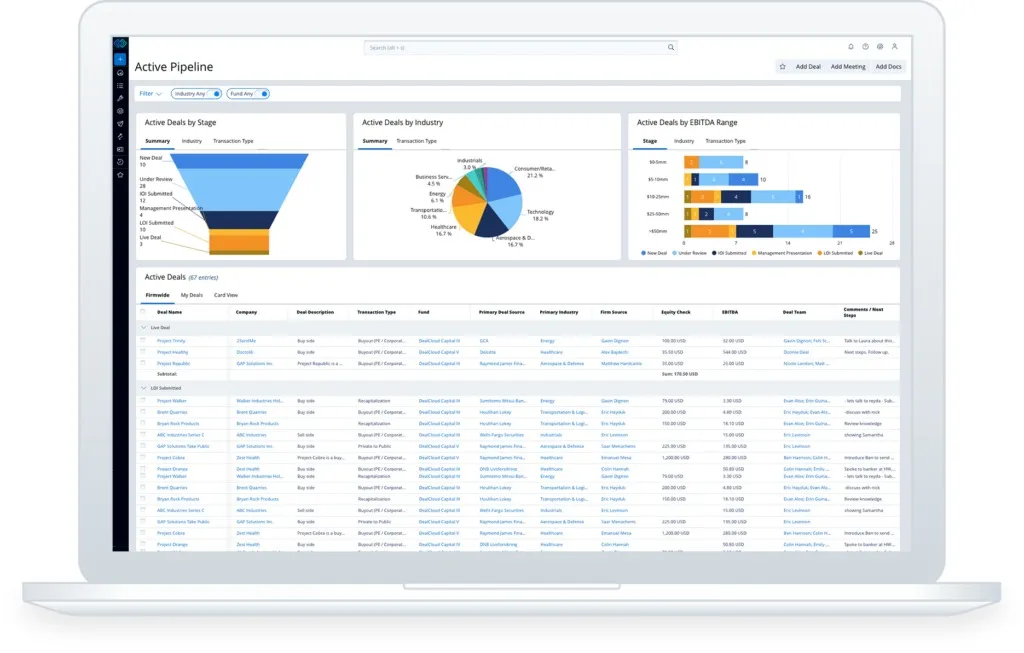
Best for: DealCloud is a good option for private equity and capital markets firms that need relationship intelligence features and configurable workflows. The CRM centralizes firm and market intelligence to give teams actionable insights into contacts, network signals, and pipeline progress.
Where it falls short: G2 users report that DealCloud’s UI is clunky, resulting in a platform that’s slow to implement and not always intuitive to use.
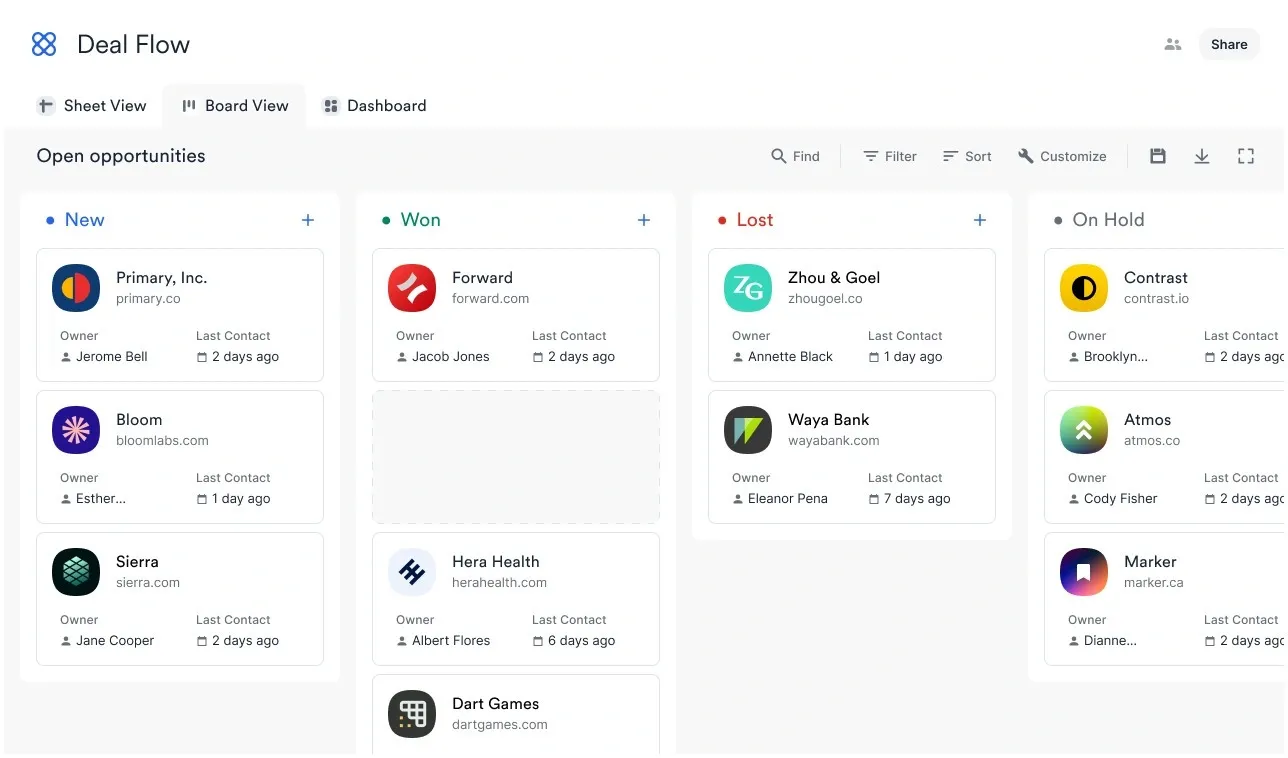
Best for: Affinity combines relationship intelligence with automatic activity tracking, including email, calendars, and files, so teams don’t spend hours on data entry. It also has AI features like Deal Assist that can help surface the warmest paths to introductions.
Where it falls short: Some G2 reviewers say that the platform’s pricing is relatively high when considering the features it offers, as well as the fact that it’s expensive to scale.
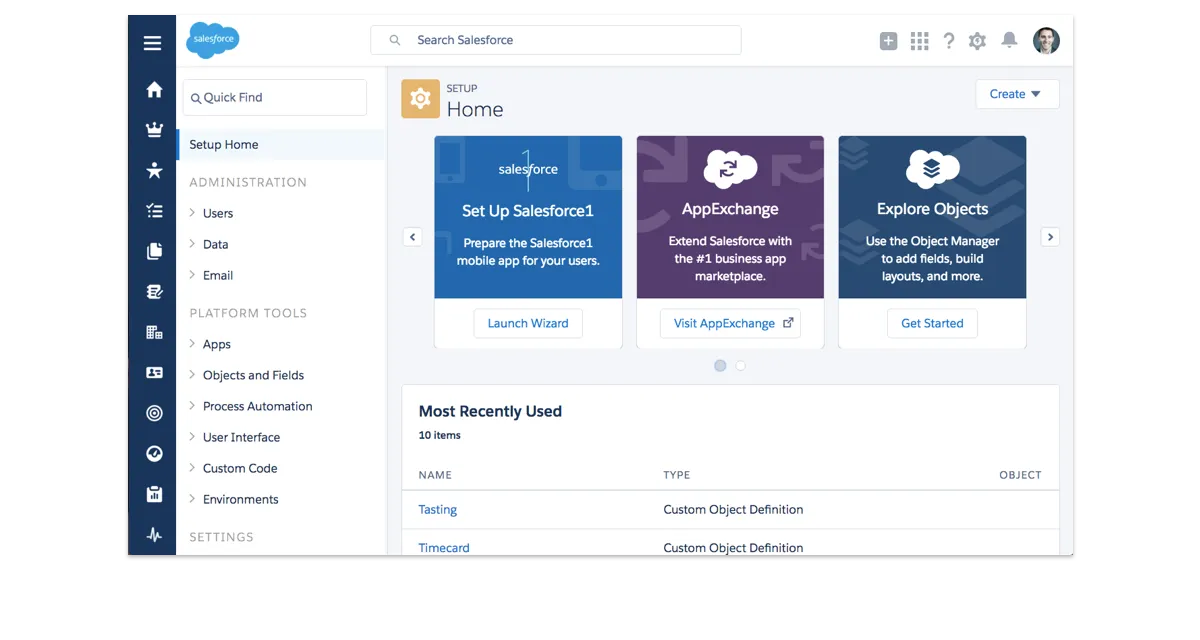
Best for: Salesforce provides a solution for PE teams that are looking to build their own workflows and scale their CRM infrastructure. It includes features that support fundraising, portfolio management, investor relations, and reporting.
Where it falls short: The Salesforce CRM isn’t private equity-specific, and it isn’t tailored to the industry’s specific nuances. That means you’ll have to invest heavily in customization for it to fit your workflows.
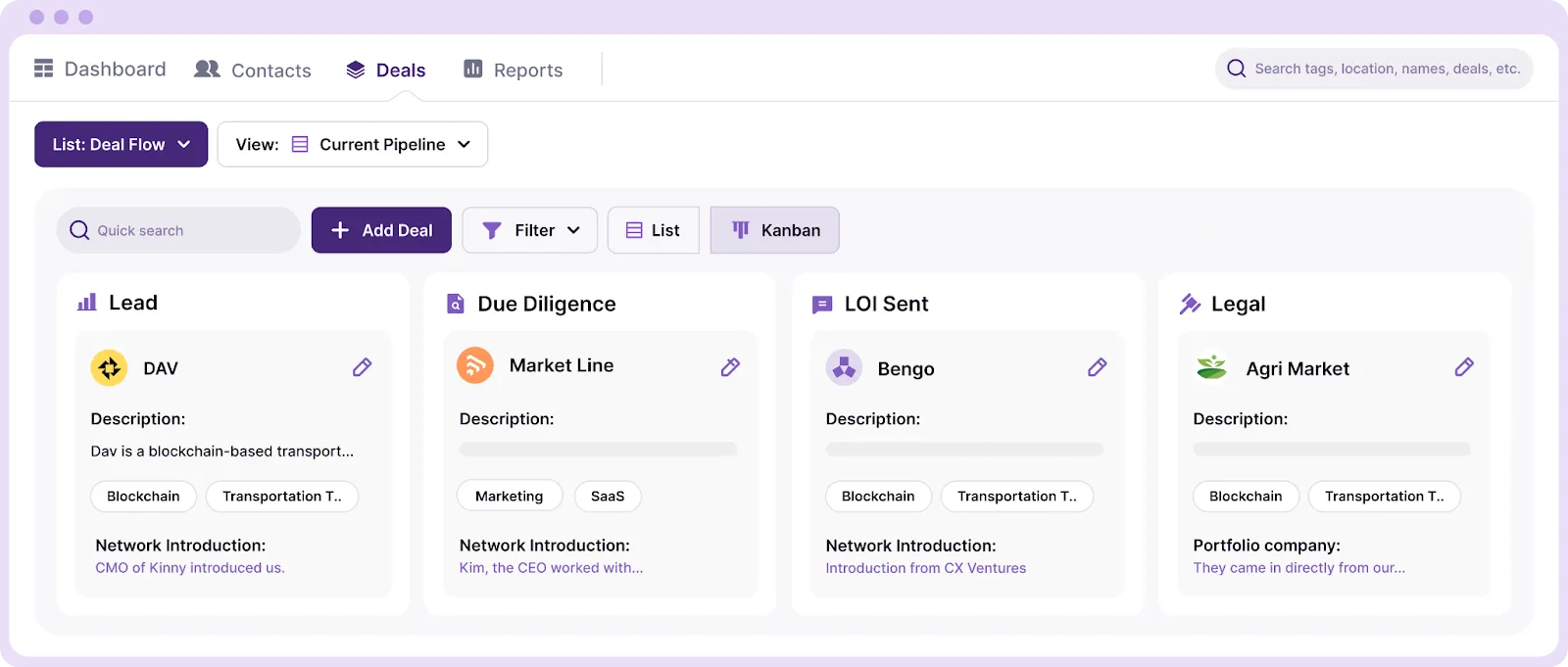
Best for: 4Degrees helps firms leverage their existing network to source, track, and close deals. Built by former investors, the platform uses relationship intelligence to score connections and automate interaction logging.
Where it falls short: Some of the prepopulated tags on the platform need manual adjustments to support firm requirements.
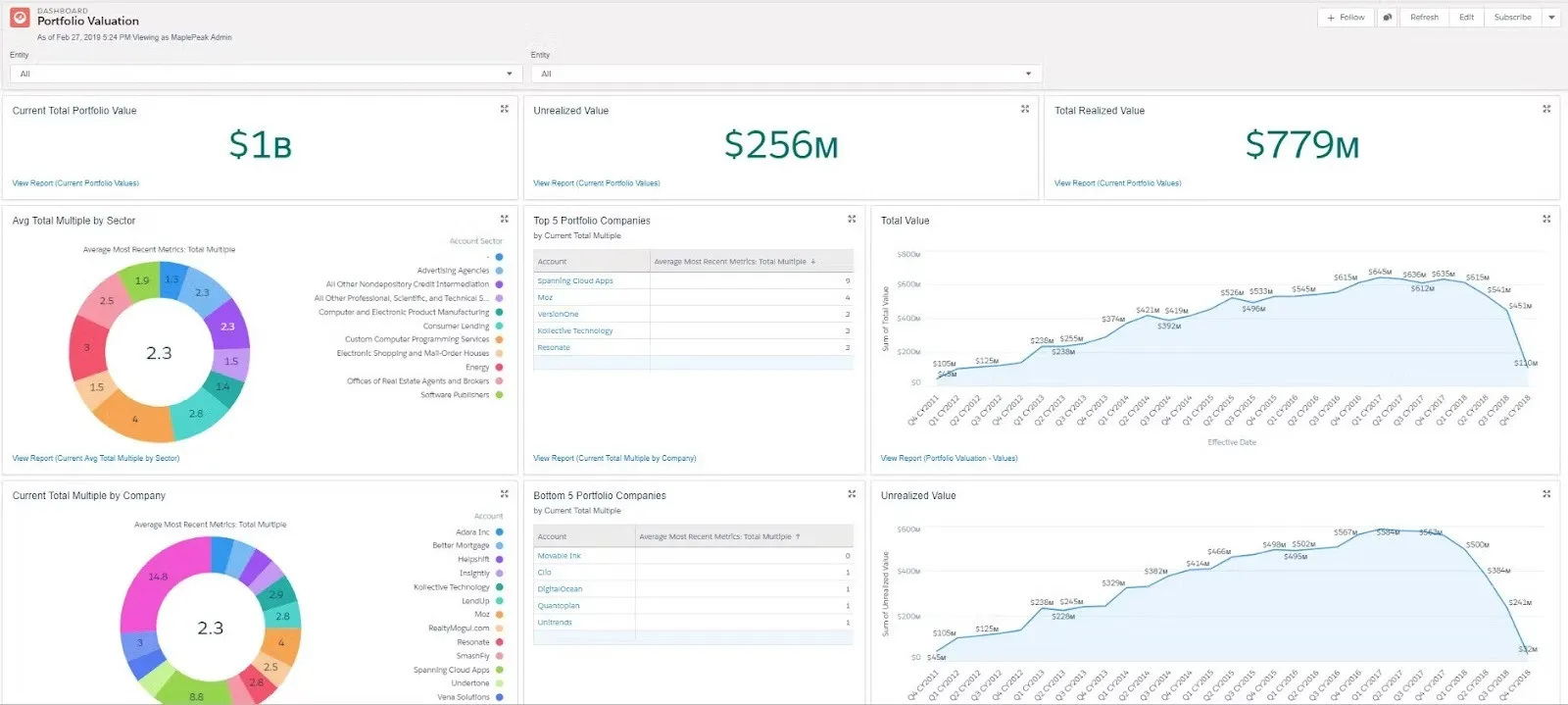
Best for: Altvia is tailored for alternative investment firms that want to unify fundraising and deal execution on one platform. It’s built on Salesforce and combines CRM automation with dedicated fundraising and an LP portal module.
Where it falls short: There is some manual data capture that the platform needs in order to function, including reentering names and information for individuals and companies.
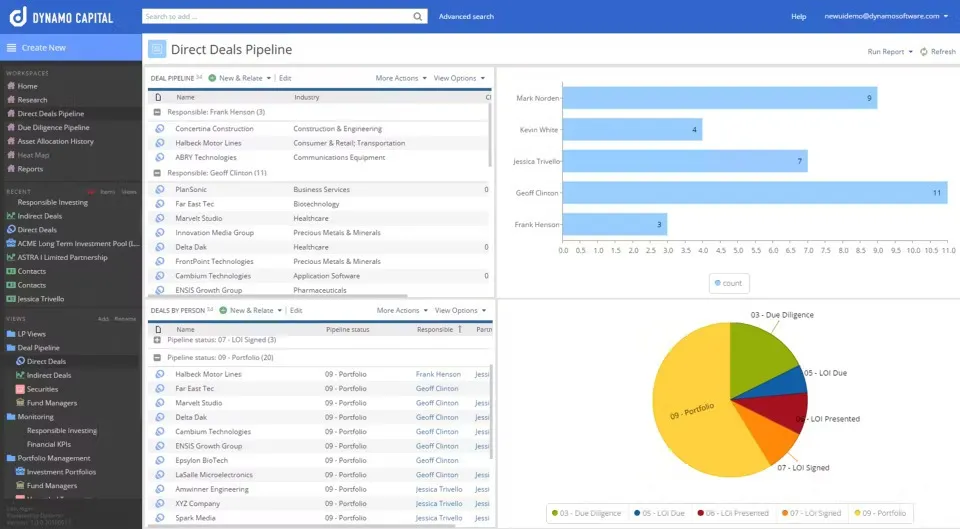
Best for: Dynamo’s cloud-native system handles deal pipeline and management, investor relations, portfolio monitoring, and fund accounting all in one place. It’s a good choice if you want to handle both deal flow and LP workflows without switching between tools.
Where it falls short: Some G2 users have reported that there is a steep learning curve when deploying the platform, which could get in the way of full adoption with your team.
Meridian tackles the very problems that slow down PE deal teams and cost firms opportunities. That’s why it represents the future of private equity CRMs.
With fast deployment, powerful email syncing, and intuitive interfaces, adoption is quick and straightforward. This allows your team to focus on sourcing and evaluating deals from the start rather than trying to navigate steep learning curves.
Every interaction with management teams, bankers, and third-party advisors is captured and stored centrally. Teams can identify the right moment to engage and who to reach out to, and your firm maintains continuity even as people leave or change roles.
And at the core of Meridian is Scout AI, an intelligent assistant that continuously benchmarks companies, extracts key insights from CIMs, and prioritizes opportunities based on your firm’s thesis.
So instead of spending hours combing through data or chasing down signals, your team gets actionable intelligence in real time to give you a massive edge in sourcing and evaluating deals.
Finally, Meridian provides industry-leading thematic sourcing support, with market mapping tools that let your team track sectors, monitor company activity, and maintain context on multiple targets simultaneously. Your firm can proactively build proprietary pipelines in priority themes rather than merely reacting to auctions.
All of these features and more help your team make confident, data-driven decisions on which deals to push forward, which to kill, and where to focus your team’s limited time.
Discover how Meridian can streamline deal sourcing and enhance your decision-making

Meridian is your team’s ultimate context provider, driving better deals while minimizing manual data entry.
A CRM for private equity centralizes all relationship and deal information, which makes it easy to track interactions with executives, bankers, external or third-party advisors, and LPs over long, multi-year investment cycles.
Private equity teams can instantly access full communication history and context, which reduces key man risk in the event of personnel changes.
Modern private equity CRMs also support deal flow management by tracking opportunities through every stage of your pipeline, automating data capture, and surfacing early signals.
And thematic sourcing tools let firms map sectors, monitor industry activity, and spot opportunities that align with their investment thesis.

Table of Contents

How deal teams keep company data clean and consolidate their vendors with built-in data.