
Get the Meridian mobile app!
Your deal data travels with you.
Learn More

Meridian raises $7M seed round led by 645 Ventures.
Read More
Most private markets firms have decided which AI tools to buy, but not whether they are ready to use them. Here are four questions to ask before scaling AI.
The responsible AI conversation was serious at Automation Anywhere’s Imagine conference recently. Large enterprise operators talked about how to govern AI deployment, measure outcomes, and build trust before scaling. The frameworks were good. The questions were the right ones.
Yet, I didn’t hear a single question asked within the context of a private markets deal room.
The financial services industry has developed a strong opinion on which AI tools to buy, but it hasn’t developed an equally strong opinion on whether it’s actually ready to use them. That gap is a problem, and it’s getting wider.
This enterprise framing is broad by necessity. Powerful plus safe equals responsible. Understand, control, evaluate. But in a deal room, responsible AI has a specific shape. It means knowing whether your IC memo came from a model grounded in your actual deal data or one that filled in the gaps. It means having a position on what happens to founder information when it goes into a prompt. It means knowing who is accountable when the AI-assisted analysis is wrong and a deal gets mispriced.
Most firms have answered none of those questions. But they have answered a simpler one: Which tool should we buy? Those are not the same question, and the answers have very different ramifications for a firm.
I came away from the conference with a four-part question framework that effectively guides firms through the AI decision-making process.
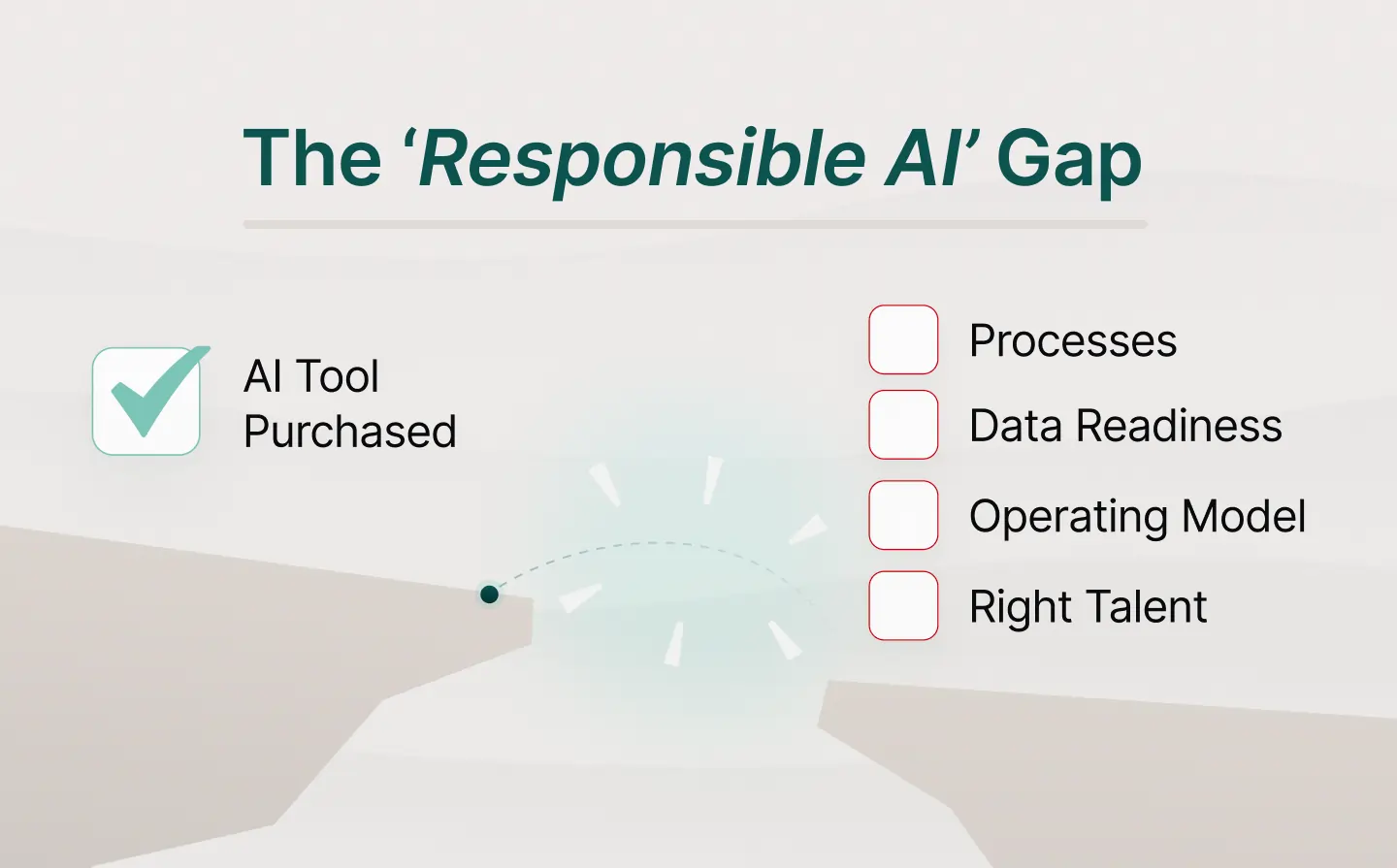
Before you scale AI, ask four things:
Run each one through the deal room and you get specific, possibly uncomfortable answers.
Most firms deploying AI are automating the workflow they have, not the one they should have. If your diligence process is fragmented across six tools and three Slack threads, an AI layer just makes that fragmentation faster and more expensive to unwind. The firms getting this right are redesigning the workflow first, then layering in the AI. The ones struggling are doing it the other way around.
The data layer is where most AI deployments die. A firm buys a tool — good vendor, real use case, genuine internal buy-in — and six months later, adoption is flat. The technology was not the problem. The data was. Incomplete CRM fields. Deal notes buried in personal inboxes. Institutional knowledge that never made it into any system the AI could actually reach. The model had nothing real to work with, so the output was either wrong or useless, and the team stopped trusting it.
Data readiness is unglamorous work. It requires someone with the standing to enforce hygiene standards and the patience to fix years of accumulated mess. Most firms don’t have that person, or haven’t given them the mandate to do anything about it. That’s why Meridian takes its implementation process so seriously. Good inputs are paramount to CRM success.
Who at your firm is accountable for AI outcomes? Not who approved the budget or selected the vendor, but who is responsible for whether the tool is actually working three months after go-live? At most firms, the honest answer is nobody. The VP of AI stands up capabilities and measures success by deployment. The deal team uses the tool inconsistently and calls it adoption. Nobody is tracking whether anything actually got better.
You cannot manage what you do not measure, and right now most firms are measuring the wrong things: seats, logins, prompts run. The metrics that matter are outcomes: time saved per deal, sourcing conversion rate, IC memo quality. Those are harder to instrument, which is exactly why most firms are not tracking them.
I covered the internal AI hiring wave in Vol. 2. The VP of AI is a real and necessary hire, but hiring the role is not the same as having the talent to execute. The question is not whether you have someone with AI in their title. It is whether your deal team can direct AI effectively and can specify inputs, interrogate outputs, and iterate with judgment rather than just accept what comes back. That is a different skill profile than what most firms hired for, and closing the gap requires deliberate investment, not an onboarding session.
There was one more thing from the conference that landed differently when I held it against what I actually see in the field here at Meridian. To trust AI, you need to understand it, control it, and continuously evaluate it.
In a deal room, trust has a consequence. Claude has become the dominant choice for sensitive deal work because deal professionals trust it with proprietary information in a way they no longer trust ChatGPT. That trust was earned through consistent behavior, and through firms that drew clear lines about what goes into which model and then actually enforced them.
That is responsible AI in practice. Not a framework document, but a set of decisions a firm made, enforced, and built workflow around. The firms that have done this are getting more consistent usage, better output, and deal teams that actually adopt the tools they’re given. The ones that haven’t are getting shadow AI behavior and deal professionals making their own calls about what’s safe to input. You cannot govern what you haven’t decided.
The responsible AI frameworks coming out of enterprise conferences are landing in a financial services industry that hasn't slowed down long enough to apply them. It's understandable. The deal clock doesn't stop for governance reviews. But you don't have to be overly cautious to get this right; you just have to be deliberate. Have the conversations early, draw the lines clearly, and build workflows around the answers before you scale.
The checklist exists. The questions are known. Are your processes right? Is your data ready? What is your operating model? Do you have the talent to execute?
Most private markets firms cannot answer any of those questions cleanly, and that’s the gap. The firms that close it first won’t announce it. You’ll just notice they’re moving faster, deciding better, and trusting their systems in a way their competitors aren’t.
Discover how Meridian can streamline deal sourcing and enhance your decision-making


Table of Contents