By using this website, you agree to the storing of cookies on your device to enhance site navigation, analyze site usage, and assist in our marketing efforts. View our Privacy Policy for more information.
Accept All
Deny
November 18, 2026
10
min read
Updated
The Truth About AI CIM Extraction for Private Markets Firms
How deal teams turn a CIM into structured data, and where firms might not be getting the most value from extraction-only tools.
The Truth About AI CIM Extraction for Private Markets Firms
TL;DR
AI CIM extraction reads a confidential information memorandum and pulls the deal metrics into structured data automatically, turning hours of manual entry into a short review.
The time saved by automatic CIM extraction increases when the figures land on the deal record, where they can be benchmarked and scored, instead of only in a separate document.
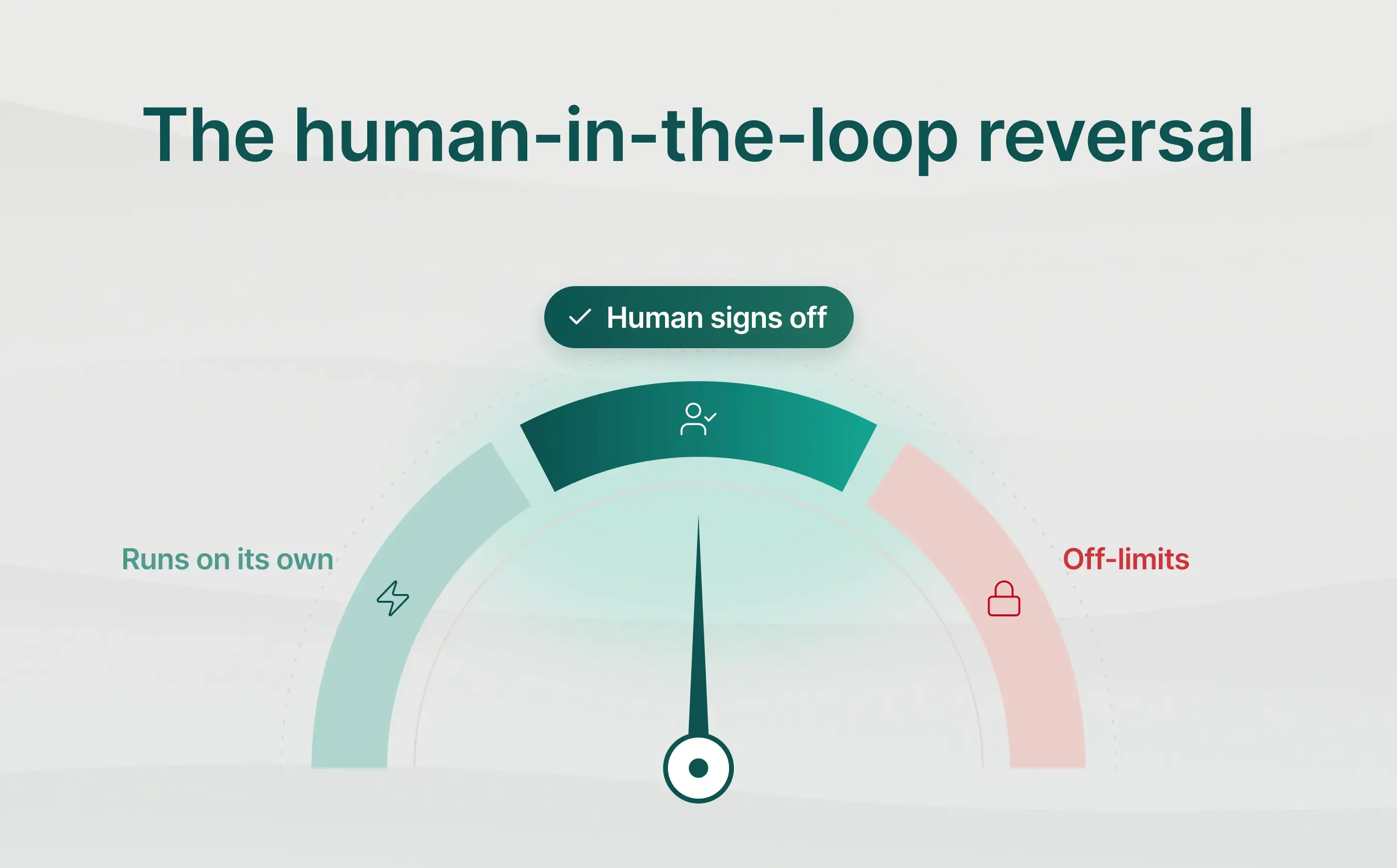
Meridian flags low-confidence and non-standard values for a person to confirm, so extraction becomes a review step instead of blind trust.
AI extraction is much more valuable when the output writes directly to structured fields in the CRM.
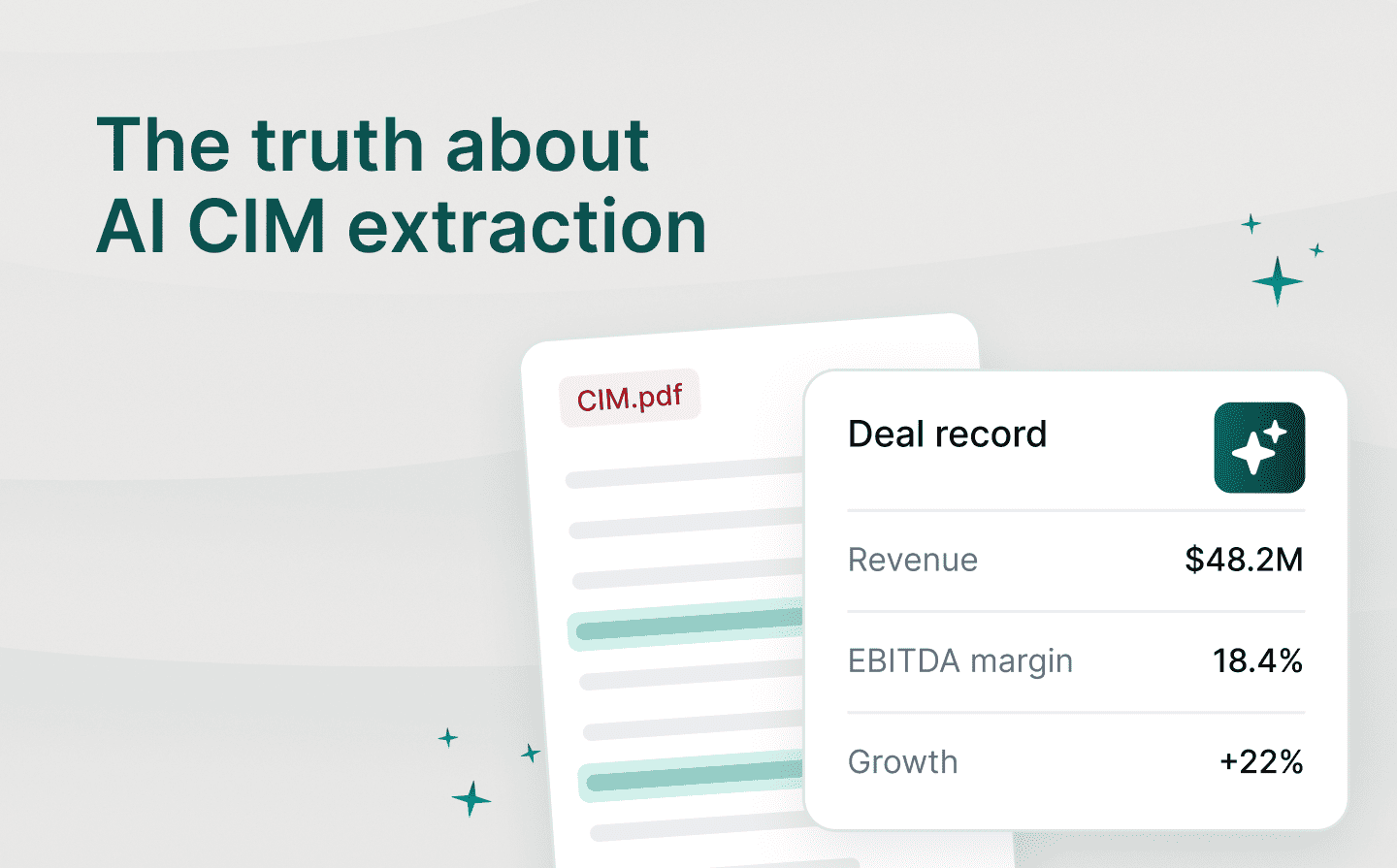
AI CIM extraction is the automated reading of a confidential information memorandum to pull its key figures (like check size, revenue, growth rate, margins, and valuation) into structured fields on the deal record. For the associate who would otherwise spend a Wednesday night moving those numbers out of a 90-page PDF one field at a time, it turns a transcription job into a review.
Bain & Company and StepStone found that GPs most often name due diligence as the area where generative AI delivers the highest return, at 40%, ahead of deal sourcing and market mapping at 33%. At Meridian, we built AI CIM extraction into our platform for exactly this reason: so the payoff shows up right where firms feel the most pressure.
Reading the CIM is no longer the hard part, because a model can do it. What matters is where the figures go next. Write them to the deal record and the team can benchmark and score them right away. Leave them in a standalone file, and someone still has to move them somewhere usable before the work counts.
Extraction only pays off when it lands on the deal record
Extraction pays off only when the figures land in the system of record, where they can be benchmarked against the firm's history the moment they arrive. Ideally extraction and the record should live in the same system, so nothing has to be exported from one to the other.
Benchmarking is the reason the record matters in this process. For example, with the figures on the deal, Meridian can compare a target's margin and entry multiple against the firm's own past deals in the sector instead of a generic market average. The same figures feed downstream into a tear sheet, with no one re-entering them.
Some extraction tools take a different approach, reading the CIM and pushing the output into whatever CRM the firm already runs. That can work, and for a team committed to its existing CRM system, it can be the path of least resistance. The handoff is a cost, though. The figures leave the tool that read them and have to be loaded somewhere usable, which is an additional step the firm set out to remove. McKinsey's survey found the large majority of respondents still rely on commercially available chatbots instead of purpose-built tools, and a chatbot hands back text a person re-enters.
This is what we mean when we say Meridian is “AI-native”: The AI reads and writes the record directly instead of sitting on top of a database it cannot change.Datasite and FT Longitude's survey found that 50% of dealmakers now regularly use or have fully embedded AI in due diligence, which raises the cost of every handoff between tools.
See Meridian in action
Find out how leading PE firms are using Meridian to enhance their deal workflows.
No two CIMs are exactly the same, but that doesn’t slow down the AI reading them. One bank buries EBITDA adjustments in a footnote; another reports a trailing figure where the firm wants a forward one. Reconciling those into a consistent record by hand is slow and easy to get wrong, which is work AI extraction absorbs and accelerates.
The time this returns to a deal team isn’t just up-front, though; it shows up across the whole deal. McKinsey found that 40% of respondents reported generative AI enabled 30-50% faster deal cycles. Most of that gain comes from compressing the document-heavy early stages, which is where extraction does its work, but that’s not the only return you can get from AI.
Human judgment still matters, even with AI CIM extraction as good as Meridian’s
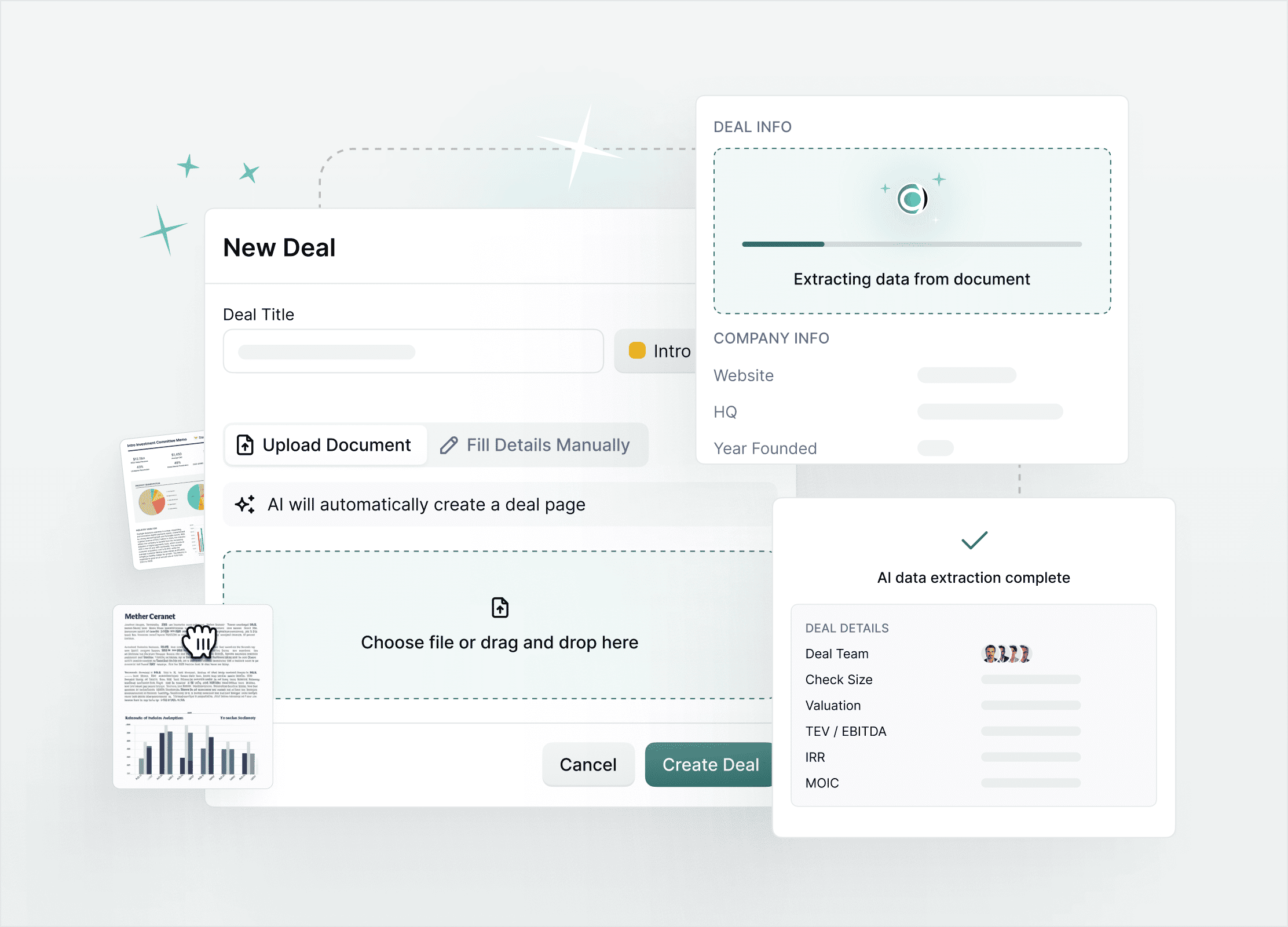
Meridian reads a CIM and extracts standard values into structured fields on a new deal record in minutes; but non-standard and low-confidence values still need an analyst to confirm, so Meridian flags them for human review. Additionally, Meridian traces every extracted value back to the page it came from, so the deal team can check a number without reopening the document.
This shifts the analyst's job from typing numbers to quickly confirming them. From the firms we talk with, retyping is the complaint we hear first about other platforms, so this immediately solves a big time waster. Datasite and FT Longitude's survey found 71% of dealmakers rank accuracy among the most important attributes when using AI, and 58% still use human review to build confidence in AI outputs. Accuracy is a constraint on trust.
CIM extraction is especially worth automating when the figures land somewhere they can be scored and reused. Extraction alone saves some manual work, but when it’s built into your system of record, your entire deal team — today and 10 years from now — gains the value of that historical data.
Discover how Meridian can streamline deal sourcing and enhance your decision-making
Yes. Meridian reads a confidential information memorandum and extracts the key deal metrics into structured fields on the deal record, with low-confidence values flagged for a person to confirm. The figures are benchmarkable against the firm's history as soon as they land.
What is AI CIM extraction?
AI CIM extraction is the automated reading of a confidential information memorandum to pull its key figures into structured data. It replaces the manual transcription an analyst would otherwise do field by field. Meridian CRM and the new lightweight Meridian Frame app are two examples of tools that do this well for private markets firms.
Does AI replace the analyst in diligence?
No. It removes the transcription and first-pass data entry, and the analyst confirms edge cases and makes the judgment calls. The team keeps the decision and gets the typing time back.
author
Alex Sen
Founder and CEO
Alex Sen is the Founder and CEO of Meridian. With nearly a decade of experience at top firms like Blackstone, Thoma Bravo, and CVC, Alex knows the challenges that hold dealmakers back.