November 11, 2026
5
min read
Updated
The State of the Stack: The Human-in-the-Loop Reversal
Set your firm’s AI operating range to get the most effective mix of automation and human oversight.
November 11, 2026
Updated
5
min read
Set your firm’s AI operating range to get the most effective mix of automation and human oversight.
When I joined Meridian as Sales Director, automatic email sync was the first feature every prospect asked about. Connect your inbox and every thread with a founder, banker, or LP lands in the CRM. It was in every RFP. Everyone talked about it. It closed deals.
And while this is still an awesome feature, 10 months later I'm feeling a reversal. More of our Meridian customers are switching to manual sync. They pick which emails go in, and someone reviews before anything hits the deal record.
On a call last month, a VP at a mid-market buyout fund asked me something I never heard in Q1: "Do we have to have this on?" But 20 minutes later, the same VP leaned in when the demo got to our MCP with Claude.
What I’ve come to realize is that buyers want more AI and less automation, often in the same meeting. What they've soured on is AI acting without asking.
Meridian promises more deals with less effort, but in the case of email automation, firms are now wanting to put in a little more effort for privacy and governance reasons. None of the reasons here are irrational, but they are still important to unpack.
The inbox is the most sensitive system at the firm. It holds NDAs, side letters, and a CEO's candid note about his co-founder. Auto-capture brings across anything, no matter the context.
Log everything, and you get everything. Newsletters, cc chains, calendar pings. The CRM fills with noise, nobody trusts it, and the team goes back to searching Outlook.
Compliance gets nervous. On a take-private, one auto-logged email from a public company CFO puts MNPI somewhere half the firm can see it.
The broader market is sending the same signal (and has been for a few years now). Here’s an example: Klarna said in early 2024 that its AI assistant was doing the work of 700 service agents. A year later, the CEO admitted quality had dropped and started hiring humans again. Meanwhile, 2026 Hype Cycle for Agentic AI puts agents at peak hype. Yet only 17% of organizations have deployed them, and Gartner says fully autonomous agents aren't ready for most enterprise work. At the end of the day, enterprises seem to be craving AI but are wary of full-scale automation and the potential risks that come with it.
Let’s look at what buyers are actually rejecting. Ambient AI runs in the background and tells you later. Directed AI does the work when you point it at something, and you decide what sticks.
That's why the VP who wanted sync turned off lit up at the Claude demo. One acts on your behalf. The other works for you. Klarna kept its chatbot, too. It just put people back where judgment mattered.
Nobody wants less AI when it helps them do their job better. They want their hands back on the wheel.
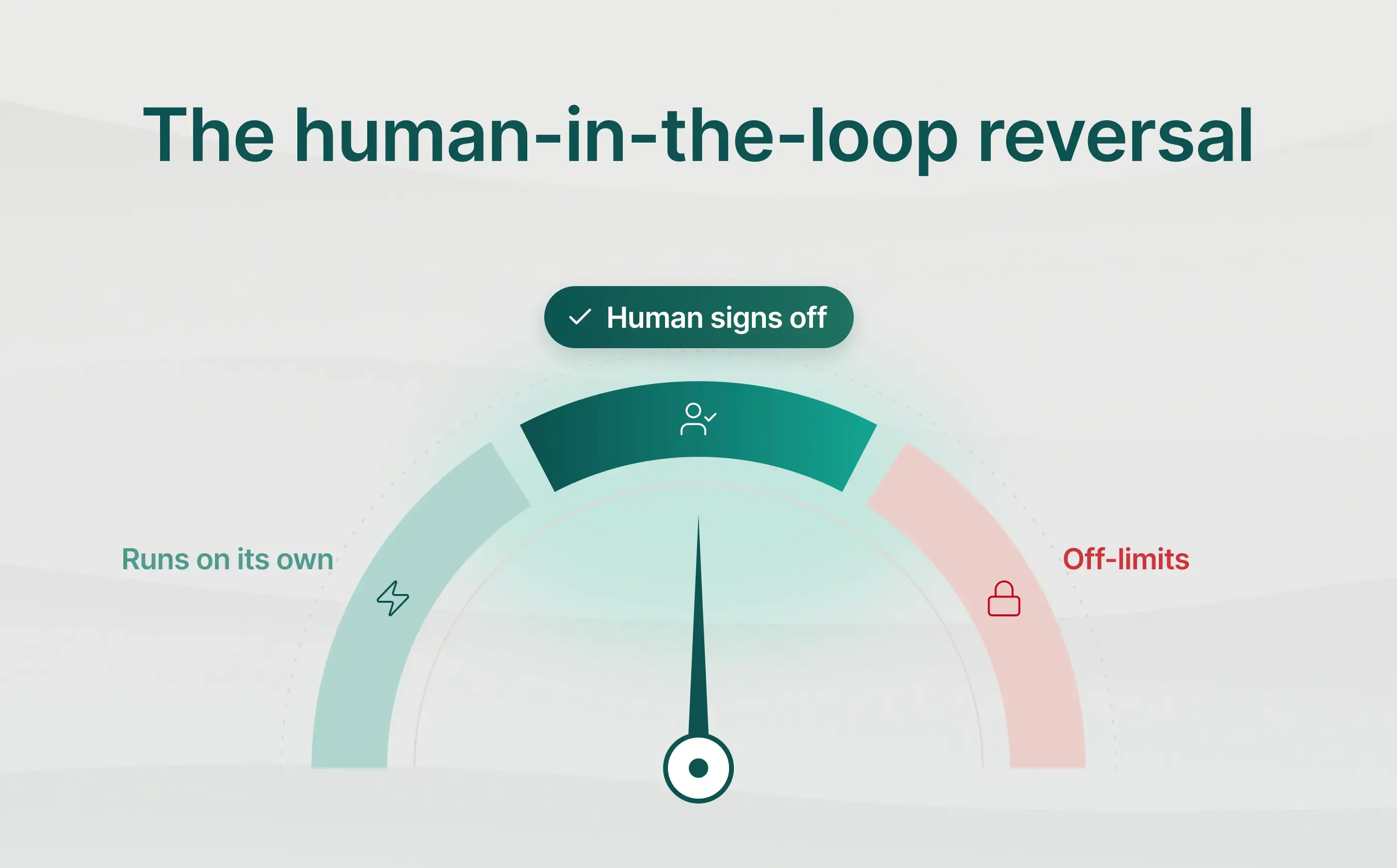
What I recommend is to skip the AI on/off debate entirely, and instead decide how you want to use it. First, draw a map with three zones.
Zone 1: Runs on its own. Low stakes, high volume, easy to undo. Examples: Meeting notes filed to the right record, contact dedupe, and company enrichment.
Zone 2: Human signs off. Anything that becomes part of the record other people rely on. Examples: Email capture to a deal, first drafts of IC memos, and anything an LP will read.
Zone 3: Off-limits. No automation, no exceptions. Examples: Privileged communications, MNPI, side letters, and personnel matters.
Write it down on one page. Give it one owner, ideally whoever already owns the stack question. Most importantly, revisit it every quarter. What needs sign-off today may earn its way to autopilot by Q2. And when a new tool shows up, ask this question: If this is wrong, who finds out, and how fast? If the answer is nobody, it needs human oversight.
The pendulum already swung once. Some firms will swing it back the next time a demo impresses them. Winning firms will set the AI operating range and hold it.
Discover how Meridian can streamline deal sourcing and enhance your decision-making


Table of Contents

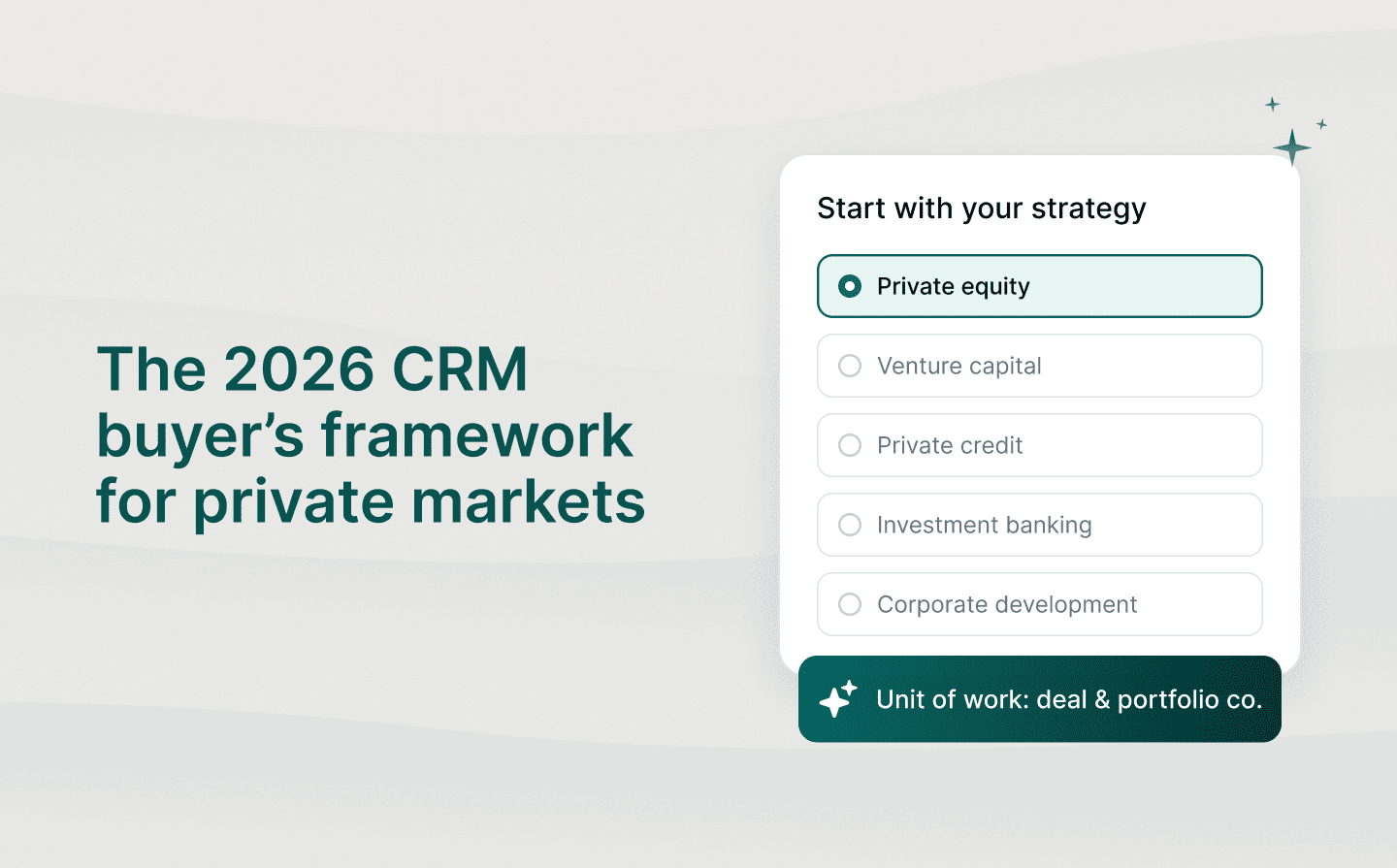
A comprehensive buyer’s guide for private markets investment firms evaluating their next CRM purchase.