By using this website, you agree to the storing of cookies on your device to enhance site navigation, analyze site usage, and assist in our marketing efforts. View our Privacy Policy for more information.
Accept All
Deny
October 28, 2026
10
min read
Automated Reporting and Analytics for Private Markets Deal Teams
How deal teams replace quarterly spreadsheet builds with automated reporting that stays current and reflects the live deal record.
Automated Reporting and Analytics for Private Markets Deal Teams
TL;DR
Deal-team reporting and analytics is a different job from the fund accounting and LP capital statements a fund administrator produces.
Manual spreadsheet reporting breaks down because it compiles numbers by hand from systems that do not talk to each other, so figures drift and go stale between quarters.
AI can generate a tear sheet or a first-draft IC memo from a CIM and the deal record in minutes, leaving the thesis and the recommendation to the people who own the decision.
Dashboards that run on the live record stay current without a quarterly rebuild in Excel, and a natural-language AI agent can answer questions like which sourcing themes produced the most IC-ready deals.
ILPA tightened LP reporting standards in 2025, which raises the bar for clean, structured data across the whole firm, even though the templates themselves sit in fund administration.
Reporting is only as trustworthy as the system underneath it, so the data layer decides whether any of the automation is worth running.
With the right tools, investment firms can automate reporting and analytics by generating tear sheets, memos, and dashboards straight from the live deal record, instead of rebuilding them by hand in a spreadsheet each quarter. For most deal teams, though, the spreadsheet build is still a quarterly ritual: an analyst pulls numbers from a CRM, a data provider, and a few inboxes, pastes them into a deck, and reconciles the versions that come back marked up. The average deal team spends hours every week on manual data entry, and that is time away from working the next deal.
The pressure on that manual process is rising. In January 2025, ILPA released version 2.0 of its Reporting Template, effective for qualifying funds from Q1 2026, which standardizes performance reporting and removes a GP’s ability to modify the template. LPs now expect cleaner, more structured, reconciled numbers, and a reporting process held together by copy-paste is the wrong foundation to meet that standard.
The shift underway is from exporting data to reporting from the system of record itself, so the numbers in a tear sheet or a dashboard are the same live data the deal team works in every day. This piece covers what reporting and analytics mean for a deal team, how AI generates tear sheets and dashboards from live data, where the line sits between deal-side reporting and fund administration, and why the data layer underneath decides whether any of it can be trusted.
What reporting and analytics mean for a deal team
Deal-team reporting and analytics means tear sheets, IC memos, pipeline and sourcing dashboards, and portfolio tracking generated from the deal record. This is different from the fund accounting and LP capital-account statements a fund administrator produces. The two are often confused because both end in a report sent to investors, but they draw on different systems and answer to different owners. Deal-side reporting runs on the front-office record of companies, deals, and relationships, while fund accounting runs on the ledger.
What they share is a dependence on the data beneath them. Gartner puts the cost of poor data quality at least $12.9 million a year on average, and a report built on stale or unreconciled figures carries that cost straight to the people making a decision from it. A tear sheet is only as good as the record it reads.
(Meridian’s own reporting features also cover LP-relationship and fundraising-pipeline reporting for investor relations teams, which is distinct from the capital-account and fund-accounting work that stays with the administrator.)
Why manual spreadsheet reporting breaks down
Manual reporting breaks down for a deal team because it compiles numbers by hand from systems that do not talk to each other, so every quarter starts from scratch. An analyst re-keys figures from the CRM, a data provider, and email threads, reconciles the ones that disagree, and formats the result. By the time the deck is approved, some of the inputs have already changed. The work scales poorly, because each new fund, theme, or reporting line adds another column to maintain.
Manual cleanup is the default response, and that is even less scalable. Validity's 2025 State of CRM Data Management report found that 57% of organizations run manual data-cleaning efforts while cutting investment in dedicated data-quality staff, and that only 18% of those without a data-quality owner plan to hire one. Cleaning a system by hand while under-resourcing the people who maintain it means the data decays again as soon as the cleaning stops.
Disconnected systems make the problem worse once AI enters the picture. Salesforce found that 51% of leaders using AI say disconnected systems are slowing their AI initiatives, which is the same friction a deal team hits when reporting data lives in one tool and the deal record lives in another. A reporting process that depends on moving data between systems inherits every gap between them.
The manual quarterly cycle can run for weeks, most of it spent assembling rather than analyzing. Some manual review will always be needed, because judgment is the analyst’s job, not the tool’s. The goal is to remove the compilation, not the thinking. We wrote about the wider move to consolidate overlapping tools in our analysis of software vendor rollups.
Generating tear sheets and IC memos from live deal data
AI can generate a tear sheet or a first-draft IC memo from a CIM and the deal record in minutes, instead of the hours an analyst spends extracting and formatting the same information by hand. The inputs already exist in the deal: the CIM, the financials, the notes from calls, and the terms. What takes time is pulling them into a consistent format, and that is the part a model does well.
In Meridian, Scout AI extracts key metrics, KPIs, covenants, and terms from CIMs and memos and auto-generates tear sheets and IC-ready packages that feed the broader memo. Because it reads from the live record, the tear sheet reflects the current state of the deal rather than a snapshot someone exported last week. The IC workflow carries the comparable tables and decision history alongside it.
The division of labor is the point. AI owns structure, formatting, and first-draft synthesis, while the people on the deal own the thesis and the recommendation, including the hard read on what could go wrong. A memo that arrives pre-formatted gives the team more time for the judgment a model cannot make. We cover how firms run that process in our piece on how the best firms run investment committee.
Pipeline, sourcing, and portfolio analytics without exporting to Excel
Analytics are more useful when they run on the live deal record than when they are rebuilt in a spreadsheet each quarter, because the live version is current and the exported one is stale the moment it lands. A dashboard that reads from the system of record shows the pipeline as it is now, not as it was when someone last pulled the data.
Meridian's reporting runs on customizable dashboards across deals, themes, time periods, and owners, filterable by any custom field, with no manual prep before a review. Scout AI acts as a natural-language data analyst: A partner can ask which sourcing themes have produced the most IC-ready deals in the last six months and get charts and tables back rather than a request to the data team. Fundraising-pipeline and LP-relationship reporting run the same way, with real-time LP summaries and commitment maps instead of an exported spreadsheet.
Portfolio tracking lives in the same place, so performance sits beside the relationship and deal history in Meridian, rather than in a separate monitoring tool. For private credit, that extends to borrower performance and covenant compliance, where the terms captured at underwriting become the fields a dashboard tracks over the life of the loan.
Analytics only reflect what the system captures, so coverage depends on the sources a firm actually connects. A theme analysis is blind to deals worked entirely over a channel the platform never sees. We go deeper on how the underlying relationship data drives this in our piece on relationship intelligence for deal teams.
Why reporting is only as good as the system underneath
A report is only as trustworthy as the system that produces it, so automated reporting and analytics depend on a clean, connected, AI-native record underneath them. Automation applied to bad data just produces wrong answers faster, which is worse than a slow manual process that at least invites a second look.
AI is already doing the analysis work that feeds reporting. Deloitte found that 86% of corporate and PE leaders have integrated generative AI into their M&A workflows, spanning diligence and analysis. The bottleneck now is the data, not the model: whether the connected record is clean enough for the output to be trusted.
The deal and reporting layers are converging in the market. In March 2026, Carta acquired ListAlpha and moved into private markets CRM, pairing front-office relationship data with back-office fund data under an AI agent. It is a signal that firms will increasingly expect one system to carry the deal and its reporting together, which makes where that data lives a real decision.
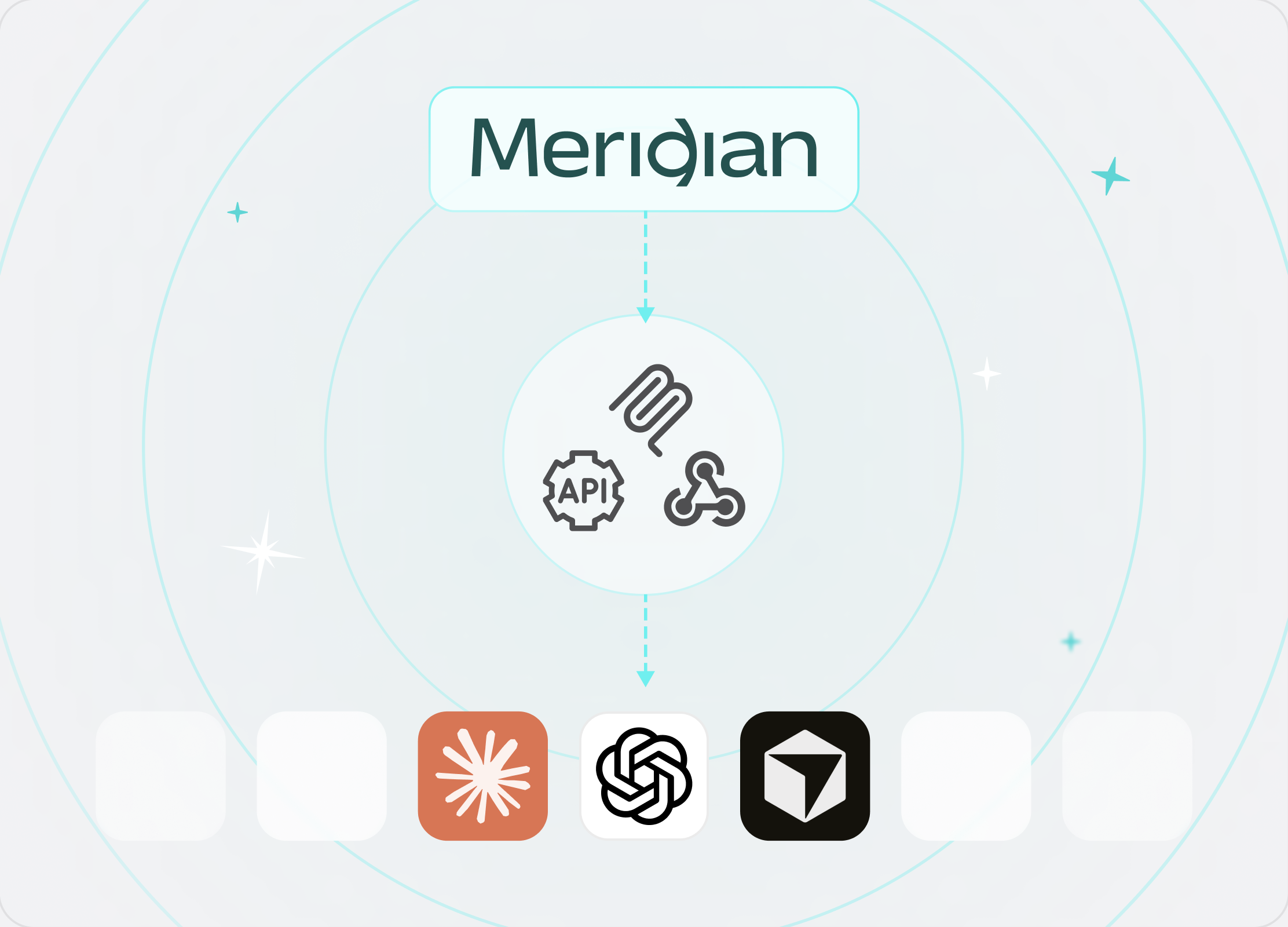
Meridian's approach is to be AI-native and open at the same time. Scout AI reads from a continuously captured record, and Meridian MCP connects that record to Claude, ChatGPT, or another tool through a standard interface, so the reporting layer feeds whatever the firm uses rather than locking the data in. For the wider platform picture, our guide to the best private equity CRM tools lays the options side by side.
Frequently asked questions
How do investment firms automate reporting and analytics?
Investment firms automate reporting and analytics by generating tear sheets, memos, and dashboards from the live deal record using AI instead of compiling them by hand in spreadsheets. AI extracts the inputs and keeps the figures current, so a report reflects the present state of a deal rather than a quarterly export. The manual review that remains is about judgment, not assembly.
Can AI generate tear sheets and IC memos?
Yes. AI can produce a tear sheet or a first-draft IC memo from a CIM and the deal record in minutes, pulling KPIs, covenants, and terms into a consistent format. The people on the deal still own the thesis, the risks, and the recommendation, which is the decision part a model should not make.
What is the ILPA Reporting Template v2.0?
The ILPA Reporting Template v2.0 is the January 2025 update to the Institutional Limited Partners Association’s standard for quarterly LP reporting, effective for qualifying funds from Q1 2026. It standardizes performance and fee reporting and removes a GP’s ability to modify the template, which raises the bar for structured, reconciled data. It is a fund-administration standard, produced from the ledger rather than the deal record.
Can a CRM generate LP and fundraising reports?
Yes, for deal-side and fundraising-pipeline reporting. A private markets CRM like Meridian can generate LP-relationship summaries, commitment maps, and fundraising-progress reports from the live record without an Excel export. What it does not produce is fund-accounting output like capital-account statements, which stays with the fund administrator.
Does Meridian do fund accounting or LP capital-account statements?
No. Meridian is the deal-side system of record and does not produce fund accounting, LP capital-account statements, or audited fund financials. It keeps the front-office data clean and connects to the fund-admin and LP-reporting systems that generate those documents.
How do you build a live pipeline or portfolio dashboard?
You build a live dashboard by reporting from the system of record rather than exporting to a spreadsheet, so it updates as the underlying deals change. In Meridian, dashboards are customizable across deals, themes, time periods, and owners, and filterable by any custom field, with no manual prep before a review. Because the data is captured continuously, the dashboard reflects the current pipeline or portfolio at any moment.
Discover how Meridian can streamline deal sourcing and enhance your decision-making
Alex Sen is the Founder and CEO of Meridian. With nearly a decade of experience at top firms like Blackstone, Thoma Bravo, and CVC, Alex knows the challenges that hold dealmakers back.
You have successfully subscribed to the newsletter!
Oops! Something went wrong while submitting the form.
Featured resources
CRM adoption
Why deal teams don’t use their CRM, and how to switch to one they will
The fix for adoption is automatic data capture, not more training or a stricter mandate.
Private Markets Insights
Waterfall Data Enrichment for Deal Teams
How deal teams keep company data clean and consolidate their vendors with built-in data.
Deal Sourcing
Deal Sourcing and Pipeline Management in Private Markets
Why deal sourcing and pipeline management belong in one system, how proactive thematic sourcing wins proprietary deals, and how to stop pipeline leakage.